

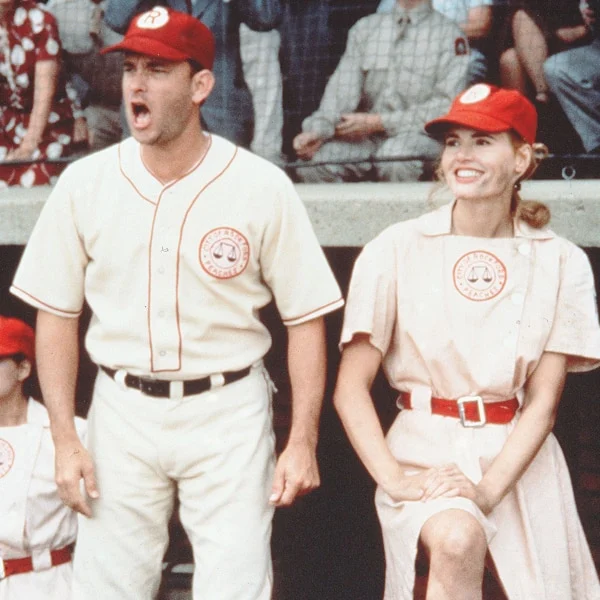
When director Penny Marshall’s sports comedy-drama A League of Their Own arrived in theaters on July 1, 1992, few industry insiders predicted it would become a watershed moment in American cinema. Starring Geena Davis, Tom Hanks, Madonna, Lori Petty, and Rosie O’Donnell, the film chronicled the fictionalized exploits of the Rockford Peaches, a real-team from the World War II-era All-American Girls Professional Baseball League (AAGPBL).
With a domestic box office haul exceeding $107 million, the film was both a commercial triumph and a critical darling. In 2012, its cultural, historical, and aesthetic significance was permanently cemented when the Library of Congress selected it for preservation in the National Film Registry. Decades later, its iconic rallying cry—"There’s no crying in baseball!"—remains firmly embedded in the global cultural lexicon.
Behind the memorable one-liners and the sweeping cinematic games lay a rigorous production process, deep historical roots, and a dedication to authenticity that transformed the lives of its cast and reshaped the landscape of sports films.
Main Facts: The Historical Reality of the AAGPBL
The cinematic narrative of A League of Their Own is anchored in a fascinating, often overlooked chapter of American history.
The Origins of the League
The All-American Girls Professional Baseball League was conceptualized by chewing gum magnate and Chicago Cubs owner Philip K. Wrigley. With Major League Baseball’s brightest stars drafted to fight overseas in World War II, Wrigley sought a viable means of keeping stadium seats filled—specifically at landmark venues like Chicago’s Wrigley Field.
Active from 1943 to 1954, the league eventually grew to include 15 teams situated across the American Midwest, including the Kalamazoo Lassies, Chicago Colleens, Peoria Redwings, Grand Rapids Chicks, and the legendary Rockford Peaches.
The Real-Life Dottie Hinson
Geena Davis’s character, the formidable catcher Dottie Hinson, was largely inspired by real-life Rockford Peaches first baseman Dorothy "Dottie" Kamenshek. Kamenshek, widely regarded as one of the finest athletes of her era, recalled the initial skepticism the league faced in a retrospective interview with Marquette Magazine:
"In the beginning, we were only getting 500 people in the stands, and then it got up to 10,000, which is good for a town that supports minor league baseball. Eventually, we won them over. At first they just came to see the skirts, and then we showed them we could play."
Gendered Regulations and Social Expectations
Despite their undeniable athletic prowess, the players operated under strict societal constraints dictated by mid-century gender norms. The uniforms, designed by Wrigley’s wife, featured short skirts that offered little protection against the hazards of sliding.
Furthermore, the players were subjected to mandatory charm school and etiquette training, as depicted in the film. Off the field, rules were rigidly enforced: shorter hairstyles were required, and players faced steep financial penalties if they were caught smoking, drinking, wearing trousers in public, or leaving their quarters without cosmetics.
Chronology: From Documentary to the Silver Screen
The journey of A League of Their Own from historical footnote to Hollywood blockbuster spanned several years of meticulous development, grueling production schedules, and post-production compromises.
[1987] Documentary "A League of Their Own" Released by Wilson & Candaele
  │
[1987-1991] Five-Year Development, Scriptwriting, and Casting Process
  │
[Mid-1991] Intensive 7.5-Month Athletic Training Camp Begins
  │
[Late 1991] Principal Photography in Chicago, Evansville, and Henderson
  │
[Early 1992] Post-Production: Editing 4-Hour Cut Down to 128 Minutes
  │
[July 1, 1992] Nationwide Theatrical Release & Box Office Success
1987: The Spark of Inspiration
The feature film owes its existence to a 1987 documentary of the same name, co-created by Kim Wilson and Kelly Candaele. Candaele’s mother, Helen Callaghan, had been a left-handed center fielder in the AAGPBL, providing the filmmakers with direct access to the league’s history.
"We used the documentary to write the story, then to sell the idea for a feature," Wilson shared in a 2017 oral history with ESPNW. "We were completely obsessed with this idea. It took close to five years to sell it, to do the research on it, to film it, and to write the story… It didn’t happen in a week."
The Writing Phase
Screenwriters Babaloo Mandel and Lowell Ganz infused the script with personal anecdotes. A key dramatic element of the film—the sibling rivalry between Dottie Hinson and her younger sister, Kit Keller (played by Lori Petty)—was born from a real-life encounter. Mandel recalled running into playwright Neil Simon’s mother in Sherman Oaks, California, who introduced Simon’s brother, Danny, simply as "Neil Simon’s brother." Ganz adapted this dynamic into Kit’s frustration: "You ever hear Dad introduce us to people? ‘This is our daughter Dottie, and this is our other daughter, Dottie’s sister.’"
1991: Auditions and Rigorous Boot Camps
Director Penny Marshall and producer Robert Greenhut prioritized athletic ability during the casting process. While some roles allowed for cinematic leeway, the core players had to look convincing on the diamond.
Tracy Reiner, Marshall’s daughter who played left fielder Betty "Spaghetti" Horn, earned her spot through a massive open tryout at the University of Southern California under the supervision of legendary baseball coach Rod Dedeaux. Reiner, recovering from having her wisdom teeth extracted, recalled spitting blood on the field, only to discover she and her cousin had placed in the top 20 of over 2,000 auditionees.
Once the cast was finalized, the actresses underwent an intense training regimen: eight hours a day, six days a week, for seven and a half months to prepare for principal photography.
Post-Production: Trimming the Epic
The original cut of A League of Their Own ran nearly four hours. To streamline the film to its final 128-minute runtime, several subplots were excised:
- The Duggan-Hinson Kiss: A controversial scene where manager Jimmy Duggan (Tom Hanks) kisses Dottie Hinson after watching her hit batting practice was deleted. Real-life AAGPBL veterans strongly objected to the scene, arguing that Dottie, whose husband was fighting overseas, would never commit infidelity.
- The Suds Bucket Bet: A sequence at the local roadhouse where Duggan helps Kit navigate a bet with a local patron was heavily edited.
- The Backstory of Bob: A scene explaining that Dottie married her husband, Bob, the night he was drafted was also cut.
Supporting Data: Production Realities and On-Set Anecdotes
The authenticity of the film was paid for in bruises, broken bones, and extreme physical exertion by a dedicated cast.
Athletic Feats and Physical Tolls
The physical demands on the actresses were genuine. The massive, deep-purple thigh bruise sustained by actress Renee Coleman (playing backup catcher Alice Gaspers) during a sliding scene was entirely real and took years to fully fade.
Two weeks before filming commenced, Anne Ramsay (first baseman Helen Haley) broke her nose when a ball thrown by a coach slipped past her vintage 1940s mitt. "It was the first day that we switched from modern-day mitts to authentic, vintage mitts from the ’40s," Ramsay recalled. "The mitt was restored a little, but it was the original deal… My nose has never been the same. But who cares!"
To protect the camera operators during close-up hitting sequences, production designers utilized custom-made "squishy" balls that looked identical to regulation baseballs but were made of soft foam.
| Actress | Character | Notable Production Fact |
|---|---|---|
| Geena Davis | Dottie Hinson | Performed her own catch-and-split behind home plate; went on to semi-final in Olympic archery trials. |
| Lori Petty | Kit Keller | One of the fastest runners on set; had to intentionally slow down to keep pace with Davis. |
| Rosie O’Donnell | Doris Murphy | Possessed genuine Little League experience; entertained extras by singing Madonna hits. |
| Madonna | Mae Mordabito | Practiced sliding maneuvers using a backyard Slip ‘N Slide; insisted on doing her own stunts. |
| Tom Hanks | Jimmy Duggan | Gained weight deliberately through a diet of barbecue ribs and desserts to portray a washed-up athlete. |
Creative Solutions and Improvisation
Some of the film’s most memorable moments were completely unscripted. During a scouting sequence in Oregon, actor Jon Lovitz’s character, Ernie Capadino, dryly yells, "Will you shut up?!" to a crying farm animal. Lovitz was reacting in real-time to a cow giving birth just off-camera. The farm’s owners subsequently named the newborn calf "Penny" in honor of director Penny Marshall.
For the iconic 53-second restroom scene featuring Jimmy Duggan, Marshall stood off-camera with a hose and a bucket to create the authentic sound of an incredibly long, comedic release.
Official Responses and Cast Reflections
The enduring legacy of A League of Their Own is frequently discussed by its cast, who look back on the production as a life-altering experience.
Geena Davis on Athletic Empowerment
For Geena Davis, who stood at an imposing 6 feet tall, the film dismantled her lifelong belief that she was inherently uncoordinated.
"I assumed I was uncoordinated. I was always so tall and awkward," Davis told ESPNW. "That changed my life—learning how to play a sport."
Her training on the film was so transformative that seven years later, at age 43, Davis competed as a semi-finalist in the U.S. Olympic archery trials.
Regarding her famous split behind home plate, Davis confirmed she performed the stunt herself but admitted the physical toll was high: "There was no popping up happening. I was stuck there and had to be helped up."
The Illusion of Age
In the film’s poignant final sequence, which takes place at the opening of the real AAGPBL exhibition at the Baseball Hall of Fame in Cooperstown, older actresses were cast to play the senior versions of the characters. Producer Elliot Abbott admitted to the Los Angeles Times that utilizing aging makeup on the young cast was deemed too risky.
Lynn Cartwright, then 65, was cast to play the older Dottie Hinson. To maintain continuity, the production team dubbed Cartwright’s lines with Geena Davis’s voice, as Cartwright’s natural speaking voice was significantly deeper than Davis’s.
The Great Debate: Did Dottie Drop the Ball?
The film’s climax features a high-stakes play where Kit runs into her sister Dottie at home plate, causing Dottie to drop the ball and allowing Kit’s team to win the World Series. Fans have debated for decades whether Dottie dropped the ball on purpose out of love for her sister.
Actress Bitty Schram, who played right fielder Evelyn Gardner, firmly believes it was intentional: "I would say subconsciously yes, because she knew how much more it meant to Kit, and she was too good of a player [to drop it accidentally]."
When asked to settle the debate, Geena Davis remains steadfastly tight-lipped:
"I’ll say two things about that. No. 1: I know the answer. Because it was me, of course, I know the answer. And No. 2: No, I’m not going to answer that question. I never have, and I never will."
Implications: A Cultural and Cinematic Home Run
The impact of A League of Their Own extends far beyond its box office receipts and memorable quotes.
┌────────────────────────────────────────────────────────┐
│               CULTURAL & SOCIAL IMPACT                 │
├────────────────────────────────────────────────────────┤
│  • Inspired generations of young women to enter        │
│    organized sports and pursue baseball/softball.       │
│                                                        │
│  • Proved to Hollywood that female-led sports films    │
│    could achieve massive commercial success.            │
│                               │
│  • Preserved the historical legacy of the AAGPBL       │
│    in the public consciousness.                        │
│                                                        │
│  • Challenged traditional mid-century gender roles     │
│    on a global cinematic stage.                        │
└────────────────────────────────────────────────────────┘
Redefining Female Athletes in Cinema
Before 1992, mainstream sports movies almost exclusively focused on male protagonists, with female characters relegated to supportive wives, girlfriends, or spectators. A League of Their Own shattered this mold by placing women at the center of the athletic narrative. The film’s tagline—"A woman’s place is at home… first, second, and third"—served as a direct challenge to patriarchal norms.
Inspiring Future Generations
The film catalyzed a significant interest in girls’ softball and baseball leagues across North America. For Geena Davis, this remains the most rewarding aspect of the film’s legacy.
"Seeing girls take up not just baseball but other sports because they were inspired by the movie is just amazing," Davis reflected. "It’s hard to even calculate how many women were impacted by this film."
By blending historical truth with Hollywood storytelling, A League of Their Own did more than just preserve the memory of the All-American Girls Professional Baseball League. It permanently changed the playing field for women in sports and cinema alike, proving that when given the opportunity, women could knock it out of the park.
 Sagoh
Sagoh
 Siti Muinah
 Nana
Nana
