

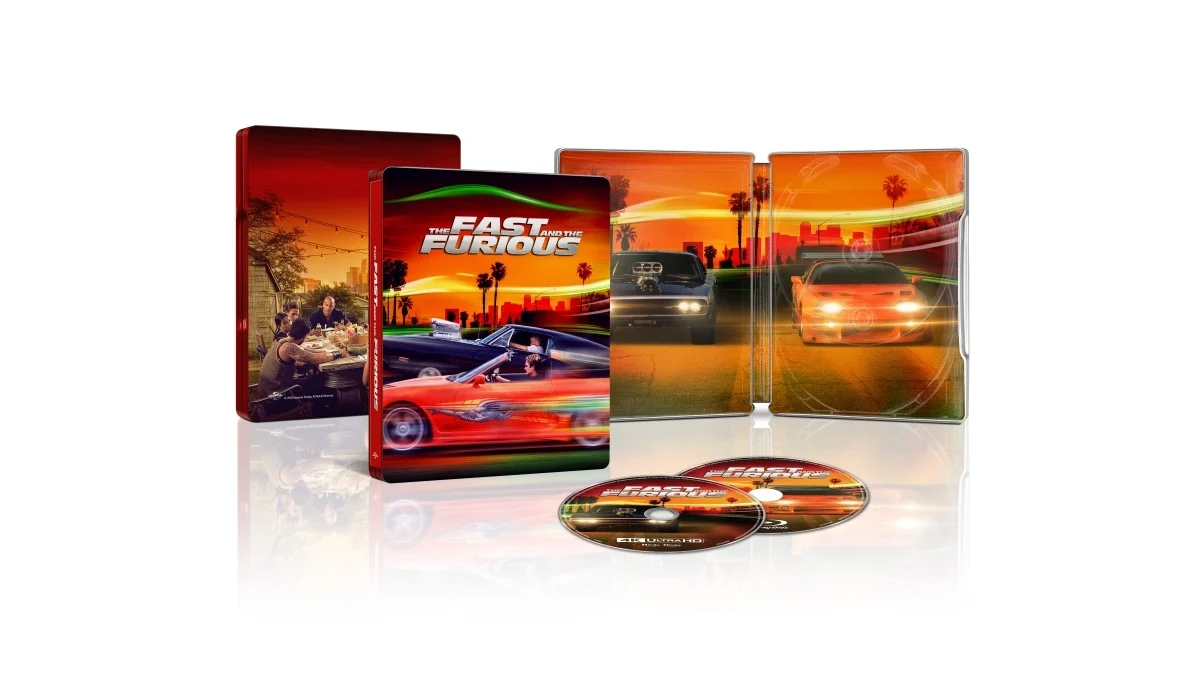
Exactly twenty-five years ago today, on June 22, 2001, audiences were introduced to the neon-drenched streets of Los Angeles, the roar of modified engines, and a crew that redefined the meaning of "family." Rob Cohen’s The Fast and the Furious didn’t just launch a successful film; it ignited a cultural phenomenon that would eventually span over two decades, gross billions at the global box office, and redefine the scope of the modern blockbuster.
To commemorate this silver anniversary, Universal Pictures has announced a high-fidelity 4K Ultra HD remaster of the original film, set to hit retailers on August 25. This isn’t merely a visual polish; it is a celebration of the humble, Point Break-inspired heist movie that grew into a global juggernaut.
Main Facts: The Return to the Start
The 25th-anniversary release brings the high-octane spectacle into the modern era of home cinema. The new 4K transfer boasts significant technical upgrades, utilizing Dolby Vision for enhanced color grading and Dolby Atmos for an immersive, visceral audio experience that promises to make the street-racing sequences feel as punchy today as they did in 2001.
Fans have two primary options for purchase: a highly coveted, limited-edition Steelbook designed for collectors, and a standard 4K Ultra HD edition. Both versions include a significant new bonus feature: a retrospective documentary filmed at this year’s Cannes Film Festival. The retrospective features key members of the original cast and crew, including Vin Diesel, Michelle Rodriguez, Jordana Brewster, producer Neal Moritz, and Meadow Walker, offering a poignant look back at the origins of a legacy that began with a simple undercover investigation.
Chronology: From Street Racing to Intergalactic Heists
To understand the significance of this anniversary, one must look at the trajectory of the franchise. What began as a gritty, street-level crime drama—pitting Dominic Toretto (Vin Diesel) against undercover cop Brian O’Conner (Paul Walker)—evolved into something unrecognizable from its roots.
- 2001: The Fast and the Furious debuts. It is a tight, focused thriller centered on high-speed truck hijackings and illegal drag racing. It establishes the central dichotomy of Toretto’s "code" versus O’Conner’s badge.
- 2003–2006: The franchise experiments with 2 Fast 2 Furious (shifting to Miami) and Tokyo Drift (introducing Justin Lin’s vision), struggling to find its footing after the departure of its two leads.
- 2009: Fast & Furious sees the original cast reunite, signaling the transition from niche racing films to high-stakes action thrillers.
- 2011–2015: The "heist era" begins with Fast Five, arguably the turning point where the series embraced absurdity and massive scale. The tragic loss of Paul Walker during the production of Furious 7 (2015) marked a somber, emotional turning point that solidified the series’ focus on the theme of "family."
- 2017–2023: The series leans into its self-aware, over-the-top nature, famously sending cars into space in F9 and embracing global espionage.
- 2026: The 25th anniversary arrives, with the franchise preparing for its final bow.
Supporting Data: The Power of the Franchise
The numbers behind the Fast saga are staggering. Spanning ten films—with an eleventh on the horizon—the franchise has grossed over $7 billion worldwide. It is consistently one of the most profitable assets in Universal’s history, transcending language barriers and cultural divides.
The original film, produced on a modest budget of $38 million, grossed over $207 million worldwide. Its success wasn’t just in the box office returns; it was in the creation of a massive, multi-generational fanbase. The 4K remaster launch comes at a time when nostalgia for the early 2000s is at an all-time high, and the release of a comprehensive "10-Movie 4K Collection" provides a complete archive for those looking to witness the evolution from 10-second quarter-mile races to gravity-defying international operations.
Official Responses and the Cannes Retrospective
The inclusion of the Cannes retrospective is a testament to the franchise’s shift from "guilty pleasure" to "cinema royalty." At this year’s festival, the cast and crew gathered to discuss how the film changed their lives.
Vin Diesel, speaking at the event, noted: "When we started this, we were just kids trying to make a car movie. We never imagined we were building a mythology. The 4K remaster isn’t just about the resolution; it’s about preserving the moment we all became family."
Meadow Walker’s participation in the retrospective is particularly noteworthy, serving as a bridge between the early days of her father’s career and the current state of the franchise. Producer Neal Moritz emphasized that the remaster was a labor of love, intended to ensure that the original 2001 aesthetic remains intact while meeting the expectations of modern high-definition displays.
Implications: The End of the Road
The announcement of this remaster arrives in the shadow of the franchise’s final chapter. Earlier this year, Vin Diesel confirmed that the eleventh installment, titled Fast Forever, is slated for a March 17, 2028 release.
This creates a bittersweet environment for fans. The 25th-anniversary celebration serves as a bookend; as the series prepares to conclude, it returns to the source material to remind audiences where the journey began. The implications for the franchise’s future are significant: while the "Fast Saga" as we know it is ending, the intellectual property remains one of the most valuable in Hollywood. Studios often use anniversaries and remaster projects to gauge long-term interest for potential reboots, spin-offs, or anniversary re-releases in theaters.
Furthermore, the shift toward 4K archival highlights the changing nature of physical media. In an era dominated by streaming, the decision to produce a high-end Steelbook for a 25-year-old film suggests that The Fast and the Furious holds a permanent place in the canon of "essential" home cinema collections.
Analyzing the "Point Break" DNA
While critics often look at the later films as cartoonish, film scholars are increasingly recognizing the first film’s structural importance. Rob Cohen’s original direction borrowed heavily from the "infiltrator" trope, but it infused it with a specific aesthetic—the "tuner car" culture—that had never been captured with such sincerity on screen before. By revisiting the film in 4K, viewers can appreciate the practical stunt work and the cinematography that, at the time, was groundbreaking. The lack of heavy CGI in the 2001 original provides a grounded contrast to the spectacle that would follow, serving as a reminder that at the heart of every high-flying heist is a driver, a car, and a mission.
Final Thoughts: A Legacy in Motion
As fans prepare to revisit the streets of East Los Angeles this August, the 25th-anniversary 4K remaster stands as a bridge between the past and the final destination. Whether you are a newcomer curious about the roots of the saga or a die-hard fan who has owned every iteration of the film on VHS, DVD, and Blu-ray, this release offers a definitive look at the beginning of the road.
The Fast and the Furious did more than sell tickets; it created a global language of automotive passion. Twenty-five years later, that engine is still running, and as we look toward the horizon of 2028, it’s clear that the legacy of Dom and Brian will continue to live life a quarter-mile at a time, long after the final credits roll.
For those looking to prepare for the final chapter, pre-orders are currently open for both the Steelbook and standard 4K editions. It is, quite simply, the best way to honor the legacy of a franchise that dared to shift gears and never looked back.
 Asro
Asro
 Lina Irawan
 rifanmuazin
