

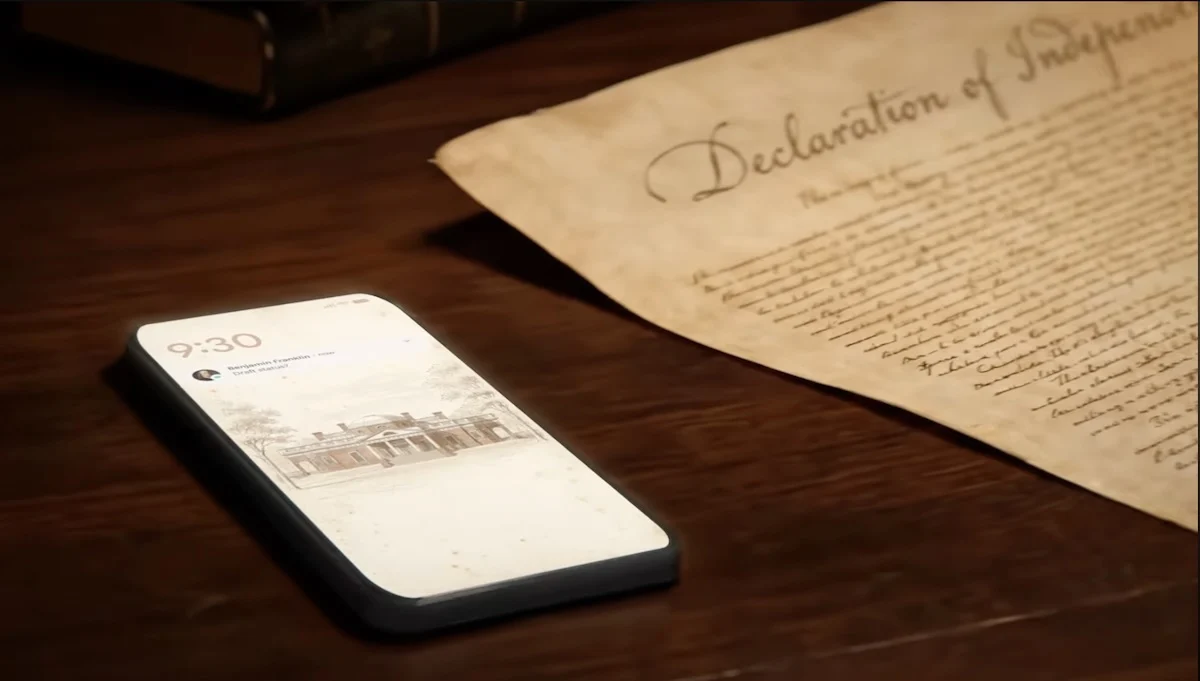
Two hundred and fifty years after the ink dried on the Declaration of Independence, the ghosts of the American Founding Fathers have been pulled into the modern digital workforce. In a new commercial campaign, Google imagines a world where the architects of American democracy were not quill-wielding revolutionaries in dimly lit Philadelphia rooms, but remote collaborators powered by Google Workspace and Gemini AI.
The advertisement, titled “Group Project, but make it 1776,” represents a calculated attempt by the tech giant to weave its suite of productivity tools into the very fabric of American mythology. However, as the ad permeates social media, it has triggered a polarized reaction, highlighting the deepening divide between corporate marketing strategies and public sentiment regarding the integration of Artificial Intelligence into human history and creative labor.
The Anatomy of the Campaign: A Chronology of a Digital 1776
The commercial opens on a familiar, albeit stylized, scene: Thomas Jefferson, largely hidden in the shadows, laboring over the draft of the Declaration. Suddenly, the stillness of the 18th century is shattered by the ping of a notification. Ben Franklin is texting.
A Timeline of the Narrative:
- The Draft Phase: Jefferson struggles with phrasing until Franklin nudges him via instant message, prompting a collaborative editing session within Google Docs.
- The Planning Phase: The founders utilize Google Calendar to coordinate the timing of the Continental Congress, ensuring that the rebellion doesn’t conflict with other colonial obligations.
- The Remote Meeting: A Google Meet session is initiated. In a nod to the modern remote-work era, the Founding Fathers appear as a grid of icons—most with their cameras turned off, creating a humorous, if slightly ironic, depiction of the "founders of democracy."
- The AI Integration: As the narrative progresses, Google’s AI tools take center stage. The founders use the “Help Me Visualize” tool to iterate through various animal options for the national seal. Gemini, Google’s flagship AI, acts as the meeting’s secretary, transcribing notes and organizing the chaotic discourse of the era.
- The Climax: In a final, tongue-in-cheek moment, the founders consult Gemini for advice on how to respond to King George III, ultimately deciding to revoke the monarch’s document access—a modern digital equivalent of treason.
The spot concludes with a burst of fireworks and a stylized sense of accomplishment, cementing the tagline: "Group project, but make it 1776."
The Technological Subtext: AI as the Silent Founding Father
While the commercial frames the technology as a productivity boon, it serves as a massive, high-budget showcase for Google’s current AI capabilities. Unlike previous attempts at AI-centric marketing—which have often been criticized for replacing human artistry with machine-generated content—this ad attempts a more nuanced approach.
The AI evangelism in this spot is relatively discreet. It does not suggest that Gemini wrote the Declaration of Independence itself, nor does it claim that the philosophical foundations of the United States were generated by an algorithm. Instead, it positions AI as a "force multiplier" for human intention. By focusing on mundane administrative tasks—scheduling, brainstorming symbols, and managing permissions—Google aims to demonstrate the utility of AI in everyday collaborative environments.
However, a critical observer might note that the video production itself carries the distinct, uncanny aesthetic of AI-generated or AI-assisted visuals. The lighting, the textures of the period clothing, and the fluid movements of the digital avatars suggest a production pipeline heavily reliant on the same generative tools the ad is marketing.
Cultural Reception: A Tale of Two Platforms
The reception of the commercial has been starkly binary, mapping neatly onto the distinct demographics of various social media platforms.
The YouTube and Instagram Sentiment
On platforms like YouTube and Instagram, where the commercial was primarily distributed as branded content, the reception has been largely positive. Users have praised the humor, the cleverness of the historical puns, and the lighthearted approach to a heavy historical subject. For many viewers, the ad successfully fulfills its primary objective: it is entertaining, memorable, and positions Google as the "essential infrastructure" of modern work.
The Bluesky Backlash
Conversely, the reaction on the decentralized platform Bluesky has been significantly more hostile. Tech critics, historians, and observers have labeled the ad as "cringey," "stunningly tone-deaf," and an affront to the gravity of the American Revolution.
Historian Angus Johnston was among the most vocal critics, noting the absurdity of applying 21st-century corporate productivity tools to the life-and-death stakes of the 18th century. Johnston observed that the ad inadvertently highlights a core limitation of AI marketing: "It’s amazing how little of this is actually AI," he remarked. "Even in a corny fantasy joke, it’s impossible to make the case that AI is a useful tool for political organizing, writing, or human collaboration."
Implications for Corporate AI Messaging
The divide in public opinion reveals a significant hurdle for tech companies: how to promote AI without alienating audiences who are increasingly skeptical of the technology’s influence on culture and history.
1. The Burden of "Tone-Deafness"
When a company as powerful as Google attempts to "gamify" the founding of a nation through the lens of a corporate software subscription, it risks appearing disconnected from reality. The American Revolution was a period of profound sacrifice, ideological struggle, and violence. By reducing this to a "group project," Google invites the accusation that it is trivializing history to sell cloud storage and AI subscriptions.
2. The AI-Generated Aesthetics
The use of AI to produce the commercial itself creates a recursive loop that many viewers find unsettling. When a company uses AI to create a video about the benefits of AI, it risks falling into the "uncanny valley," where the artificiality of the medium distracts from the message. If the viewers cannot tell what is real and what is synthesized, trust in the brand’s commitment to "authentic" human tools may diminish.
3. The Shift in Marketing Strategy
Google’s pivot away from the more aggressive AI-generated content seen in its previous, widely criticized "Dear Sydney" commercial—which featured a father using AI to write a fan letter for his daughter—shows that the company is learning. In that instance, the backlash was severe because the ad suggested that AI could replace a parent’s genuine emotional connection with their child. In the "1776" ad, Google plays it safer by keeping the AI focused on clerical work rather than creative expression or emotional labor.
Conclusion: A Mirror of the Modern Workplace
Ultimately, the "1776" campaign is less about the American Revolution and more about the anxiety of the modern worker. By projecting the "Google Workspace experience" onto the Founding Fathers, Google is validating the feeling that modern work is an endless stream of calendar invites, Slack messages, and document sharing.
Whether this makes the technology appear essential or merely exhausting remains an open question. For Google, the goal is to normalize the presence of Gemini in every aspect of the professional workflow. For the public, the commercial serves as a litmus test: are we ready to invite AI into the most sacred corners of our history, or are we witnessing the beginning of a cultural pushback against the encroachment of machine-generated narratives?
As the debate continues to unfold, one thing is certain: the conversation surrounding AI has moved far beyond the boardroom and into the heart of the national identity. Whether through a lens of innovation or a lens of absurdity, the technology is undeniably here to stay—even if it has to invent its own version of history to prove it.
 Asep Darmawan
 Siti Muinah
 Ali Ikhwan
