RIO DE JANEIRO, Brazil — As the dynamic industrial heartbeat of the Rio International Film Festival, RioMarket prepares for its upcoming October 1–11 run, positioning itself as a central nexus for international audiovisual trade. Returning to the sprawling, repurposed industrial warehouse in Rio’s port area—a legacy site revitalized for the 2016 Summer Olympics—the 2026 edition of RioMarket promises a transformative blend of cross-border partnerships, cutting-edge AI discussions, and a groundbreaking collaboration with social media titan TikTok.
With an ambitious agenda designed to scale the footprint of Brazil’s creative economy, RioMarket is expanding its global outreach. It is courting key international territories, bridging legacy cinematic artistry with digital-first content creation, andsoft-launching a revolutionary networking application intended to forever change how global film markets operate.
Main Facts
RioMarket 2026 brings together global executives, regional producers, and top-tier creative talent from October 1 through October 11, anchored by several major initiatives:
The TikTok Partnership: In a first-of-its-kind alliance, TikTok is joining forces with RioMarket to host an exclusive three-day intensive workshop. Forty hand-picked content creators from across Brazil will convene to refine their technical skills in directing, lighting, editing, screenwriting, and format development under the guidance of seasoned audiovisual professionals.
Global Networking App Launch: The event marks the soft launch of Connecting Screens, a new mobile app modeled after the Cannes Film Festival’s renowned Marché du Film networking platform, Cinando. Promoted as a cross between Tinder, LinkedIn, and Wikipedia, the application aims to streamline international co-productions by matching buyers and sellers seamlessly.
High-Profile Masterclasses and Panels: A major headlining event pairs two critically acclaimed auteurs face-to-face: Iran’s Academy Award winner Asghar Farhadi (A Separation, Parallel Tales) and Brazil’s cinematic luminary Walter Salles (Central Station, I’m Still Here).
Cross-Continental Alliances: RioMarket 2026 highlights a deliberate strategic pivot toward Asian markets, with strong delegations from China, India, and South Korea, alongside Russia, sitting alongside traditional North American and European partners. Spike Liu, president of China Year Technology, will lead a keynote on artificial intelligence in audiovisual production.
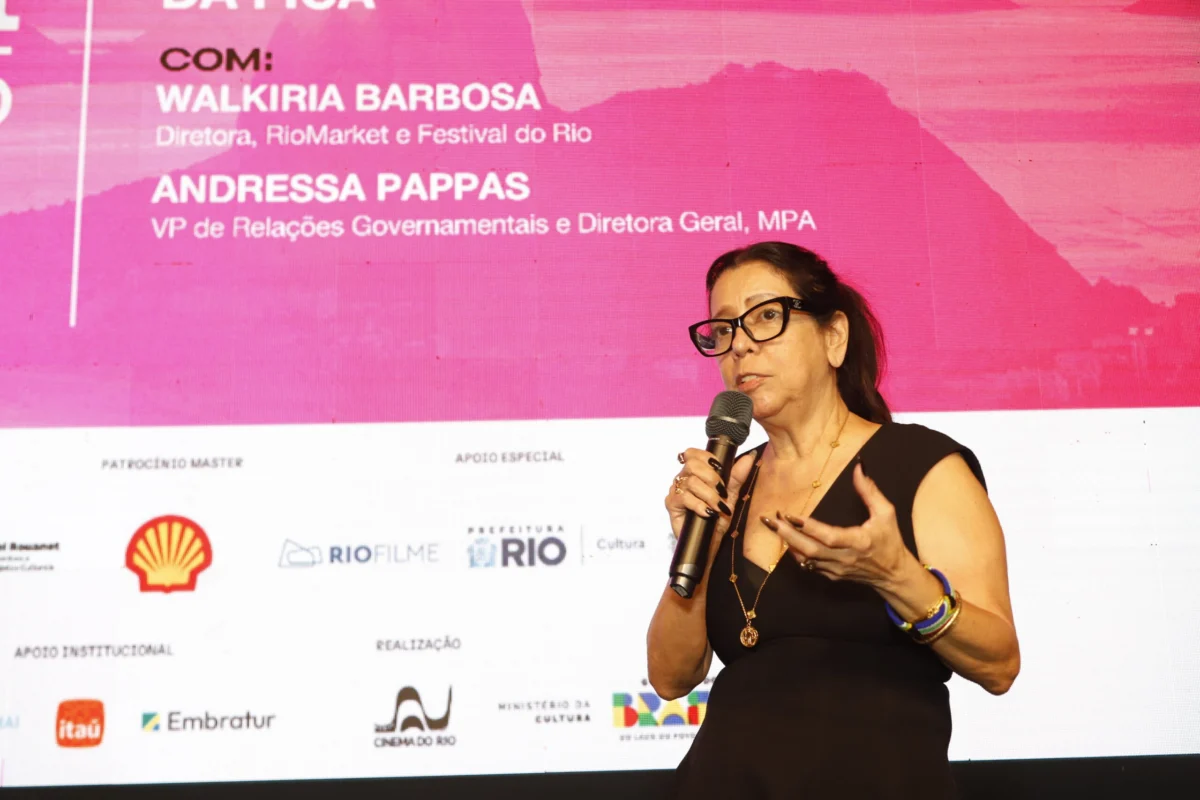
Economic Ambitions: Led by Walkiria Barbosa, executive director of the Rio Film Festival and president of the Audiovisual Industry and Commerce Federation (FICA), the market is championing a bold national initiative: to triple the audiovisual sector’s contribution to Brazil’s GDP over the next five years.
Chronology of Evolution: From Pandemic Adaptation to Global Hub
The operational trajectory of RioMarket reflects the broader structural shifts experienced by the global entertainment industry over the past half-decade.
The Pandemic Pivot (2020–2024)
Like many prominent festival markets, RioMarket was forced to rethink its foundational delivery mechanisms during the global health crisis. When physical attendance ground to a halt, organizers experimented with digital-first initiatives, discovering that virtual business-to-business (B2B) infrastructure could democratize access and bridge geographical divides.
The Pilot Program (2025)
Capitalizing on post-pandemic infrastructural insights, RioMarket 2025 introduced a pilot phase for online one-on-one business meetings. The experiment yielded immediate dividends, drawing applications from a diverse array of international companies, ranging from traditional film and television production houses to emerging streaming platforms, international distributors, and broadcast networks.
The Expansion and Ecosystem Integration (2026)
Building on the momentum of the 2025 pilot, RioMarket 2026 has institutionalized online business meetings as a permanent, expanded fixture. This year’s iteration also integrates secondary educational pathways—such as the Generation Program, which fosters children’s and teenagers’ media literacy through film—while cementing its structural symbiosis with the public-facing Rio Film Festival. As Ilda Santiago, Rio Fest’s executive director of programming and international projects, notes: "The market feeds the festival program, and the program, in turn, feeds the market. Today, no major film festival can afford to operate without a strong industry market."
Supporting Data and Key Industrial Metrics
To understand the weight of RioMarket 2026, one must look at the quantitative targets and structural metrics driving the Brazilian audiovisual sector today.
Current GDP Contribution: The Brazilian audiovisual industry currently accounts for 0.6% of the nation’s Gross Domestic Product (GDP).
The Five-Year Target: FICA and RioMarket leadership have established a clear economic mandate: to triple this economic share over the next half-decade, pushing the industry’s GDP contribution closer to 1.8%.
Strategic Growth Vectors: Achieving this growth requires a four-pronged approach:
Strengthening domestic production companies through capital access and international co-production frameworks.
Expanding the physical footprint of movie theaters across underserved regions of Brazil.
Accelerating technological development, particularly regarding artificial intelligence and digital distribution models.
Aggressively expanding the export volume of Brazilian cultural products to foreign territories.
The TikTok Cohort: Exactly 40 prominent digital creators from multiple Brazilian states have been invited to participate in the inaugural three-day content-enhancement workshop.
LatAm Content Meeting Synergy: The event also highlights non-fiction and documentary milestones, paving the way for the upcoming LatAm Content Meeting scheduled for September 2027 in São Paulo—a regional equivalent to the prominent international documentary market Sunny Side of the Doc.
Official Responses and Perspectives
Industry leaders speaking with Variety emphasized the paradigm shifts occurring at this year’s market:
"We ran a pilot last year, and we are going to expand it this year. During the pandemic, we learned that it is possible to do business online. We received applications from companies in several countries, including film and television production companies, streaming platforms, distributors, and television networks."
— Walkiria Barbosa, Executive Director of the Rio Film Festival and President of FICA
The integration of creator-economy platforms is a deliberate move to secure the future pipeline of entertainment consumption, according to TikTok Latin America representatives:
"The goal is to raise the quality of entertainment content production on TikTok by connecting creators with experienced audiovisual professionals. We believe Festival do Rio, which brings together the leading players in Brazil’s entertainment industry, is the ideal setting to launch this new model."
— Luciana Galastri, Head of Entertainment Partnerships at TikTok in Latin America
On the technological front, the development of the Connecting Screens app addresses a long-standing friction point in cross-border trade matching:
"While Cinando resembles Wikipedia, our app will be a sort of Tinder, LinkedIn, and Wikipedia. The idea is to match sellers and buyers of the audiovisual industry."
— Pedro Souza, President of the Financing Committee of FICA
Implications for the Global Audiovisual Landscape
The convergence of diverse economic models, technological experimentation, and institutional foresight at RioMarket 2026 carries several profound implications for the global film and television landscape.
1. Blurring the Lines Between Cinema and Digital Platforms
By embedding a major social media platform like TikTok directly into an elite film market, RioMarket is formally acknowledging that the pipeline for narrative entertainment no longer flows exclusively through traditional theatrical windows. Bringing 40 high-performing digital creators into direct contact with seasoned cinematic veterans helps bridge the technical divide between fast-turnaround short-form video and long-form narrative craft. The initiative ensures that emerging creators learn the foundational principles of lighting, mise-en-scène, and screenwriting, thereby elevating the baseline quality of digital content across Latin America.
2. The Shift Toward Multi-Polar International Trade
For decades, Latin American film markets relied primarily on a transactional axis anchored between South America, North America, and Western Europe. RioMarket 2026 signals a decisive shift toward a multi-polar trade model. By deliberately courting robust delegations from China, India, South Korea, and Russia, Brazilian producers are opening new avenues for cross-continental co-productions. Keynotes such as Spike Liu’s lecture on artificial intelligence in Chinese audiovisual production underscore how developing markets are collaborating to solve modern infrastructural and creative challenges.
3. Democratization of Co-Productions via Digital Infrastructure
The soft launch of Connecting Screens addresses a structural bottleneck in global film financing. By combining the database utility of Wikipedia with the direct matchmaking mechanics of modern networking apps, the platform removes administrative friction for independent producers. For an independent Brazilian documentary filmmaker or a South Korean streaming executive, the ability to initiate secure, targeted B2B interactions without navigating complex bureaucratic gates democratizes market access.
4. Macro-Economic Ambitions and Soft Power
The explicit goal to triple the audiovisual sector’s contribution to Brazil’s GDP over five years reflects a growing recognition of culture as a critical economic driver. Under the leadership of Walkiria Barbosa and FICA, RioMarket is not merely a cultural showcase; it is a strategic economic engine. By systematically boosting infrastructure, increasing exhibition screens, advancing technological adaptation, and driving content exports, Brazil is positioning its creative sector to become a powerhouse of the Southern Hemisphere’s contemporary economy.




 Ali Ikhwan
 Iffa Jayyana
 Siti Muinah
