

Published: September 27, 2026
Category: Media & Entertainment / Artificial Intelligence
Main Facts
Artificial intelligence has officially crossed over from tech-sector anxiety into mainstream pop culture satire. During its September 27, 2026 broadcast, Saturday Night Live (SNL) trained its satirical crosshairs on the booming, yet increasingly apocalyptic, narrative surrounding generative artificial intelligence.
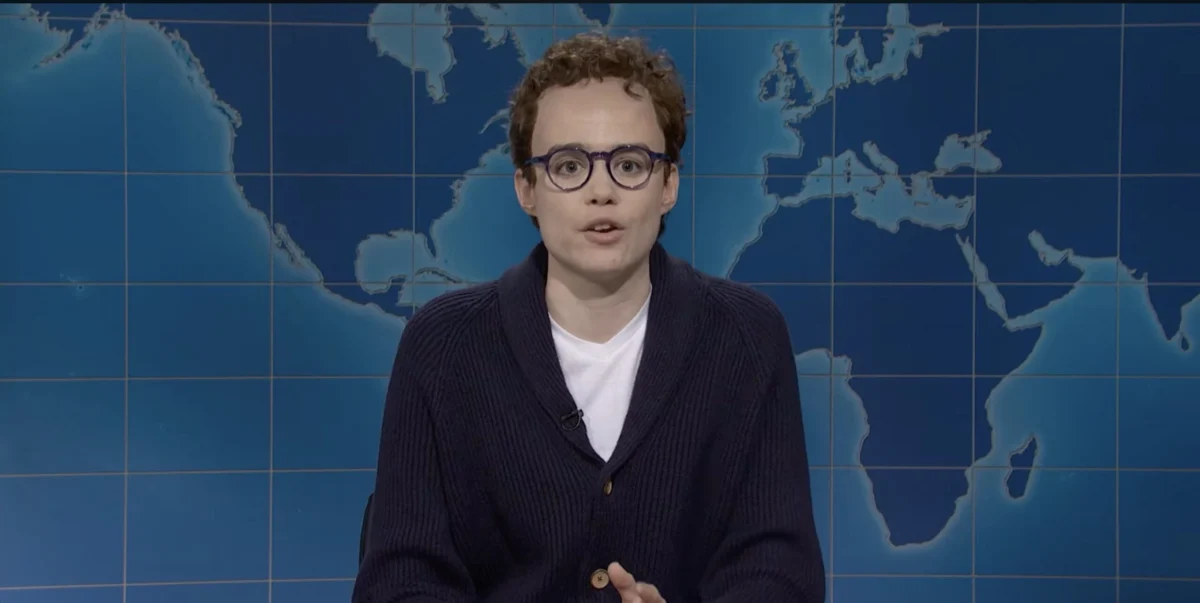
The focal point of the sketch was Anthropic CEO Dario Amodei, whose recent media blitz warning of potential existential threats posed by advanced AI systems became ripe for comedy. SNL cast member Jane Wickline debuted a memorable, wig-wearing impression of the tech executive during the show’s signature "Weekend Update" segment.
Co-host Michael Che—mockingly struggling to pronounce "Amodei"—introduced the segment by recounting how the CEO had recently "stumbled through a press tour" wherein he appeared to validate alarming claims made by a high-profile whistleblower. Wickline’s portrayal leaned heavily into the paradox of modern tech leadership: executives eagerly pushing humanity toward artificial general intelligence (AGI) while simultaneously acting as prophets of doom regarding its consequences.
The sketch highlighted a growing public cognitive dissonance: tech moguls reaping billions in venture capital while openly speculating whether their own creations might spell the end of the human race.
Chronology of Events
To understand how a niche debate among computer scientists and ethicists landed on the Studio 8H stage, it is necessary to examine the sequence of events leading up to SNL’s broadcast in late September 2026:
- August 16, 2026: Anthropic CEO Dario Amodei addresses widespread public pushback against rapid automation, framing the backlash not as a technical hurdle, but as a "crisis of trust." During this period, he highlights potential long-term medical breakthroughs, such as curing cancer, while acknowledging the profound societal disruptions AI might cause.
- September 9, 2026: Public anxiety spikes when an anonymous or high-profile Anthropic researcher abruptly resigns, publicly accusing leadership of "gambling with our lives." The researcher specifically warns against the dangerous acceleration of self-improving AI models that could soon outpace human oversight.
- Mid-September 2026: Amodei embarks on a high-profile media tour to address the resignation and wider safety concerns. Rather than fully quelling fears, his measured, hyper-cautious admissions about existential risks inadvertently fuel a new wave of media headlines regarding AI "doom."
- September 27, 2026: Saturday Night Live captures the cultural zeitgeist. Jane Wickline debuts her impression of Amodei on "Weekend Update," crystallizing the absurd reality of CEOs warning the public about the very monsters they are heavily funded to build.
Supporting Data: The Rise of the Tech "Doomer"
The satirical take on Saturday Night Live was not pulled from thin air; it reflected a genuine and escalating tension within Silicon Valley. Over the past several years, the discourse surrounding artificial intelligence has shifted dramatically from optimistic utopianism (predicting disease eradication and limitless clean energy) to dystopian fatalism.
Industry metrics and survey data leading into late 2026 indicate a sharp decline in public trust regarding tech governance:

- Existential Risk Estimates: Prominent industry labs, including Anthropic, OpenAI, and Google DeepMind, have frequently debated the statistical likelihood of catastrophic outcomes—with some internal researchers placing the odds of severe, uncontrollable societal disruption stemming from advanced AGI anywhere from 10% to over 50% within the decade.
- The Whistleblower Exodus: By late 2026, an estimated 15% to 20% of safety-focused researchers across major AI firms had either transitioned to academic oversight roles or resigned outright, citing commercial pressures that superseded safety protocols.
- The "Cure vs. Catastrophe" Paradox: As parodied by Wickline’s line—"In 10 years, there’s about a 10% chance that cancer won’t be a problem for anyone"—executives have increasingly balanced massive promises of medical salvation against casual acknowledgments of existential collapse, a rhetorical tightrope that late-night comedy found impossible to ignore.
Official Responses and Industry Reactions
As of Sunday afternoon, neither Anthropic nor Dario Amodei has issued a formal statement regarding Wickline’s comedic portrayal. However, tech industry insiders and online commentators have largely embraced the satire, viewing it as a bizarre rite of passage.
In the hyper-accelerated ecosystem of modern technology, being parodied on Saturday Night Live is often viewed as a cultural benchmark, signaling that a company or executive has entered the public consciousness beyond the confines of financial news and trade publications.
Earlier in the month, following the researcher’s resignation and the subsequent media scrutiny, Anthropic released a brief corporate blog post reiterating its commitment to "responsible scaling policies" and constitutional AI development. The company emphasized that rigorous debate regarding safety is a feature—not a bug—of its institutional culture. However, critics noted that internal safety debates have increasingly leaked into public forums, creating the exact brand of chaotic, self-contradictory messaging that SNL mocked so effectively.
Implications: Where Satire Meets Reality
The comedic treatment of Dario Amodei on Saturday Night Live underscores a profound cultural shift. For decades, tech founders like Steve Jobs or Bill Gates were parodied as visionary, albeit eccentric, messiahs promising a brighter, more streamlined future. Today, the archetype of the tech CEO has transformed into something far more conflicted—akin to a modern-day Dr. Frankenstein who has built a marvelous machine, realizes it might destroy the village, but continues to optimize its code anyway because of competitive market pressures.
1. The Normalization of Existential Dread
When mainstream comedy shows begin cracking jokes about human extinction via neural networks, it signals that existential risk has been thoroughly normalized in the public psyche. Citizens are no longer shocked by headlines warning of superintelligent systems; instead, they expect billionaires to wring their hands on television while announcing their next multi-billion-dollar compute cluster.
2. The Perils of Corporate Transparency
Amodei’s willingness to engage with hard questions—unlike peers who dismiss safety concerns as science fiction—has earned him respect among ethicists, but it has also made him an easy target for satire. The SNL sketch illustrates a cruel communication paradox for ethical tech leaders: downplay the risks, and you are accused of recklessness; acknowledge the risks honestly, and you look like a terrified prophet urging the world to stop you from succeeding.
3. The Weaponization vs. Utility Debate
One of Wickline’s sharpest lines—"AI is not a weapon, it’s a tool: A tool for building weapons"—hits at the heart of current geopolitical and defense anxieties surrounding dual-use technology. As large language models and autonomous agents are increasingly integrated into enterprise, logistics, and national security infrastructure, the line between commercial innovation and military application is rapidly blurring.
Conclusion
Saturday Night Live‘s skewering of Dario Amodei and Anthropic is more than just a fleeting late-night laugh; it is a cultural mirror reflecting our collective unease with the current trajectory of technological development. As artificial intelligence continues to reshape the boundaries of labor, creativity, and human agency, the tech industry’s frantic race forward will undoubtedly continue to provide rich material for comedians, ethicists, and satirists alike. Whether Silicon Valley’s leaders will heed the artistic warnings—or simply laugh them off in the next quarterly earnings call—remains to be seen.
 Asep Darmawan
 Siti Muinah
 Ali Ikhwan
