

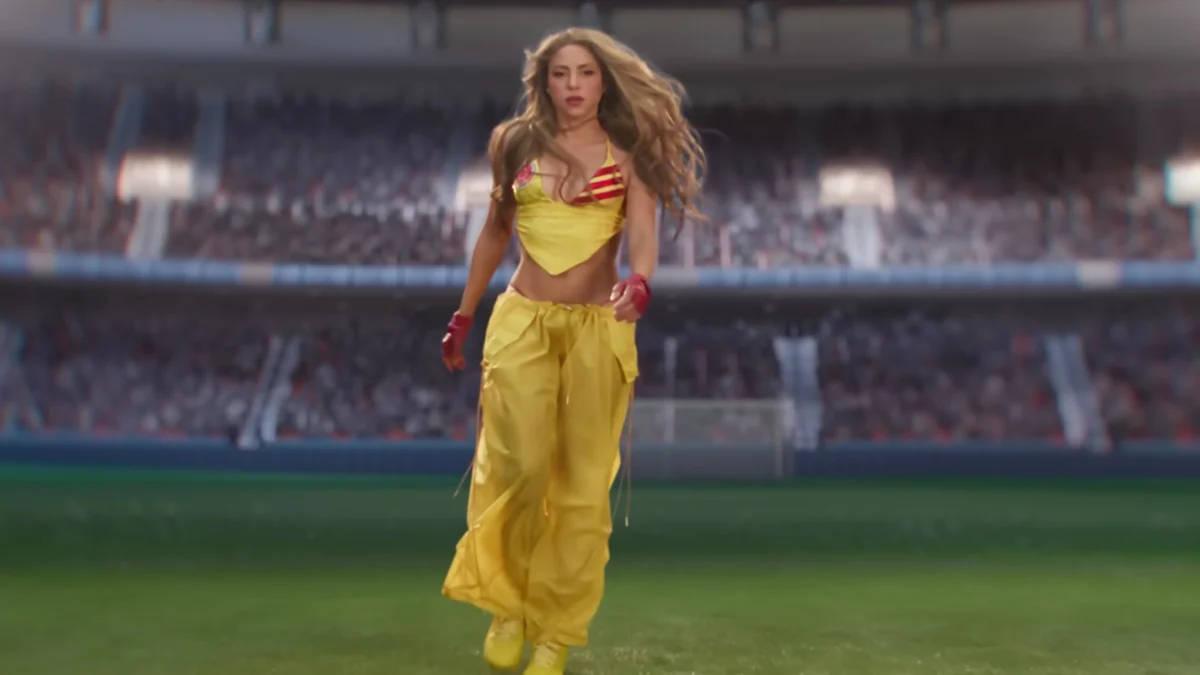
In the high-stakes world of global pop superstardom, few artists understand the intersection of choreography, vocal performance, and visual spectacle as intimately as Shakira. The Colombian icon, whose career spans over three decades, has consistently utilized fashion as an extension of her musical narrative. Her most recent performance, which has sent social media into a frenzy, serves as a masterclass in modern stage styling. By blending athletic functionality with high-fashion provocation, Shakira has once again solidified her status as a cultural trendsetter, proving that her influence extends far beyond the recording studio.
Main Facts: The Anatomy of a Viral Look
The performance in question, which saw the "Waka Waka" singer command a field-inspired stage, was defined by a bold, monochromatic yellow ensemble. At the heart of the look was a daring, asymmetrical cropped top that showcased the performer’s well-documented athletic prowess. However, it was the lower half of the outfit that dominated the discourse.
Shakira opted for ultra-low-rise, sheer, baggy trousers that pushed the boundaries of traditional stage attire. The garment’s translucent quality provided a dynamic visual element, shifting with every move of her signature, high-energy choreography. A deliberate styling choice—a thin, vibrant red thong waistband peeking above the low-slung trousers—served as a focal point that sparked widespread online debate and admiration. To ground the ethereal, sheer fabric, the ensemble was completed with coordinating yellow performance sneakers and contrasting red wrist wraps, successfully bridging the gap between high-octane pop performance and athletic streetwear.
Chronology: A Career Built on Visual Evolution
To understand the weight of Shakira’s current aesthetic shift, one must contextualize it within her broader career trajectory.
The Early Years: Earthy and Authentic
In the late 1990s and early 2000s, Shakira’s aesthetic was defined by a bohemian, "rock-chic" sensibility. Her leather pants, belly-dancing-inspired hip scarves, and raw, wavy hair became synonymous with the "Laundry Service" era. During this time, fashion was secondary to the raw, visceral power of her songwriting and vocal delivery.
The "Hips Don’t Lie" Era: Polished Pop Stardom
As she pivoted toward a global English-speaking audience, her style became more curated. The mid-2000s saw the introduction of high-end designers, more complex silhouettes, and the solidification of the "Shakira" brand as a global commodity. It was during this period that she began to experiment with the juxtaposition of femininity and athleticism.
The Modern Era: The Avant-Garde Performer
Following her historic Super Bowl LIV Halftime Show performance in 2020, Shakira’s style took a turn toward the architectural. She began embracing more structured pieces, bold colors, and materials that interact with light and motion. The current "sheer and baggy" aesthetic represents a departure from the tight, glittering gowns of her early pop years, favoring a look that prioritizes fluidity and the "street-to-stage" transition.
Supporting Data: The Science of Stage Presence
The efficacy of Shakira’s latest look is not merely a matter of taste; it is a calculated effort in performance engineering.
Textile Dynamics in Choreography
For a performer like Shakira, whose dance routines are characterized by rapid hip movements and intricate footwork, the physics of clothing is paramount. The choice of sheer, lightweight fabric for her trousers serves two purposes:
- Aerodynamics: The baggy fit allows for a greater range of motion, preventing the restriction often associated with denim or heavy synthetic materials.
- Visual Amplification: As the fabric moves, it creates a "trailing" effect, making her movements appear more fluid and expansive to audiences sitting in the back rows of large stadiums.
The Psychology of the "Low-Rise" Trend
Fashion historians and industry analysts note that the return of the low-rise aesthetic is a deliberate nod to 2000s nostalgia, currently a dominant force in youth culture. By integrating the "visible waistband" detail, Shakira is tapping into the "Y2K" revival, effectively bridging the generational gap between her long-term fanbase and the Gen Z audience that has discovered her music through viral digital platforms.
Official Responses and Public Reception
The viral nature of the performance has elicited a wide range of responses from the fashion and music communities. While fans on platforms like X (formerly Twitter) and Instagram have lauded the look for its confidence and "cool factor," professional stylists have offered a more analytical perspective.
"What Shakira has done here is redefine the ‘pop star uniform,’" says a leading celebrity stylist who requested anonymity to speak on industry trends. "She is moving away from the traditional, sequined showgirl aesthetic and toward something that feels more grounded in the reality of the modern street. It’s provocative, yes, but it’s also undeniably functional. She’s signaling that she is as much an athlete as she is a pop icon."
While no official statement has been issued by Shakira’s creative team, the buzz surrounding the look has been acknowledged by fashion publications, which have already begun citing the "yellow-and-red" color palette as a potential trend for the upcoming festival season.
Implications: The Business of Being Shakira
Shakira’s ability to remain at the center of the cultural conversation is not accidental; it is a byproduct of a sophisticated personal branding strategy.
Cultural Longevity and Relevance
In an industry that often discards female artists as they age, Shakira’s ability to pivot her image—while remaining true to her core identity—is a masterclass in longevity. By wearing outfits that challenge traditional expectations of "age-appropriate" stage wear, she is reclaiming her narrative and asserting her agency. She is not performing for a demographic; she is setting the parameters for what it means to be a modern icon.
The Economics of Performance Fashion
Every choice made by a star of Shakira’s magnitude has economic ripple effects. The immediate interest in the "yellow sheer pants" look drives engagement across multiple verticals:
- Brand Collaborations: Designers associated with such high-visibility looks often see a surge in brand equity.
- Social Media Velocity: The "meme-ification" of her performance outfits creates a feedback loop, driving streams to her music and ticket sales for her tours.
- Cultural Impact: By staying at the forefront of fashion, Shakira ensures that she is not just remembered for her past hits, but is actively participating in the current zeitgeist.
Looking Ahead: The Future of the Pop Aesthetic
As we look toward the future of global entertainment, it is clear that the role of the performer is shifting. It is no longer enough to possess a powerful voice; one must also curate a visual identity that is shareable, memorable, and replicable. Shakira’s latest look serves as a benchmark for this new reality.
Her embrace of the sheer, the asymmetrical, and the unexpected demonstrates a fearlessness that many of her contemporaries lack. By leaning into her toned physique and using it as a canvas for high-fashion experimentation, she challenges the industry to rethink its standards.
Whether she is topping the charts with a new single or dominating the news cycle with a daring wardrobe choice, Shakira remains a force of nature. Her latest look is not just a fashion statement; it is a declaration of presence. In an era of manufactured celebrity, Shakira reminds us that true stardom is about the synthesis of talent, charisma, and the courage to wear—and do—exactly what one wants, regardless of the noise.
As she continues her tour, fans and fashion critics alike will undoubtedly keep a watchful eye on her stage wardrobe, anticipating the next iteration of a style that is as dynamic, vibrant, and enduring as the woman herself. Shakira isn’t just following trends; she is, as she has been for decades, setting the pace for everyone else to follow.
 Neng Nana
 Azzam Bilal Chamdy
 Nana
Nana
