

By Dominika Tomaszewska-Mortimer, Geneva
9 June 2026
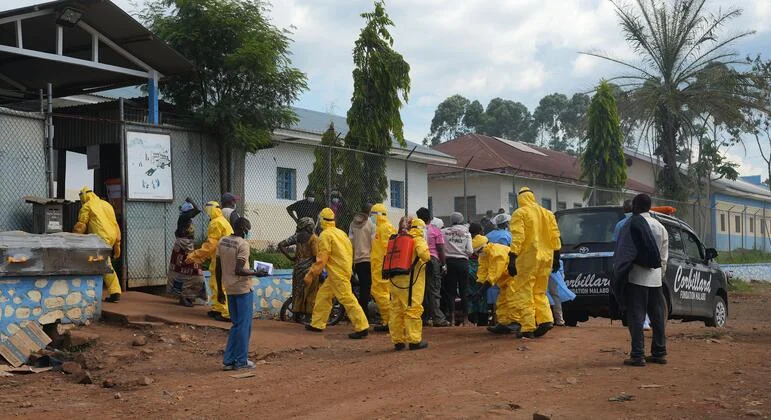
In the dense, sprawling provinces of eastern Democratic Republic of the Congo (DRC), a critical battle is being waged against one of the world’s most lethal pathogens. The Bundibugyo species of the Ebola virus—a rare and particularly virulent strain—has triggered a swift and aggressive response from international health authorities. However, as the World Health Organization (WHO) reported on Tuesday, the strategy currently being employed is yielding tangible results, centered on a two-pronged approach: the radical decentralization of laboratory testing and the cultivation of deep, grassroots trust within affected communities.
Main Facts: The Current State of the Outbreak
The current Ebola outbreak, while geographically contained, remains a high-stakes emergency. According to the latest data provided by Dr. Abdirahman Mahamud, the WHO’s Health Emergency Alert and Response Operations Director, the DRC has recorded 550 confirmed cases of the virus, resulting in 101 fatalities as of June 8, 2026.
While these figures are sobering, they are accompanied by a vital indicator of progress: 19 individuals have officially recovered from the virus. This statistic is being heralded by health experts as proof that early identification and prompt medical intervention are the most effective tools in preventing mortality.
The outbreak has not remained confined to the DRC; the virus has crossed the border into neighboring Uganda, where 19 confirmed cases and two deaths have been reported. A third individual, classified as a "probable" case, has also succumbed to the disease. Despite this cross-border spillover, the WHO has emphasized that there is currently no evidence of sustained community transmission within Uganda, suggesting that surveillance measures are successfully identifying imported cases before they can propagate.
Chronology: A Race Against Time
The trajectory of this outbreak has been defined by the speed at which it moves and the agility of the response. The Bundibugyo strain is notoriously rapid in its clinical progression, leaving little room for error.
- Early Phase: Upon the initial detection of the outbreak, the primary challenge was the vast, rugged terrain of the eastern DRC provinces—Ituri, North Kivu, and South Kivu. These regions, combined, cover a landmass roughly the size of France, creating significant logistical hurdles for health responders.
- Scaling Up: Recognizing that centralized testing was causing life-threatening delays, the WHO and local government partners began an aggressive "decentralization" strategy. By shifting the capability for virus identification closer to the epicenter, the turnaround time for test results was slashed from 24 hours to as little as one to two hours in major hubs like Bunia.
- The Present: As of June 6, the response had identified 5,040 direct contacts of infected individuals. Health workers are currently monitoring these individuals to ensure they receive immediate care should symptoms arise.
- The Immediate Future: The WHO is continuing its expansion of laboratory infrastructure. A new, fully functional facility in Mongbwalu is now operational, and an additional laboratory in the remote border town of Aru is scheduled to open this Friday.
Supporting Data: The Logistics of Containment
The logistics of managing an Ebola outbreak in a region as geographically challenging as the eastern DRC cannot be overstated. To understand the scale of the WHO’s intervention, one must look at the data-driven approach to resource allocation.
The Lab Infrastructure
Testing is the backbone of the containment strategy. Before the current decentralization, samples had to be transported across treacherous roads and remote trails, sometimes taking half a day to reach a laboratory. The WHO has now established field laboratories in five critical areas. The impact on clinical outcomes is direct: when a patient’s status is confirmed within hours, they can be admitted to an Ebola Treatment Centre (ETC) before their condition deteriorates, thereby increasing their chances of survival.
Contact Tracing Efficiency
The "gold standard" for controlling an Ebola outbreak is the 90-95% contact tracing threshold. Currently, the response teams are reaching 62% of identified contacts. Dr. Mahamud acknowledges that while this is a "slow and steady" progression, the trend lines are moving in the right direction. The goal is to reach the 90% threshold in the coming weeks, a feat that requires both human resources and the logistical support of over 100 WHO personnel currently deployed on the ground.
Material Support
The logistical footprint of the response includes the delivery of 40 tonnes of medical supplies and specialized equipment. This includes Personal Protective Equipment (PPE) for healthcare workers, reagents for laboratory analysis, and the construction of modular treatment centers that can be rapidly deployed to hotspots.
Official Responses and the Strategy of Trust
The success of the DRC response is not merely a matter of equipment and medicine; it is, fundamentally, a matter of human relations. Dr. Mahamud emphasized that the system is only as strong as its weakest link, which is often the interface between the patient and the healthcare system.
"The rise in confirmed cases is due to the scale-up of testing," Dr. Mahamud explained during his briefing in Geneva. By removing the barriers to testing, the WHO has encouraged more people to come forward, thereby preventing "silent" chains of transmission.
However, the WHO official was quick to credit local healthcare workers as the heroes of the operation. "We have a well-functioning system that is integrated from surveillance to contact tracing to the treatment center and to the lab," he said. This integration relies on the local staff who understand the cultural nuances of the region. Building trust means ensuring that communities understand that an ETC is a place of healing, not a place of isolation or abandonment.
The WHO’s strategy involves working hand-in-hand with the DRC government. By supporting state-led efforts, the international community is ensuring that the infrastructure—such as the new lab in Aru—remains as a permanent legacy of the response, strengthening the nation’s overall health security long after the current outbreak is contained.
Implications: A Model for Future Epidemics
The current Ebola response in the DRC provides a blueprint for how to handle emerging infectious diseases in resource-limited or geographically isolated settings. The key takeaways for the global health community are threefold:
- Decentralization is Non-Negotiable: The "hub and spoke" model of laboratories, where high-tech diagnostic capabilities are brought to the doorstep of remote communities, is essential to cutting transmission chains.
- Community Trust is the Foundation: Without the cooperation of the local population, even the most advanced medical technology will fail. The integration of community leaders and local health workers into the response team is the only way to ensure high contact-tracing rates.
- Data Integration: The ability to share data across provinces in real-time allows commanders of the response to pivot resources to where they are needed most. The "slow and steady" progress in the DRC is, in reality, a masterclass in modern epidemiological management.
As the response enters its next phase, the focus will remain on the border regions and the "last mile" of contact tracing. While the challenge of limited connectivity and rugged topography remains, the establishment of labs in remote areas like Aru suggests that the international health apparatus is learning to adapt to the realities of the field.
The international community is watching closely. The success in containing the Bundibugyo strain will depend on the continued flow of resources, the steadfast commitment of local health workers, and the ability to maintain the delicate balance of public health interventions and community trust. As Dr. Mahamud noted, every recovered patient is a testament to the fact that while the virus is deadly, the response is proving to be, incrementally, more effective.
For those following the situation, the WHO continues to provide daily updates to the public, emphasizing that transparency is as vital as medicine in the fight against Ebola. The path ahead remains difficult, but with the current systems in place, the hope for an end to the outbreak is grounded in the reality of hard work, science, and the resilience of the Congolese people.
 Lina Hope
 Asro
Asro
 Layla Zulfa
