

Main Facts
The 2026 Emmy Awards ceremony delivered its customary mix of high-stakes television triumphs, emotional tributes, and industry celebrations. Yet, as the house lights dimmed and the telecast transitioned into its solemn annual tradition, a familiar cycle of post-show controversy immediately took root. The "In Memoriam" segment—a broadcast staple designed to honor television professionals who passed away over the preceding year—quickly became the subject of intense public scrutiny, social media backlash, and journalistic investigation.
While the segment featured poignant moments, including a widely praised live musical performance by singer-songwriter Noah Kahan, who delivered a stirring cover of Simon & Garfunkel’s classic "Bridge Over Troubled Water," the broadcast’s editorial omissions soon overshadowed the artistry of the tribute. According to reports following the broadcast, the Television Academy’s selection committee excluded several prominent television veterans, genre icons, and beloved character actors from the on-screen montage.
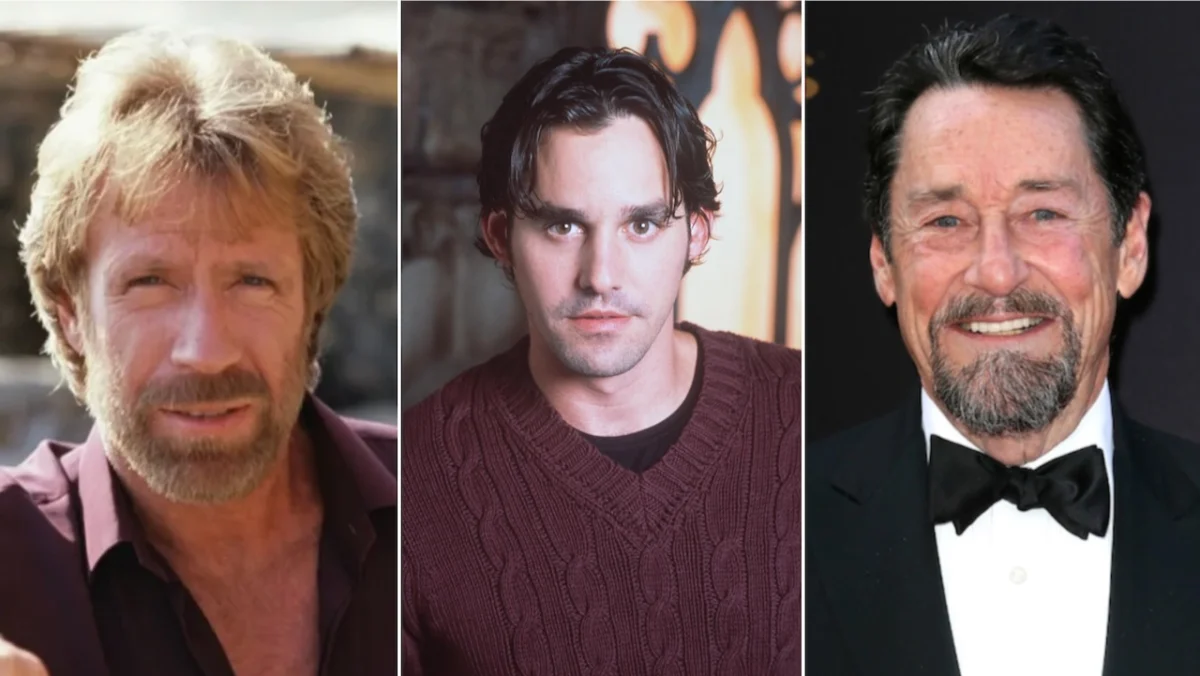
Among the notable figures left out of the televised broadcast were legendary action star and television fixture Chuck Norris (Walker, Texas Ranger); prolific voice acting pioneers Peter Cullen, widely revered globally as the definitive voice of Optimus Prime in the Transformers franchise, and Tom Kane, celebrated for his work as Yoda in Star Wars: The Clone Wars; Big Love actress Daveigh Chase; and Days of Our Lives star Patrick Muldoon.
Perhaps most glaring to television fandoms was the exclusion of Nicholas Brendon, best known for playing Xander Harris in the era-defining cult phenomenon Buffy the Vampire Slayer. Brendon’s omission felt particularly disjointed to viewers given that the overarching telecast heavily leaned into nostalgia for the series. Not only was Brendon’s late co-star Anthony Head included in the televised tribute, but the broadcast itself featured a celebrated, high-profile on-screen Buffy reunion between series leads Sarah Michelle Gellar and David Boreanaz.
While the segment did pay tribute to a heavyweight roster of industry legends—including Rob Reiner, Sam Neill, Tim Curry, Isaiah Whitlock Jr., James Van Der Beek, Catherine O’Hara, Robert Duvall, and Dolly Parton—the glaring omissions exposed the persistent structural challenges, curation bottlenecks, and agonizing choices facing the producers of live awards show tribute montages.
Chronology of the 2026 Emmy Awards Tribute and Aftermath
To understand how an omission of this magnitude unfolds, it is helpful to examine the timeline of events leading up to, during, and immediately following the 2026 Emmy telecast.
Pre-Broadcast Production (Months Leading to September 2026)
Months before the broadcast, the Television Academy’s archival and production teams began compiling the master database of television professionals who passed away since the previous Emmys ceremony. This working list grows continuously, incorporating actors, directors, writers, producers, stunt coordinators, and behind-the-scenes crew members. Producers must weigh the relative prominence of hundreds of candidates against strict time constraints imposed by network television schedules.
The Live Broadcast (September 2026)
During the live telecast, Noah Kahan took the stage to perform "Bridge Over Troubled Water." As images scrolled across the giant screens above the stage, viewers watched emotional tributes to giants of the medium, such as Rob Reiner and Tim Curry. Within minutes of the montage ending, however, entertainment reporters, pop culture historians, and sharp-eyed fans began cross-referencing the on-screen names with the broader registry of television figures who had passed away during the eligibility window.
Immediate Social Media Backlash (Late Night, September 2026)
As the ceremony concluded, platforms like X (formerly Twitter) lit up with threads cataloging the missing names. Posts highlighting the absences of Peter Cullen and Chuck Norris quickly gained traction. Buffy the Vampire Slayer fans expressed outrage over Nicholas Brendon’s exclusion, especially juxtaposed against the nostalgic reunion of Gellar and Boreanaz earlier in the evening.
Journalistic Follow-Up and Industry Analysis (Days Following)
By the morning after the ceremony, entertainment trade publications, most notably The Hollywood Reporter, published deep-dive analyses listing the snubbed individuals. The oversight triggered broader industry conversations about the mechanics of awards-show memory, the historical under-representation of voice actors and genre television stars, and the urgent need for transparency in how the Television Academy curates its final list.
Supporting Data: The Anatomy of Emmy Omissions
The exclusion of Chuck Norris, Nicholas Brendon, Peter Cullen, Tom Kane, Daveigh Chase, and Patrick Muldoon is not an isolated incident in the history of major awards shows. Year after year, the Academy Awards, the Grammy Awards, and the Emmy Awards face rigorous public criticism for leaving out beloved figures.
To contextualize the 2026 controversy, it is essential to examine the scope of contributions made by the omitted figures:
- Chuck Norris: Beyond his global cinematic footprint, Norris cemented his legacy in television history through his iconic eight-season run on CBS’s Walker, Texas Ranger (1993–2001), a series that defined Friday-night television for millions of households and remains a foundational property in procedural action drama.
- Peter Cullen: In the realm of animation and commercial voiceover, few figures carry the cultural gravity of Peter Cullen. For decades, his resonant, authoritative baritone breathed life into Optimus Prime across multiple animated series, feature films, and video games, shaping the childhoods of generations of viewers. Voice actors historically struggle to receive parity in mainstream television awards, making Cullen’s omission a sore point for animation advocates.
- Tom Kane: A titan of modern voice acting, Kane lent his extraordinary vocal talents to iconic roles including Yoda in Star Wars: The Clone Wars, Professor Utonium in The Powerpuff Girls, and Magneto in various Marvel adaptations. His contributions to prestige television animation made his absence from the segment starkly noticeable.
- Nicholas Brendon: As a core member of the "Scooby Gang" in Buffy the Vampire Slayer, Brendon appeared in 143 episodes across all seven seasons of one of the most influential programs of the late 20th century. His exclusion stung deeply among the fandom, particularly given the show’s prominent presence elsewhere in the evening’s programming.
These omissions highlight a systemic tension within the television industry: how to equitably honor artists who worked across disparate mediums—live-action drama, network sitcoms, syndicated action, daytime soap operas, and voice acting—within a rigid two-to-three-minute broadcast window.
Official Responses and Industry Dynamics
As public pressure mounted in the days following the 2026 telecast, representatives for the Television Academy and the broadcast’s production team faced intense questioning regarding the curation process.
Historically, the Academy issues a standard defense when facing In Memoriam backlash: space and time limitations. With hundreds of industry professionals passing away annually, producers are forced to make agonizing editorial cuts. The broadcast version of the segment typically features a curated "short list" of individuals who achieved mainstream crossover fame, major industry awards, or historical significance to the medium, while a more comprehensive, expanded registry is published on the official Emmy website.
However, industry insiders and talent unions have increasingly pushed back against this rationale, arguing that production companies prioritize marquee star power over the democratic representation of television’s diverse workforce. When an actor like Anthony Head receives an on-screen tribute while his principal co-star of seven seasons, Nicholas Brendon, is omitted, it points less to a strict mathematical constraint and more to subjective editorial curation—or, in worst-case scenarios, administrative oversight.
Furthermore, advocacy groups representing voice actors and stunt performers have long argued that behind-the-scenes talent and specialized performers are disproportionately filtered out of televised tributes. Despite animation and voice acting driving billions of dollars in television revenue and cultural engagement, performers like Peter Cullen and Tom Kane frequently find themselves relegated to digital-only appendices rather than prime-time memorial montages.
Implications for Future Telecasts
The 2026 Emmy Awards In Memoriam controversy serves as a cautionary tale for future awards show producers. As television continues to fragment across streaming platforms, cable networks, and syndicated avenues, defining who belongs in the pantheon of television history becomes increasingly complex.
1. The Call for Expanded Formats
Many critics and entertainment journalists are advocating for a restructuring of how the In Memoriam segment is delivered. Rather than compressing hundreds of deaths into a rapid-fire montage accompanied by a single musical performance, broadcasters could leverage digital platforms. A hybrid model—featuring a concise, universally agreed-upon marquee tribute during the live broadcast, seamlessly paired with an exhaustive, searchable, on-screen QR-code or dedicated streaming companion gallery honoring every registered industry member—could mitigate public outrage.
2. Greater Transparency in the Selection Process
The Television Academy may need to demystify the criteria used by its selection committees. By providing clear guidelines on how individuals are vetted and prioritized for the televised portion versus the online registry, the Academy can manage public expectations and preempt accusations of bias or neglect.
3. Valuing Genre and Alternative Television Work
The outcry over the omissions of Chuck Norris, Peter Cullen, and Nicholas Brendon underscores a lingering industry bias against genre television—specifically action, soap operas, animation, and cult sci-fi/fantasy. As these genres continue to anchor the modern television economy, awards ceremonies must adapt their cultural lens to fully recognize the artists who built these vital ecosystems.
Ultimately, while the 2026 Emmys will be remembered for their exceptional artistic winners and memorable reunions, the In Memoriam controversy leaves a complex legacy. It reminds us that television is deeply personal to its audience; when beloved figures are left unacknowledged on television’s biggest night, the sting of their absence resonates far beyond the screen.
 Asro
Asro
 Lina Irawan
 rifanmuazin
