

By Ari Notis, Deputy Editor of Games
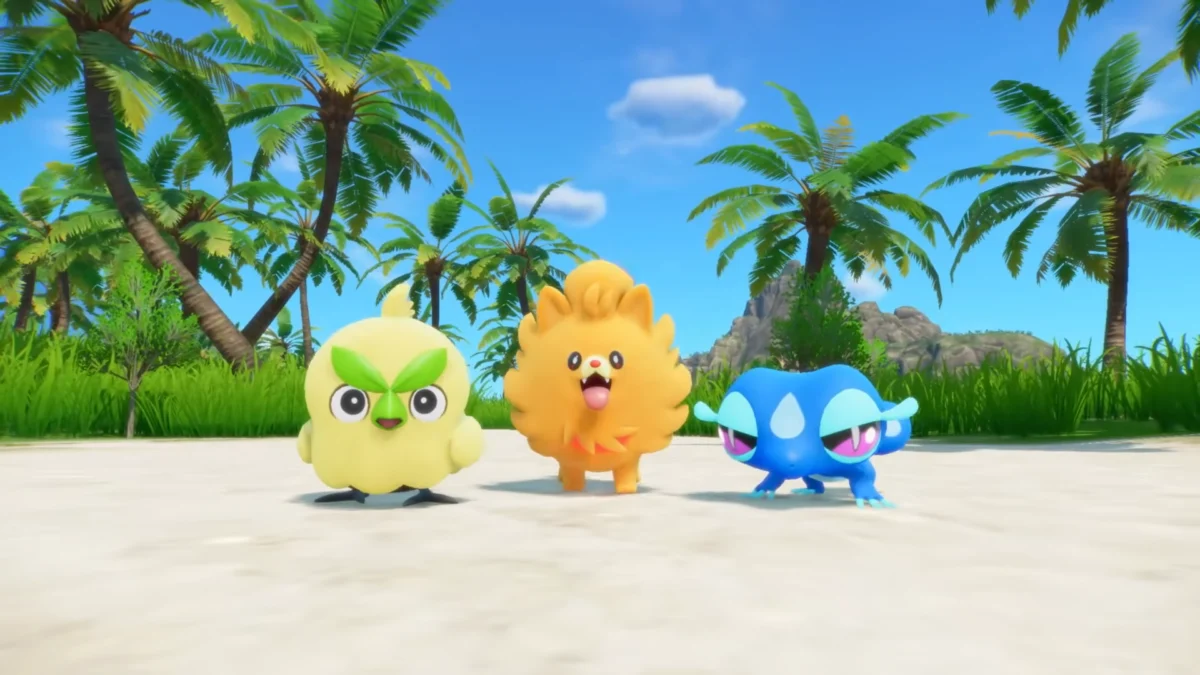
Rumors swirling around this summer’s heavily anticipated, yet unconfirmed, Pokémon Winds and Pokémon Waves have sent shockwaves through the global creature-collecting community. According to a wave of leaks and industry whispers, next year’s mainline entries could introduce a staggering 300 new Pokémon to the franchise.
For any rational observer, these reports must be taken with a heavy dose of skepticism—or, in franchise parlance, an entire Stantler lick of salt. Yet, even if these leaks ultimately prove to be wide of the mark, the sheer magnitude of the rumor has sparked an intense debate. If Game Freak truly intends to unleash 300 new monsters into the wild, it would shatter every historical precedent set over nearly three decades of Pokémon history. It raises a fundamental, pressing question for modern gaming: Can a franchise nearly 30 years old sustain this level of expansion without compromising quality, balance, and design integrity?
Main Facts: Breaking Down the 300-Pokémon Rumor
To understand why a 300-monster debut is causing such profound anxiety among longtime fans, one must look at the sheer scale of the proposal. If the leaks hold true, Pokémon Winds and Pokémon Waves will feature the largest single-generation expansion in the history of the franchise, easily eclipsing the previous record-holders.
While some insiders have tried to temper expectations by noting that the 300-figure likely includes regional variants, alternate forms, and evolutionary branches rather than 300 entirely distinct biological concepts, seasoned players argue that the distinction is largely academic. A regional variant like Alolan Ninetales functions as a completely new creature on the battlefield. It boasts an entirely different typing (Ice/Fairy instead of pure Fire), a unique visual design, a specialized movepool, and an entirely distinct competitive profile that players must memorize whether they are deploying it or defending against it.
Whether an addition is born from a brand-new concept or a localized mutation, integrating 300 variations into a single release represents an unprecedented paradigm shift for Game Freak and Nintendo.
Chronology of Generation Sizes: A Historical Perspective
To fully grasp how radical a 300-Pokémon generation would be, it helps to examine how the Pokedex has expanded since the late 1990s. Data tracking from trusted community resources like Serebii illustrates how Game Freak has traditionally paced its monster introductions:
- Generation 1 (Red/Blue/Yellow, 1998): 151 Pokémon
- Generation 2 (Gold/Silver/Crystal, 2000): 100 Pokémon
- Generation 3 (Ruby/Sapphire/Emerald, 2003): 135 Pokémon
- Generation 4 (Diamond/Pearl/Platinum, 2007): 107 Pokémon
- Generation 5 (Black/White, 2011): 156 Pokémon (the previous record for a wholly new regional dex)
- Generation 6 (X/Y, 2013): 72 Pokémon
- Generation 7 (Sun/Moon, 2016): 88 Pokémon
- Generation 8 (Sword/Shield, 2019): 96 Pokémon
- Generation 9 (Scarlet/Violet, 2022): 120 Pokémon
Historically, Game Freak has hovered safely between 70 and 150 new additions per generation, treating each batch with a deliberate level of curation. Even Generation 5—famous for attempting a "soft reboot" of the franchise by relying exclusively on 156 new creatures before the post-game—kept well below the threshold of 200. Doubling that historical ceiling to 300 would fundamentally break the historical trajectory of the series.

Supporting Data: Are We Scraping the Bottom of the Barrel?
Skeptics of the rumor often point to a broader design philosophy concern: can Game Freak consistently dream up compelling, high-quality creature designs after nearly a thousand existing monsters?
While defenders of modern generations frequently champion the mantra that "every Pokémon is someone’s favorite," hard data complicates this romantic notion. In 2025, a prominent community YouTuber put the sentiment to the test via a massive, wide-ranging survey encompassing more than 26,000 respondents. The results were startling: over 50 Pokémon received zero votes from the entire respondent pool. Of those neglected creatures, only one belonged to the original 151 generation (poor Tentacool). The overwhelming majority of deeply beloved, top-tier monsters trace their roots back to the earlier eras of the franchise.
Critics argue that recent generations have increasingly struggled with conceptual novelty. For every fan-favorite powerhouse like the sleek, dragon-like Dragapult, players are handed designs like Applin (literally an apple with eyes) or Flamigo (a flamingo whose name merely drops a single letter).
When designers are tasked with creating 100 to 150 Pokémon, inventive hits often shine through. But asking a studio to cook up 300 distinct, compelling, and memorable designs for a single pair of games stretches credulity—and risks flooding the regional Pokedex with filler.
Official Responses and Community Division
Unsurprisingly, the Pokémon community is deeply split over the prospect of a massive roster expansion.
On one side of the aisle, hardcore collectors and explorers view the rumor as a thrilling prospect. For players whose primary joy in the franchise stems from discovery, filling out an expansive Pokedex, and testing obscure team compositions, a massive influx of new creatures promises endless hours of gameplay and surprise encounters.
On the other side, competitive players, veteran fans, and design critics view the prospect with dread. They argue that the franchise is already suffering from severe monster bloat. Balancing a competitive meta-game becomes exponentially more difficult when hundreds of new abilities, signature moves, and stat spreads are dropped into the ecosystem all at once. Furthermore, casual players note that managing box storage and keeping track of countless new evolution methods has grown increasingly tedious in recent releases.
To date, Game Freak, Nintendo, and The Pokémon Company have maintained a strict silence regarding the leaks, declining to comment on rumors surrounding Winds and Waves. With even the name of the game’s tropical setting remaining shrouded in secrecy, fans are left to dissect every crumb of unofficial information.

Implications: The Death of the Traditional Six-Pokémon Party?
Beyond aesthetics and design fatigue, an influx of 300 new Pokémon carries profound implications for how these games are actually played.
For decades, the beating heart of the Pokémon single-player experience was the sacred institution of the six-Pokémon party. Players would carefully select a core squad of six monsters early in their journey, level them up painstakingly from the first gym badge all the way through to the Elite Four, and forge deep, narrative bonds over the course of a lengthy RPG. There was an intentional, tactical tension to swapping party members out; leaving a beloved partner behind required real sacrifice and strategic foresight.
However, the DNA of the franchise has been quietly shifting away from this philosophy for years:
- The Let’s Go Era (2018): Starting with Let’s Go Pikachu! and Let’s Go Eevee!, Game Freak streamlined box access, allowing players to swap out their active party members from virtually anywhere at any time.
- Real-Time Innovations: Last year’s Pokémon Legends: Z-A leaned heavily into real-time mechanics that actively encouraged fluid, on-the-fly roster adjustments, further eroding the traditional, immutable six-person team dynamic.
By flooding the game with 300 new options, Game Freak would only accelerate this trajectory. When presented with hundreds of exciting new creatures just around every corner, the incentive to stick with a loyal core team of six evaporates. Players are nudged toward a revolving-door approach to team building, transforming the journey from an intimate bond-building epic into an endless, high-turnover collection spree.
Conclusion
Ultimately, we cannot know the true impact of the next generation until Game Freak formally pulls back the curtain on Pokémon Winds and Pokémon Waves. We need official confirmation regarding the game’s structure, pacing, and regional layout.
Yet, if the rumor mill proves accurate and 300 new monsters truly join the fold, it signals a definitive turning point for the franchise. At that scale, the classic rallying cry of the series—"Gotta catch ’em all!"—stops sounding like an achievable challenge and starts sounding like an impossible, exhausting chore.
 Nana Muazin
 Layla Zulfa
 Basiran
