

Introduction: The Ticking Clock and the Shift in Perspective
At some point in most women’s lives, a familiar line of thinking creeps in—whether born from internal reflection or planted by well-meaning parents: What if I don’t get married? What if I never find my person and end up alone?
For decades, society has treated singlehood as a waiting room, a temporary stop on the highway toward the ultimate destination of matrimony. Women who remained unpartnered past a certain age were routinely cast as cultural anomalies, cautionary tales, or caricatures—think of the tired tropes of the "childless cat lady," the "old maid," or the "lonely spinster."
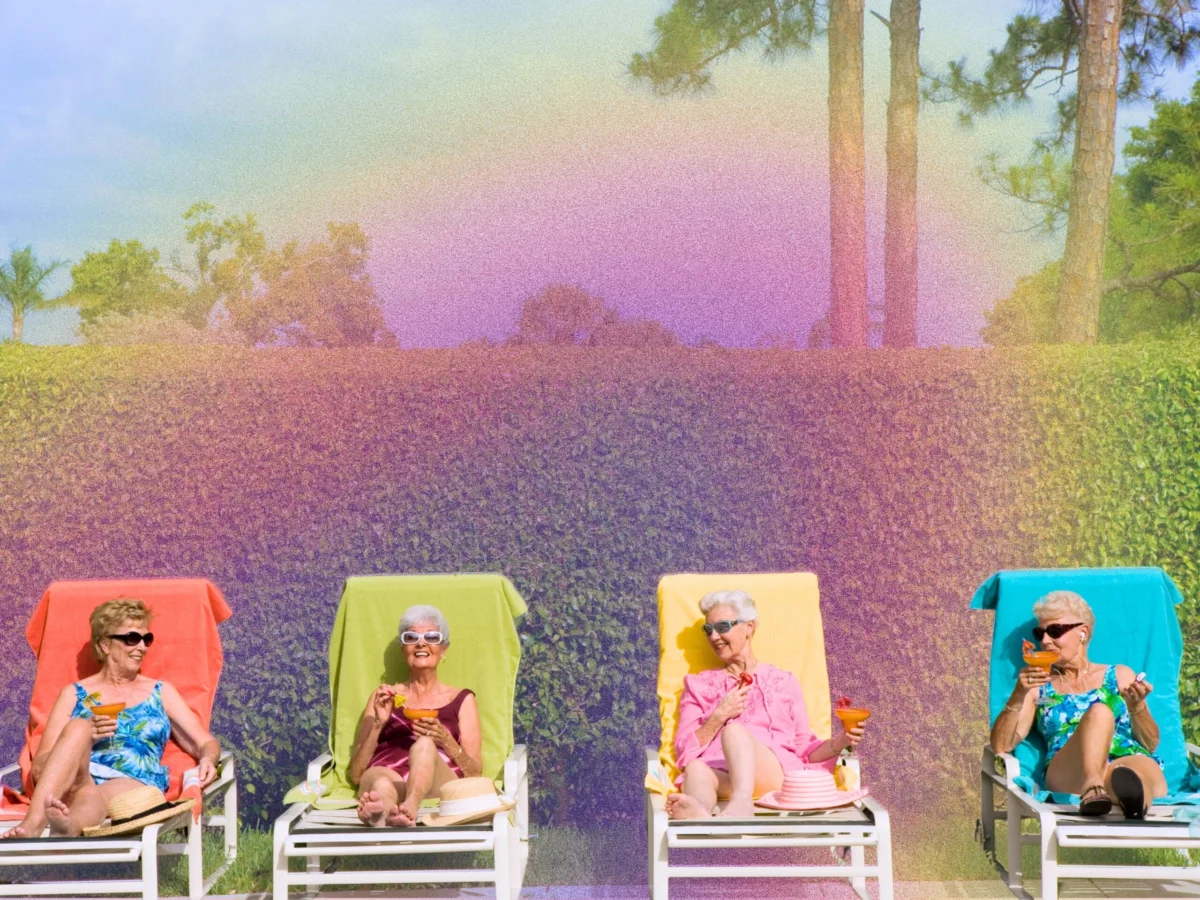
However, a profound cultural recalibration is underway. Today, older unmarried women stand as living proof that a life without a husband is not a fallback plan or a second-tier existence; rather, it is a deeply satisfying, intentional choice. Backed by shifting demographic trends, sociological frameworks, and a collective fatigue with modern dating, a growing number of women are discovering that the unexpected joy of their own company outweighs the traditional rewards of marriage.
Main Facts: The Evolution of Singlehood
The narrative that a woman’s worth and security are tied to her marital status is rapidly dissolving. Statistics from the Pew Research Center indicate that 42% of U.S. adults were unpartnered as of 2023, up from 29% in 1990. Furthermore, among non-daters under the age of 50, half report that they simply are not interested in pursuing a relationship.
This shift is not merely about opting out of bad dates; it represents a fundamental re-architecting of how women view fulfillment. For generations, marriage was an economic and social imperative. Women relied on husbands for financial stability, social standing, and a sanctioned path to family life.
With women gaining unprecedented access to higher education, career advancement, and economic independence, the historical pressure to couple up has evaporated. Today’s unpartnered women are discovering that solitude does not equal loneliness. Instead, it offers a blank canvas to design a life centered around personal passions, strong platonic networks, financial autonomy, and absolute peace of mind.
Chronology: From 1980s Panic to Modern Liberation
To understand how far societal attitudes have shifted, it helps to look backward through the decades.
The 1980s: The Radical Realization
For Joan, now 79, the panic of singlehood hit hard in her 30s, driving her straight into a psychologist’s office. Back then, as she recalls, "a woman who didn’t want a husband was assumed to have something wrong with her."
Her therapist, however, bypassed cheesy motivational mantras and fear tactics about a ticking clock. Instead, she asked a penetrating question: What kind of husband would you want, if you had one?
Joan listed a few traits: someone busy, deeply absorbed in his own life, his job, his hobbies, his community. When the therapist asked if she wanted someone intellectually stimulating, Joan replied with a joke that held a core of truth: "No, I’d want someone who’s never home."
Out of that session emerged a radical realization for 1980: Some people genuinely live their best lives independently. Now single and entirely uninterested in changing her relationship status, Joan has spent decades proving her theory correct.
The 1990s and 2000s: Untying the Knot
For women like Alice Foster, who recently turned 80, following the mid-century cultural script meant marrying young, raising children, and maintaining domestic stability. "It was fine, but I felt like it was never really about me," Foster reflects. "It wasn’t my life."
In 1988, her marriage ended in divorce. Far from the catastrophic loss she had been conditioned to fear, what followed was space, peace, and recalibration. She moved upstate, returned to school, and built a new career in nursing. Slowly, she constructed a life that felt entirely her own.
The Present Day: Aspiration Over Obligation
Fast forward to the present, and stories like Joan’s and Alice’s are no longer anomalies. They are part of a broader cultural movement where being single is viewed as an aspirational state of being rather than a personal failure.
Supporting Data: Burnout, Autonomy, and the Numbers
The modern landscape of romance has inadvertently accelerated the embrace of singlehood. A recent Forbes Health survey revealed a staggering statistic: 78% of users on dating apps—including Tinder, Hinge, and Bumble—reported feeling burnt out.
At the same time, behavioral shifts are occurring among younger generations. Young adults in their mid-20s to early 30s, traditionally considered prime marriage years, are having far less sex than previous generations. Sexual inactivity has surged by roughly 50% for women over the past decade.
Pop culture has mirrored this reality. Modern audiences show a voracious appetite for stories that sideline romance in favor of friendship, independence, and chosen families, as seen in blockbusters like Barbie and cultural phenomena like Wicked.
Sociologically, researchers have formalized these observations. Dr. Bella DePaulo, a social scientist and author of Single at Heart, coined a framework for individuals—particularly women—who do not "end up" alone by accident, but instead orient toward singlehood as a genuine, innate preference.
"I still smile when I think about the men I dated when I was a very young adult," Dr. DePaulo notes. "But I remember even more fondly how I felt when each of those relationships ended: finally free."
Official Responses and Expert Insights
Experts across sociology and psychology emphasize that the psychological freedom of singlehood is fundamentally different from being coupled.
Dr. Kris Marsh, a sociologist and author of The Love Jones Cohort: Single and Living Alone in the Black Middle Class, points out that the modern unpartnered woman is looking for an additive experience rather than a foundational rescue.
"Now, a lot of women are looking for something additive," Dr. Marsh explains. "I’ve heard over and over, ‘I’m already in a very good place on my own. So you can’t be a distraction. You can’t disrupt my peace.’"
Dr. DePaulo expands on this psychological distinction, arguing that couples are rarely as free as single people. Even in happy relationships, a romantic partner occupies mental space on the periphery. For some, that is comforting; for others, it feels like an ongoing mental calculation of another person’s needs, moods, and reactions. Removing that constant mental background noise allows an individual’s attention and energy to become entirely their own.
Furthermore, society still struggles to process this level of autonomy. Married individuals are routinely taken at their word when they claim fulfillment, while those who deviate from the norm face public scrutiny.
"They have to be extra strong, exceptionally confident to stand comfortably in their singleness and validate to the world that they are, in fact, thriving," Dr. Marsh adds.
Implications: The Quiet, Enduring Happiness of Self-Reliance
What are the long-term implications of this cultural shift? Recent research published in public health and sociological journals indicates that satisfaction with singlehood tends to increase with age, often taking root firmly for individuals in their 40s and beyond.
The women who have lived this reality for decades offer a unified perspective: there is no regret, no lingering sense of missing out, and certainly no bitterness. Their lives are characterized by ease, spontaneity, and financial freedom. They take solo trips on a whim, invest in property, adopt pets, start businesses, and cultivate rich, laughter-filled social circles.
As one 73-year-old woman bluntly summarized her favorite part of the lifestyle: "Not having to bicker or put up with an incompetent man. That’s probably why I’m the least stressed I’ve ever been."
Ultimately, the women leading this movement have stopped performing for societal approval. They do not overexplain their choices, nor are they defensive. They simply live. By stepping off the historical conveyor belt of mandatory coupling, they have discovered a quieter, rarer form of happiness—one that requires no external validation and endures for a lifetime.
 Reynand Wu
 Iffa Jayyana
 Lina Irawan
