

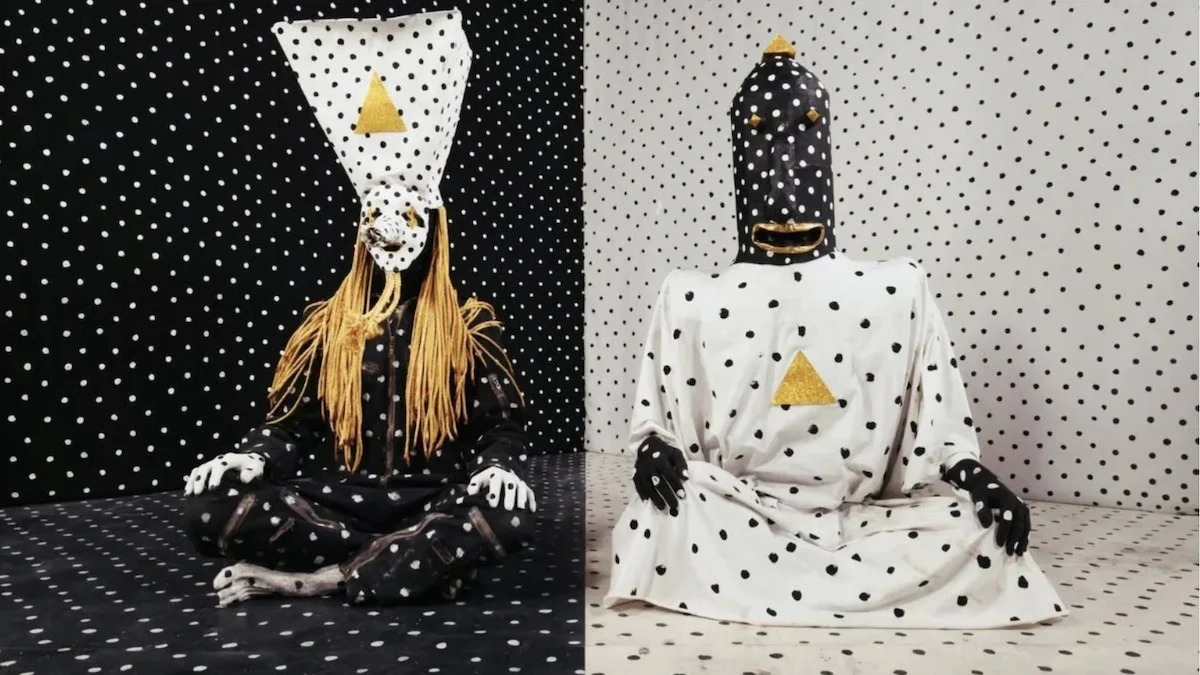
In the hyper-saturated landscape of the contemporary music industry, the old adages of "talent and hard work" sound increasingly quaint. Today, the sheer volume of active musical acts eclipses any previous era in human history. Millions of tracks drop on streaming platforms daily, burying exceptional musicianship under an infinite digital avalanche.
Enter Angine de Poitrine, the Canadian instrumental prog-rock and math-rock duo who transformed local underground buzz into international virality and, eventually, a lucrative world tour. Their secret weapon? A delightfully absurd, high-concept visual identity featuring sentient polka-dot puppetry and wild, custom-built costumes.
As the music industry grapples with an obsession over image, authenticity, and short-form video algorithms, the rise of Angine de Poitrine offers a vital lesson: in a world overstuffed with overlooked talent, a great gimmick isn’t just a marketing trick—it is a survival mechanism.
Main Facts: The Rise of the Polka-Dot Prog-Rockers
At its core, Angine de Poitrine’s musical output is a tough sell for the mainstream masses. Playing complex, highly technical instrumental progressive and math rock requires immense dexterity, yet the genre has historically struggled to capture broad commercial attention. Had these musicians stepped onto a stage in standard streetwear, they likely would have remained confined to local Quebecois venues, respected by purists but financially strapped.
Instead, they wrapped themselves in polka-dot, puppetry-inspired costumes that evoke a surreal, avant-garde children’s show crossed with an absurdist art installation.
- The Musical Style: Intricate, rhythmically challenging instrumental math-rock and prog.
- The Visual Hook: Sentient polka-dot packaging, elaborate full-body suits, and modified multi-necked guitars.
- The Trajectory: From regional Canadian cult favorites to global viral sensations, culminating in a headline world tour capable of sustaining a middle-class musician’s lifestyle.
- The Imitators: The true measure of their cultural impact came when bootleg outfits were briefly retailed by a Quebec party chain (before being pulled) and an imposter band popped up in Moscow performing in full polka-dot regalia.
Chronology: From Quebec Backwaters to Global Stages
Tracing the timeline of Angine de Poitrine reveals how modern virality intersects with clever conceptual branding.
- The Pre-Dot Era: Long before the polka dots, the members operated within the tight-knit, fiercely respected, yet commercially quiet Quebecois math-rock underground. Like thousands of other bands, they recorded intricate music, played to half-empty rooms of fellow musicians, and faced the grim reality of the modern music economy.
- The Pivot to Absurdism: Recognizing that traditional promotion wasn’t cutting through the noise, the duo conceptualized Angine de Poitrine. They developed the custom puppetry-inspired costumes, shifting the focus from standard performance to immersive visual theater.
- The Viral Spark: Short-form video platforms—TikTok and Instagram Reels—became the catalyst. The cognitive dissonance of hearing blistering, lightning-fast math-rock riffs emerge from giant, dancing polka dots proved irresistible to the algorithm.
- Global Breakthrough and Touring: The local momentum snowballed internationally. Venues grew from underground clubs to mid-sized international halls, securing a sustainable world tour schedule for 2027.
- The Imposter Phase: By mid-2026, the cultural footprint expanded to unauthorized copies. Reports surfaced of an Angine de Poitrine cover/imposter act playing shows in Moscow, while retail stores in Canada briefly capitalized on the craze by selling $120 knock-off costumes.
Supporting Data: The Economics and Psychology of the Modern "Gimmick"
To understand why Angine de Poitrine’s strategy works, one must analyze the broader structural shifts in the music market. According to recent industry analytics, the barrier to recording and distributing music has never been lower, resulting in a staggering surplus of supply. However, the avenues for discovery remain narrow, bottlenecked by playlist curators, algorithmic feeds, and social media trends.
The Death of the Organic Breakthrough
In previous decades, artists could slowly build an audience through relentless touring or traditional radio play. Today, the live music sector is suffering under soaring touring costs, while radio has largely relinquished its role as a tastemaker for niche genres.
Furthermore, historical sonic gimmicks—such as Tom Waits’ gravelly persona, Kate Bush’s theatrical art-pop choreography, or T-Pain’s pioneering use of Auto-Tune—paved the way for today’s visual-first landscape. For years, the industry has rewarded artists who lean heavily into world-building:
- Ghost and Sleep Token: Both metal/rock acts utilize elaborate fictional lore, bibles, and cloaked identities to keep fans engaged across album cycles.
- Twenty One Pilots: Mastered narrative-driven eras, using distinct visual uniforms and color palettes to signify changing album themes.
- Chappell Roan: Leveraged a heightened, drag-inspired aesthetic that radically disrupted the festival circuit before being widely replicated.
- Electronic Dance Music (EDM): Long dominated by masked DJs (e.g., Marshmello, Deadmau5) who proved that hiding human identity can supercharge brand recognition.
Angine de Poitrine proves that instrumental acts, traditionally disadvantaged in a pop market obsessed with charismatic frontpersons, can bypass linguistic and vocal barriers entirely through striking visual design.
Official Responses and Industry Reactions
The music community’s reaction to Angine de Poitrine has been a fascinating mix of amusement, envy, and critical reappraisal of what it means to be "authentic."
Industry gatekeepers have largely praised the duo’s marketing ingenuity. Music critics note that while the costumes initially read as a joke, the musicianship underneath is undeniably airtight—a factor that separates a fleeting meme from a sustainable touring act.
Meanwhile, merchandise and retail reactions highlight the strange economics of modern virality. When a Quebec party chain attempted to cash in on the trend by marketing $120 polka-dot suits, public backlash and copyright discussions quickly forced the merchandise off shelves.
Most telling, however, are the reactions from fellow underground musicians. In interviews and forums, independent artists frequently express a mix of secondhand embarrassment and grudging admiration. As one indie-rock commentator noted: "If you can’t be insanely photogenic or obscuringly lucky, adopting a high-concept gimmick is the most logical survival strategy left."
Implications: The Death of "Cool" and the Rise of the Try-Hard
The success of Angine de Poitrine holds profound implications for the future of independent art. It shines a glaring light on the anxiety surrounding "cringe" culture in the music industry.
The Cost of Vulnerability
Adopting a gimmick requires a staggering amount of vulnerability. It is an open admission that an artist desperately wants attention, that they do not possess effortless, natural cool, and that they are willing to be perceived as a "try-hard." In an era obsessed with the plastic, effortless "authenticity" curated on social media, actively donning a ridiculous costume is a radical counter-programming measure.
A Blueprint for the Overlooked
For the thousands of talented musicians currently working day jobs after receiving critical acclaim but zero financial security, the message is clear: what do you have to lose?
If a band plays brilliant instrumental math-rock to empty rooms, clinging to traditional notions of artistic dignity is a fast track to obscurity. Embracing theatricality, humor, and absurdist visual packaging does not cheapen the art; rather, it acts as a Trojan horse, smuggling complex, challenging compositions into the mainstream consciousness wrapped in polka dots.
As the copycats multiply—from Moscow tribute acts to retail knock-offs—Angine de Poitrine remains the gold standard. Their instruments may feature multiple necks, and their bodies may be hidden beneath layers of foam and fabric, but in an age suffocated by boring homogeneity, they are the most authentically daring act in rock.
 Pevita Pearce
 Evan Lee Salim
