

By [Your Name/Journalist Desk]
Published in partnership with deep-dive cultural reporting
Main Facts: The Paradigm Shift in Modern Womanhood
For generations, the cultural script handed to women was absolute: find a partner, walk down the aisle, settle into domesticity, and measure your ultimate worth by your marital status. To deviate from this path was to invite labels ranging from the patronizing “old maid” to the weaponized modern caricature of the “childless cat lady.” Singlehood was treated as a waiting room—a temporary holding pattern before real life began.
Today, that narrative is fracturing. Across demographics and generations, a growing cohort of women are looking at the traditional institution of marriage and opting out entirely. Far from enduring a state of tragic isolation, these women are pioneering a lifestyle of intentional, self-authored independence. They are discovering that a life unanchored to a romantic partner is not defined by what is missing, but by what is gained: uncompromised peace, complete financial autonomy, and a profound sense of self-possession.
Statistical data backs up this cultural evolution. According to the Pew Research Center, roughly 42% of U.S. adults were unpartnered as of recent data, a significant jump from 29% in 1990. Furthermore, among non-daters under the age of 50, half report that they simply aren’t interested in a relationship. Rather than viewing singlehood as a fallback plan, an increasing number of women are recognizing that their peace of mind is too valuable to risk on a subpar partnership.
Chronology: From the Panic of the 1980s to the Freedom of Today
To understand how singlehood transformed from a social stigma into an aspirational lifestyle, we have to look back at how the conversation has evolved over the decades.
- Circa 1980: Joan, now 79, recalls experiencing a wave of existential panic in her 30s. The societal pressure to marry was suffocating; a woman who openly rejected the idea of a husband was often pathologized. Yet, during a pivotal therapy session, when asked what kind of husband she would theoretically want, Joan famously replied that she wanted someone "who’s never home." It was a joke masking a deeper truth: she didn’t want a husband at all. She wanted her own life. That accidental realization planted the seed for decades of thriving independence.
- The Late 20th Century: For women like Alice Foster, who recently turned 80, following the traditional script meant marrying young and raising children. But for many, the reality of mid-century marriage felt like living a life script written by someone else. When Foster’s marriage ended in divorce in 1988, the anticipated tragedy never materialized. Instead, what followed was space. She went back to school, built a career in nursing, and slowly constructed a life that was entirely her own.
- The 2010s and 2020s: Societal shifts, fueled by women’s expanding access to higher education, financial independence, and professional advancement, accelerated the decoupling of marriage from survival. Concepts like "Single at Heart"—coined by sociologist Dr. Bella DePaulo—entered the lexicon, giving academic and cultural language to a demographic of people who naturally orient toward singlehood as a genuine, fulfilling preference rather than a second-best option.
- The Present Day: Today, we see a widespread cultural fatigue with modern romance. Dating apps have driven record levels of burnout, young adults are having less sex than previous generations, and popular media increasingly sidelines traditional romance in favor of narratives centered on platonic friendship, community, and chosen families.
Supporting Data: What the Numbers Tell Us About Modern Romance and Fatigue
The shift away from compulsory coupling isn’t just anecdotal; it is heavily supported by sociological research, psychological studies, and demographic data.
- Dating App Burnout: A recent Forbes Health survey revealed a staggering 78% of users on dating applications—including Tinder, Hinge, and Bumble—experience severe dating fatigue. The endless swiping, superficial interactions, and repetitive disappointment have led many to delete the apps for good.
- Shifting Sexual Habits: Young adults in their mid-20s to early 30s, traditionally considered the "prime marriage years," are engaging in significantly less sex than prior generations. Over the past decade, sexual inactivity rates among young women have risen by roughly 50%.
- The Rise of the Unpartnered Population: Pew Research Center data highlights that the share of U.S. adults living without a romantic partner has continued to shape modern demographics, reflecting a broader societal decoupling of domestic cohabitation from adulthood milestones.
- Age-Related Satisfaction: Academic research published in scientific journals (such as studies highlighted in Personal Relationships) indicates that satisfaction with singlehood tends to increase with age. Individuals who embrace singlehood—particularly past their 30s and 40s—report higher baseline levels of emotional stability and contentment compared to those trapped in unfulfilling relationships.
Official Responses: Insights from Sociologists and Behavioral Experts
Leading sociologists and psychologists who study modern relationship trends emphasize that the modern single woman is rewriting the rules of human connection.
Dr. Kris Marsh, a sociologist and author of The Love Jones Cohort: Single and Living Alone in the Black Middle Class, notes that historical context is vital. For centuries, marriage was an economic and social necessity for women. Today, with that pressure lifted, the dynamic of what women look for in a partner has fundamentally shifted.
"Now, a lot of women are looking for something additive," Dr. Marsh tells SELF. "I’ve heard over and over: ‘I’m already in a very good place on my own. So you can’t be a distraction. You can’t disrupt my peace.’”
Dr. Marsh also points out the unfair double standard single women face. While married people’s claims of fulfillment are taken at face value, single individuals—particularly older women—are subjected to intense public scrutiny. They are forced to be exceptionally confident to validate that they are thriving, caught in a flat societal caricature of either the hyper-independent success story or the pitiable loner.
Dr. Bella DePaulo, a social psychologist and author of Single at Heart, echoes this sentiment, emphasizing the profound psychological freedom that comes with living alone.
"In my opinion, couples are never free the way single people are," Dr. DePaulo argues. "A romantic partner is also there in your mind almost all the time… even if only on the periphery. Remove that, and your attention and energy become fully your own."
For Dr. DePaulo, remembering the feeling of liberation when past romantic relationships ended was the ultimate indicator that her natural orientation was toward solitude, not partnership.
Implications: The Quiet, Enduring Happiness of Self-Authorship
What are the broader cultural and personal implications of this mass movement toward self-directed independence?
First, it forces a redefinition of community. As more adults live alone, the reliance on traditional nuclear family structures is giving way to robust networks of platonic friendships, mentorships, and chosen families. Women are investing heavily in social bonds that offer mutual support, laughter, and shared experiences without the domestic friction often inherent in traditional cohabitation.
Second, it redefines financial and personal autonomy. Single women are purchasing property, investing in businesses, traveling on a whim, and structuring their daily lives entirely around their own desires. As one 73-year-old woman bluntly noted regarding her favorite part of being single: "Not having to bicker or put up with an incompetent man. That’s probably why I’m the least stressed I’ve ever been."
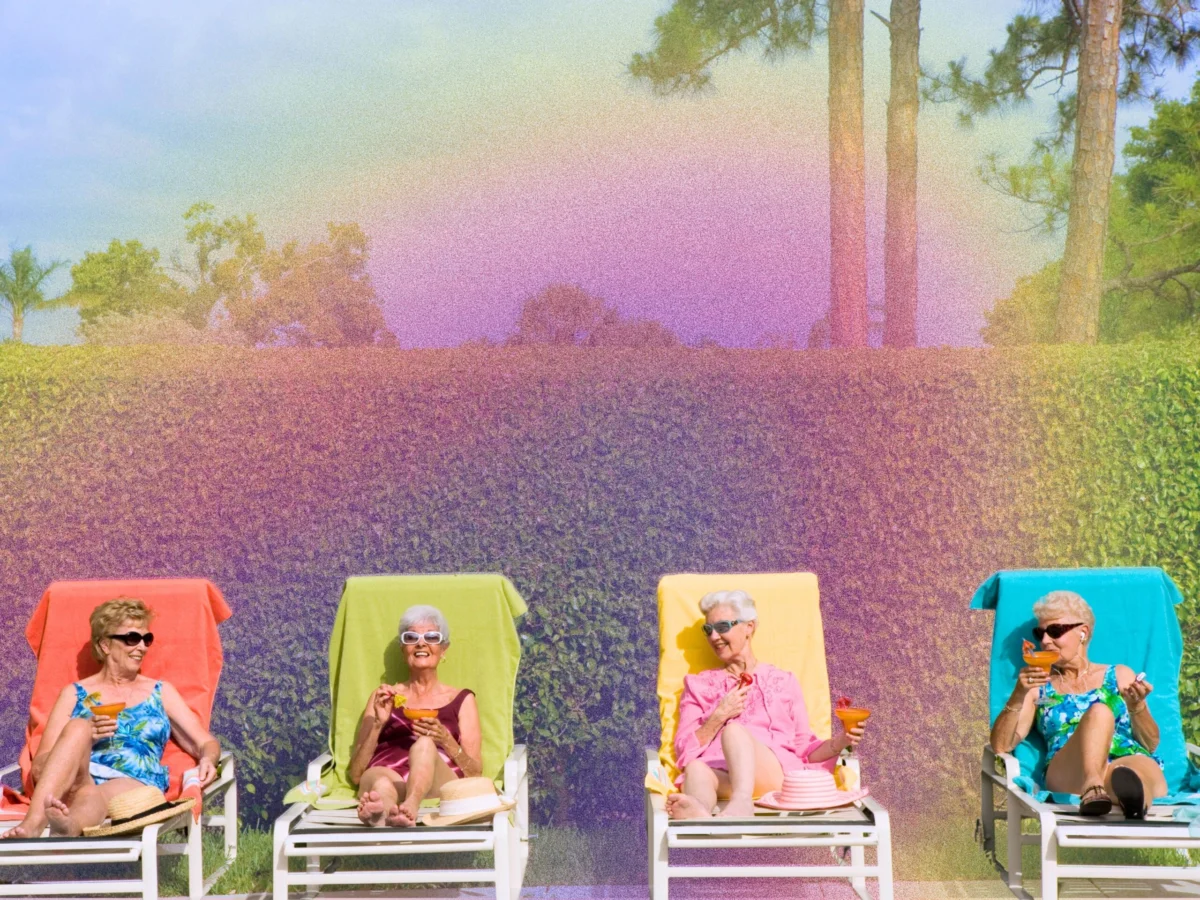
Ultimately, the women who have spent decades successfully navigating singlehood carry a quiet, unassuming confidence. They are no longer interested in performing happiness for a skeptical society, nor are they defensive about their relationship status. They have discovered a rare, enduring form of joy—one that does not require external validation, because its foundation is built entirely from within.
 Iffa Jayyana
 Lina Irawan
 Asro
Asro
