

For the modern professional, the line between career ambition and parental devotion is often blurred by the cold geometry of time zones and the relentless frequency of airport departures. Travel for work is a paradox: it is often a significant career privilege, yet it carries an emotional tax that manifests as a "knife to the heart" for many parents. As the global workforce becomes increasingly mobile, the challenge of navigating the emotional turbulence of long-distance parenting has become a common, yet rarely discussed, frontier of family life.
The Anatomy of the Departure: A New Emotional Reality
The emotional impact of business travel is not uniform; it evolves as children grow. For a parent, the transition from infancy—where absence is felt physically but not articulated—to the preschool years, where children begin to process and vocalize their loss, marks a significant shift.
One parent recounts a recent 17-day journey across Central Asia, a trip focused on the intricacies of the Silk Road’s archaeology. While the assignment was professional, the personal toll was immediate. FaceTime calls, often conducted in the middle of the night due to the seven-hour time difference, became the epicenter of the family’s struggle. "Mommy, I miss you when you travel," her four-year-old son, Julian, would say, occasionally escalating to the most poignant argument a child can offer: "You can’t go on a trip because I love you."
This sentiment is the hallmark of "pre-departure dread." For many, the anxiety begins long before the suitcase is zipped. It is a shared experience among frequent flyers: the guilt of the professional, the longing of the child, and the search for a bridge between the two worlds.

Chronology of Connection: Rituals That Resonate
While there is no "airport plushie" capable of erasing the pain of separation, the most successful traveling parents have moved beyond mere phone calls, opting instead to build a structure of "micro-rituals" that keep them present even when they are physically absent.
1. The Tangible Goodbye
Establishing a physical connection before departure can mitigate the abstract nature of travel. Angela Cowley, a Sydney-based managing director and mother of four, has developed a ritual where her eldest daughter, Georgia, selects one accessory—a watch, a pair of earrings, or a bracelet—for her mother to wear each day of her trip. This creates a tactile connection; the child feels she is accompanying the parent on the journey. Similarly, some parents use the "heart kiss"—a smudge of lipstick on a child’s cheek—as a symbolic, temporary tattoo that serves as a recurring reminder of the parent’s affection.
2. The Countdown Architecture
For longer trips where standard communication is difficult—such as expeditions to Antarctica or remote regions—some parents have adopted a "numbered envelope" system. By placing a series of boxes or envelopes on a child’s desk, each containing a note, a small toy, or a funny drawing for a specific day, parents can provide a sense of predictable progress. It turns the absence into a countdown, transforming "how long until you are back?" into a series of daily discoveries.
3. The "Traveling Mascot"
The use of inanimate objects as surrogates for the parent is a practice that bridges the gap between home and the road. James Massey, a London-based communications agency head, has spent years photographing his children’s Lego figures in exotic locales—from airline lounges to VIP dinners in Gstaad. This practice, often met with bemused looks from fellow travelers, has become a legacy of curiosity. When children see their own toys in the context of the wider world, they become participants in the parent’s work, rather than victims of it.

Supporting Data: The Shift to Interactive Digital Engagement
The evolution of technology has allowed for more than just status updates. Modern parents are now using the digital landscape to maintain the "everydayness" of home life.
- The Room Tour: Rather than a static video call, parents are turning hotel stays into interactive experiences. By giving children a virtual "tour" of the room, asking for their ratings on pillow fluffiness, minibar snacks, or the view, the parent validates the child’s interest and keeps them engaged with the reality of the trip.
- The AI Storyteller: For parents like John Froese, a senior executive at PayPal, technology serves as an engine for bedtime rituals. By using AI tools to create personalized stories featuring family alter-egos—such as "Princess Baby Chanel" or "King Burberry"—parents can maintain their presence in the nightly routine, regardless of their location.
- The Souvenir Narrative: The most impactful souvenirs are not those that cost the most, but those that tell a story. Whether it is a collection of snow globes from different cities or a sticker journal tracking a parent’s global movements, these items serve as physical artifacts of a career that is shared with the family.
Official Perspectives: Experts and The Long-View Approach
Professional psychologists and family counselors often suggest that the key to managing work-related absence lies in the "long view." The goal is not just to survive the current week, but to frame the parent’s travel as an experience that eventually becomes a shared family narrative.
Fernando Diez, a marketing director who travels extensively, emphasizes that the postcards he sends to his children serve a dual purpose. They are immediate sources of wonder, but they are also investments in the future. By promising that children can select one of the destinations featured on his postcards for a future family trip, he is not only mitigating the current separation but also cultivating a shared curiosity about the world. This approach echoes the experience of those who have seen their children grow up to cherish the journals and correspondence of their parents, eventually transforming childhood separation into a foundation for future connection.
Implications: Redefining the Professional Parent
The implications of these rituals are significant. For the child, the constant communication and shared experiences normalize the parent’s work life, turning it from a source of anxiety into a window to the world. For the parent, these practices provide a structured way to combat the pervasive "worst parent alive" guilt that often accompanies business travel.

However, it is vital to recognize that these rituals are not a replacement for presence. They are supplementary, designed to bridge the gap in a world where economic and professional realities require parents to be in two places at once. As the professional landscape continues to prioritize global mobility, the ability to maintain these "tiny rituals" will likely become a requisite skill for the modern, high-achieving parent.
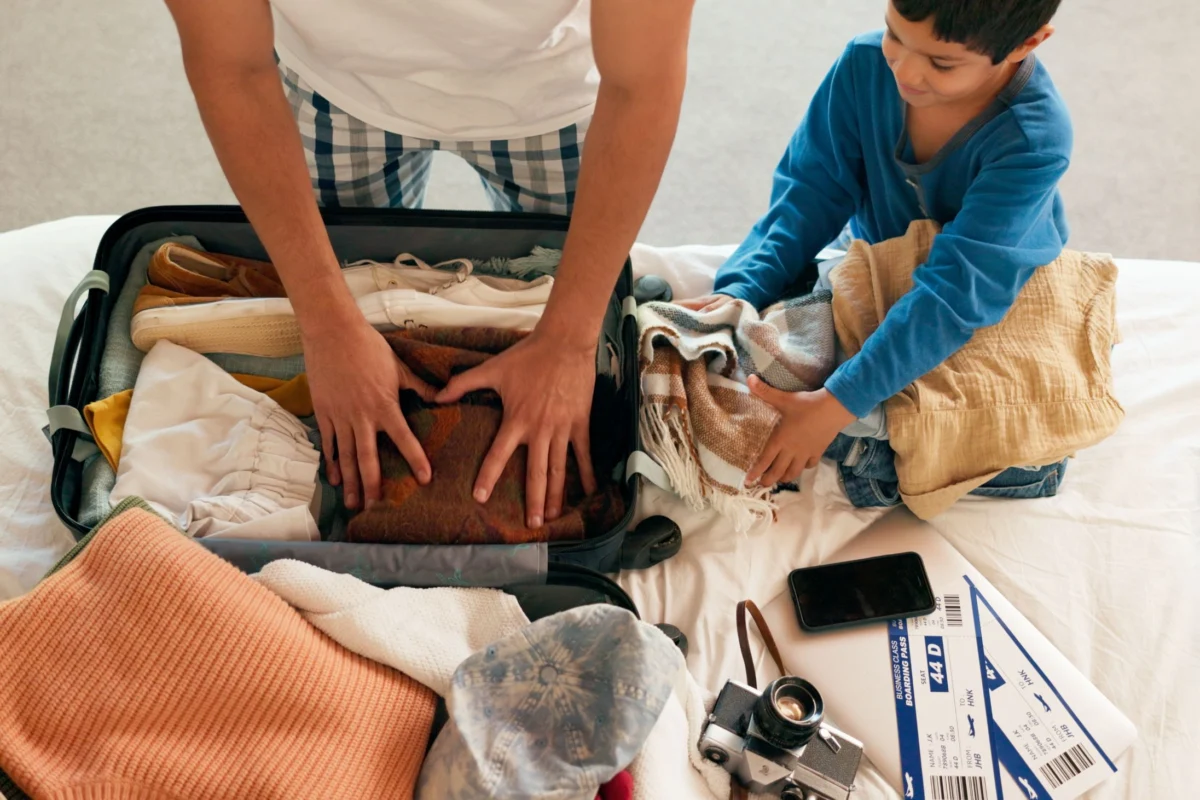
Ultimately, the most successful strategy is one that turns the distance into a story. By involving children in the packing, the documenting, and the planning, parents do more than just travel for a paycheck; they demonstrate that even when they are thousands of miles away, their children remain the central reference point for their journey. As one parent noted, the goal is for their children to eventually "pick a destination from their own stack of cards and set off on adventures I can’t yet imagine," carrying the lesson that love is not defined by proximity, but by the intention we hold for one another across the miles.
 Evan Lee Salim
 Nana Muazin
 Sagoh
Sagoh
