

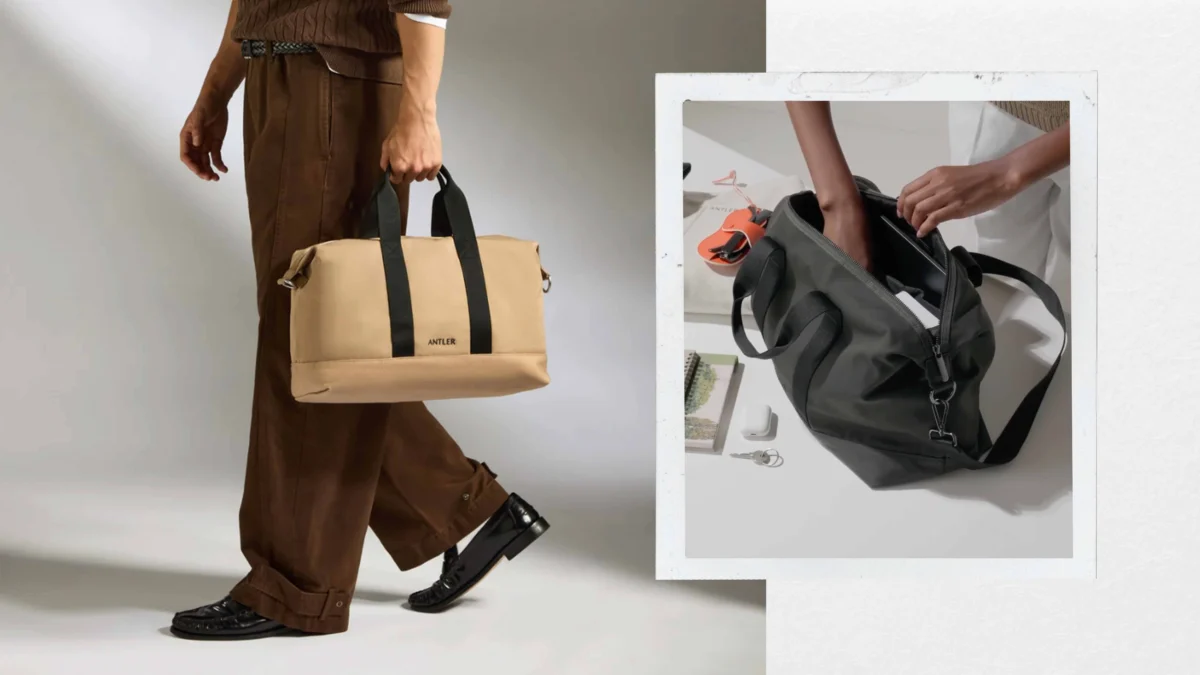
For the modern traveler, the "carry-on-only" lifestyle has long been the gold standard of travel efficiency. It is the hallmark of the seasoned jet-setter—those who have mastered the architectural precision of packing cubes, possess an innate disdain for the unpredictability of baggage claim, and treat the boarding process as a tactical maneuver. However, as budget airlines tighten their grip on overhead bin access and baggage fees continue to climb, a new, even more efficient frontier has emerged: the underseat bag.
These "small-but-mighty" vessels offer the ultimate travel paradox: they hold more than one might expect while occupying the most overlooked real estate on an aircraft—the space beneath the seat in front of you.
Main Facts: Redefining the Personal Item
At its core, underseat luggage is designed to bridge the gap between a standard personal item and a full-sized carry-on. While travelers often view these as mere extensions of their handbags or backpacks, they are increasingly being engineered with the structural integrity of full-scale suitcases.

The primary advantage is accessibility. Unlike overhead bins, which can become a theater of chaos during boarding—leading to the dreaded "gate-check" of your bag when space runs out—underseat luggage remains within reach throughout the flight. Whether you need your laptop, a change of clothes for an early arrival, or toiletries for a quick refresh, your essentials stay tethered to your feet.
For business travelers, this is a game-changer. For a one-to-two-night trip, the necessity of navigating a traditional carry-on through crowded terminals and cramped aisles is often an unnecessary burden. An underseat bag streamlines the journey from the taxi to the terminal, through security, and directly into your seat.
The Evolution of Compact Travel: A Chronology
The shift toward underseat-focused travel is not a sudden trend but a reaction to the changing landscape of commercial aviation.

- The Pre-Fee Era: Decades ago, the overhead bin was a shared, communal resource. Travelers were encouraged to bring "carry-on luggage," and the restriction on bags was largely a matter of physical size rather than economic policy.
- The Ancillary Revenue Shift (2010s): As airlines sought new ways to offset rising fuel costs and lower base fares, "unbundling" became the industry standard. Baggage fees for carry-on bags were introduced by ultra-low-cost carriers (ULCCs), forcing passengers to choose between paying for the privilege of overhead space or fitting everything into a strictly defined "personal item."
- The Rise of the "Smart" Underseater (2020–Present): Luggage brands recognized a gap in the market. Consumers no longer wanted to choose between a flimsy tote bag and a cumbersome rolling suitcase. Manufacturers began producing high-end, wheeled underseat luggage that utilized the maximum allowable dimensions of personal items, effectively creating a "mini-suitcase" that bypasses overhead bin constraints entirely.
Supporting Data: Dimensions and Capacity
To successfully utilize underseat luggage, one must understand the technical constraints imposed by aviation standards. While no universal "underseat" measurement exists across the global airline industry, the following benchmarks are standard:
| Airline Category | Typical Personal Item Limit (Approx.) |
|---|---|
| Ultra-Low Cost | 16" x 14" x 8" |
| Major Domestic | 18" x 14" x 8" |
| International | Varies by aircraft type |
Capacity Management:
The secret to success with an underseat bag lies in the "compression strategy." Because these bags rarely exceed 20 liters in volume, packing cubes are not just a luxury—they are a mathematical necessity. By utilizing the vertical space of the bag and removing the air from textiles, travelers can often fit two to three days’ worth of clothing, a secondary pair of shoes, and tech accessories into a bag that sits comfortably beneath their feet.
Official Industry Policies and Regulations
A frequent point of confusion for travelers is the distinction between a personal item and a carry-on. Most major airlines, including Delta, United, and American, explicitly state that a personal item must be "smaller" than a carry-on, but the interpretation of that rule is often left to the gate agent.

The "Underseat" Rule:
According to standard IATA (International Air Transport Association) guidelines, the bag must fit completely beneath the seat in front of you. It cannot block the aisle, nor can it infringe upon the footwell space of adjacent passengers.
- Crucial Caveat: If you are seated in an exit row or a bulkhead row, the regulations change significantly. Due to safety requirements, passengers in these rows are typically required to store all bags in the overhead bins during takeoff and landing. Travelers relying on underseat luggage must be aware of their seat assignment to avoid being forced to check their bags at the last minute.
Implications for the Future of Travel
The rise of the underseat bag has profound implications for the passenger experience and the aviation industry at large.
1. Speed and Efficiency
The most immediate benefit is the elimination of the "deplaning bottleneck." While the rest of the aircraft is standing in the aisles waiting for the overhead bins to be opened, the underseat traveler is already prepared to exit the moment the cabin door opens. This saves an average of 5 to 10 minutes per flight—a lifetime for frequent travelers.

2. Economic Advantages
As airline loyalty programs and ticket classes become more tiered, "Basic Economy" tickets often exclude overhead bin access. Investing in a high-quality underseat bag essentially pays for itself within three to four round trips by allowing travelers to avoid the $30–$60 carry-on fees imposed by budget carriers.
3. Sustainability and Weight
Airlines are increasingly monitoring the total weight of aircraft to optimize fuel efficiency. While an individual bag seems negligible, the cumulative weight of hundreds of carry-on suitcases in overhead bins contributes significantly to fuel consumption. The transition toward smaller, more efficient bags aligns with broader industry goals to reduce the carbon footprint of commercial air travel.
4. The Psychological Shift
There is a profound sense of liberation in traveling with only what you can keep at your feet. It forces a minimalist mindset that rejects the "just in case" items that weigh down traditional luggage. It simplifies the travel day, reduces the risk of lost luggage (as the bag never leaves your possession), and provides a sense of autonomy that is rare in the modern, regulated airport environment.

Expert Recommendations
For those looking to adopt this strategy, focus on three specific features when selecting a bag:
- Structured Frame: Soft-sided bags are easier to shove under seats, but structured ones protect your belongings better. Look for a hybrid, such as a semi-rigid duffel.
- External Pockets: Since the bag will be under the seat, you need quick access to your passport, headphones, and chargers without dragging the entire unit out.
- Trolley Sleeve: If you do decide to travel with a larger suitcase for a longer trip, ensure your underseat bag has a trolley sleeve so it can stack securely on top of your checked or carry-on luggage.
In conclusion, the underseat bag is more than a storage solution; it is a tactical evolution of the travel experience. By reclaiming the space beneath our feet, we reclaim control over our transit, bypass the frictions of modern airport fees, and embrace a lighter, faster way to traverse the globe. Whether for a business sprint or a weekend getaway, the underseat bag is the final frontier of the efficient traveler.
 Sagoh
Sagoh
 Asro
Asro
