

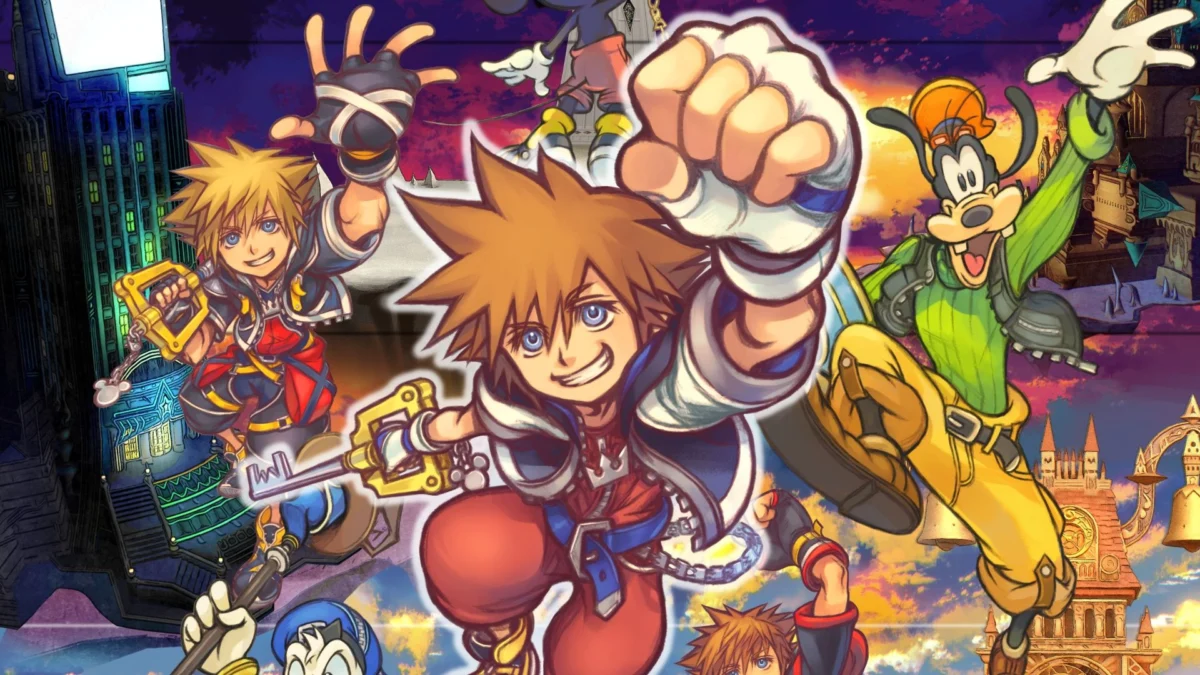
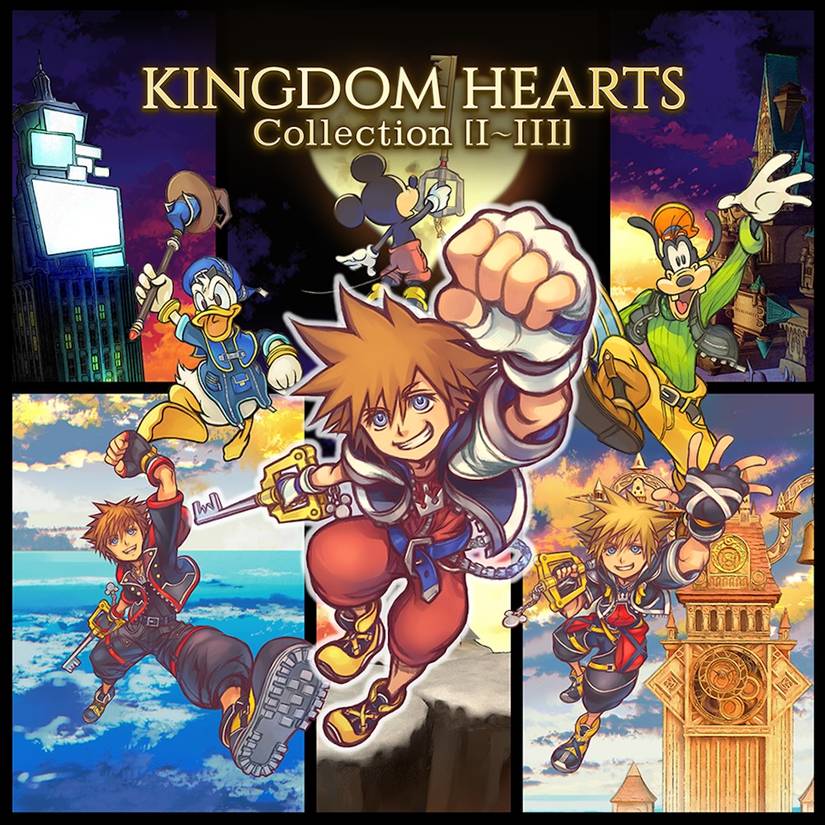
For long-standing followers of the Kingdom Hearts franchise, the recent Nintendo Direct was supposed to be a watershed moment. After a prolonged period of silence, Square Enix finally pulled back the curtain on the highly anticipated Kingdom Hearts 4, confirming its arrival on the upcoming Nintendo Switch 2 alongside established platforms. However, the excitement surrounding the series’ future was quickly tempered by a wave of controversy regarding the present. As Square Enix unveiled the Kingdom Hearts Collection—a comprehensive bundle slated for release on October 8—the community’s attention shifted from the announcement to the promotional key art, with many fans becoming convinced that the imagery was generated or heavily assisted by artificial intelligence.
This skepticism is not merely an aesthetic grievance; it represents a deepening rift between major game publishers and their core audiences regarding the role of human artistry in the gaming industry.
The Evidence of "AI Slop"
The scrutiny began almost immediately after the official reveal, as eagle-eyed fans began dissecting the promotional assets released by Square Enix. Within hours, social media platforms, including X (formerly Twitter) and Bluesky, were flooded with annotated screenshots highlighting what many describe as "hallucinations"—the signature errors that frequently plague generative AI models.
The most glaring issue identified by the community involves character anatomy. Observers noted that Donald Duck, a franchise staple, appears to possess four fingers on one hand while sporting five on the other. Such anatomical inconsistency is a hallmark of current generative AI technology, which often struggles to maintain logical spatial relationships when rendering complex appendages.
The criticism did not stop at character design. Further examination of the artwork revealed a litany of structural anomalies:

- Impossible Geometry: Chains and environmental elements in the background appear to loop into one another in ways that defy physical reality, suggesting an AI’s failure to comprehend the structural integrity of the objects it was tasked to "draw."
- Architectural Degradation: A clock tower featured in the background displays distorted, drooping hands, while adjacent buildings appear to "melt" into the landscape—a common artifact of deep-learning models struggling with rigid, straight-edged structures.
- Texture and Detail Loss: The iconic oversized shoes worn by the protagonist, Sora, are missing standard design details that have been consistent for over two decades. The textures lack the sharpness and deliberate stylistic choices typically found in the hand-drawn or high-fidelity renders of previous Kingdom Hearts entries.
For a fanbase that prides itself on the intricate, deliberate lore and aesthetic consistency of the series, these "slop" artifacts—a term used by the community to describe low-quality, AI-generated assets—have been viewed as an insult to the franchise’s legacy.
A Chronology of Corporate Ambivalence
The controversy surrounding the Kingdom Hearts Collection art does not exist in a vacuum; it is the latest chapter in a tumultuous narrative regarding Square Enix’s relationship with emerging technologies.
In early 2024, Square Enix President Takashi Kiryu issued a bold, aggressive New Year’s message, declaring that the company intended to be "aggressive in applying AI" to its development processes. The announcement was met with immediate, widespread backlash from both the gaming public and industry professionals concerned about the displacement of creative talent.
Six months later, attempting to quell the firestorm, Kiryu backpedaled, issuing a statement that the company would be "careful" with the implementation of the technology, insisting that AI would be restricted to "areas unrelated to creativity." However, this promise proved short-lived. In recent months, Square Enix shifted its narrative again, announcing a strategic partnership with an AI research laboratory with the stated goal of offloading 70% of its Quality Assurance (QA) testing to automated AI systems by the end of 2027.
This history of shifting priorities has left the consumer base in a state of high alert. When players see something that looks "off" in a promotional image, they no longer assume it is a simple mistake or a rushed deadline; they assume it is the result of a deliberate, cost-cutting corporate mandate to minimize human creative input.

The Industry Context: A Growing Trend
The Kingdom Hearts situation is part of a broader, industry-wide trend that has left gamers increasingly disillusioned. Other major players have faced similar scrutiny:
- The Final Fantasy 6 Incident: Hironobu Sakaguchi, the creator of Final Fantasy, faced a significant PR blowback after promoting an AI-generated mock-up of a Final Fantasy 6 remake. The backlash served as a stark reminder that even industry legends are not immune to the community’s refusal to accept AI-synthesized content.
- QA and Development Concerns: Titles such as Clair Obscur: Expedition 33 have faced intense questioning regarding the potential use of AI in their development pipelines, with developers often forced to issue clarifications to avoid being "review-bombed" or boycotted.
- Sega and Crazy Taxi: Sega recently had to issue formal responses regarding the use of generative AI in its upcoming titles, highlighting a growing industry pressure to disclose the extent of automation in the creative pipeline.
These incidents have created an environment of "AI fatigue," where the mere suspicion of automation is enough to overshadow the product itself.
Official Responses and Silence
As of this writing, Square Enix has maintained a policy of silence regarding the Kingdom Hearts Collection artwork. Polygon and other industry outlets have reached out to the publisher for comment, specifically asking whether the artwork was produced using generative AI tools.
The silence from the studio is, in itself, a message. In the current climate, a simple denial—"this was created by a human artist"—would likely serve to immediately de-escalate the situation. By choosing not to comment, Square Enix has effectively left the door open for speculation, allowing the narrative that they have traded artistic integrity for technological convenience to solidify.
Implications for the Franchise
The Kingdom Hearts Collection is intended to serve as a bridge, gathering Kingdom Hearts – HD 1.5 + 2.5 ReMIX, Kingdom Hearts HD 2.8 Final Chapter Prologue, and Kingdom Hearts 3 + Re Mind to prepare players for the upcoming fourth installment. Instead of serving as a celebratory retrospective, the collection has become a lightning rod for criticism.
The implications are two-fold:
- The Erosion of Brand Trust: Kingdom Hearts is a series defined by its emotional resonance and its status as a "passion project" that blends Disney and Square Enix sensibilities. By potentially cutting corners on something as visible as box art, the publisher risks signaling that they no longer view the franchise as a premium, handcrafted experience, but rather as a product to be churned out with maximum efficiency.
- The Power of Public Scrutiny: If nothing else, this incident proves that the gaming community is currently the most effective watchdog for AI misuse. Through decentralized, community-led analysis, fans have identified inconsistencies that might have gone unnoticed by traditional marketing departments.
Whether the Kingdom Hearts Collection art was the result of a tired human illustrator working under impossible deadlines or a generative model mimicking human style, the result is the same: a loss of faith. For a series that has spent decades building a world of wonder and detail, the appearance of "AI slop" on its cover is a jarring reminder that the corporate pursuit of efficiency may ultimately come at the expense of the very magic the franchise seeks to protect.
Square Enix may not feel pressured to respond to individual social media posts, but the collective voice of the Kingdom Hearts community has made one thing clear: players are no longer willing to settle for the artificial when they have come to expect the authentic. Whether this forces a change in policy remains to be seen, but for now, the shadow of the machine looms large over the Keyblade War.
 Nana Muazin
 Layla Zulfa
