

This story is an installment of The Oeno Files, our weekly insider newsletter to the world of fine wine. Sign up here.
The story of Amarone della Valpolicella is one of the wine world’s most fortuitous accidents—a narrative of happy errors akin to the unintended secondary fermentation that birthed Champagne or the serendipitous addition of neutral spirits that created Port. Legend holds that 90 years ago, a forgotten barrel of sweet Recioto—a dessert wine crafted from dried grapes—continued fermenting until it was completely dry, yielding the first, unintended Amarone.
For decades, this "accident" defined the category: a wine known for its massive, viscous, and alcohol-forward profile. However, a quiet revolution is currently unfolding in the mountainous terrain north of Verona. Today, winemakers are moving away from the heavy-handed styles of the past, favoring a fresher, more lifted expression of Amarone. This shift is not merely an aesthetic choice; it is a calculated viticultural migration toward the sky.
The Geography of Elegance: A High-Altitude Shift
The Amarone della Valpolicella DOCG zone is defined by a 20-mile-wide mountainous band situated at the foot of the Dolomites. Traditionally, the valley floors provided the volume required for the region’s intense, raisin-based wines. Today, the focus has pivoted toward sites ranging from 500 to 1,640 feet above sea level, with the most profound stylistic differences appearing at heights above 1,100 feet.
In these cooler, hillside vineyards, the grapes—primarily Corvina, supplemented by Rondinella, Corvinone, and Oseleta—undergo a fundamentally different maturation process. By escaping the heat-trapping fog of the valley floor and utilizing the breezier, cooler microclimates of the higher slopes, producers are successfully retaining natural acidity, developing softer tannins, and encouraging a more complex aromatic profile.
A Chronology of Change
To understand the current "elevation revolution," one must look at how the perception of Amarone has evolved over the last century.

- The 1930s (The Discovery): The accidental creation of the first dry Recioto (the precursor to Amarone) sets the stage for a new style of wine. It is characterized by high sugar and high intensity.
- 1968 (The Formalization): Amarone receives its official DOC status, cementing its reputation as a powerhouse, concentrated, and often heavy wine.
- The 2000s (The Expansion): As global palates shift toward balance and drinkability, elite producers begin experimenting with harvest dates and site selection to mitigate the excessive alcohol levels that defined the 1980s and 90s.
- 2010–Present (The Elevation Era): A clear consensus emerges among top-tier producers: to achieve finesse, the grapes must be grown in cooler, higher-altitude sites. Estate-level bottlings from elevated vineyards become the new gold standard for the region.
The Mechanics of Appassimento
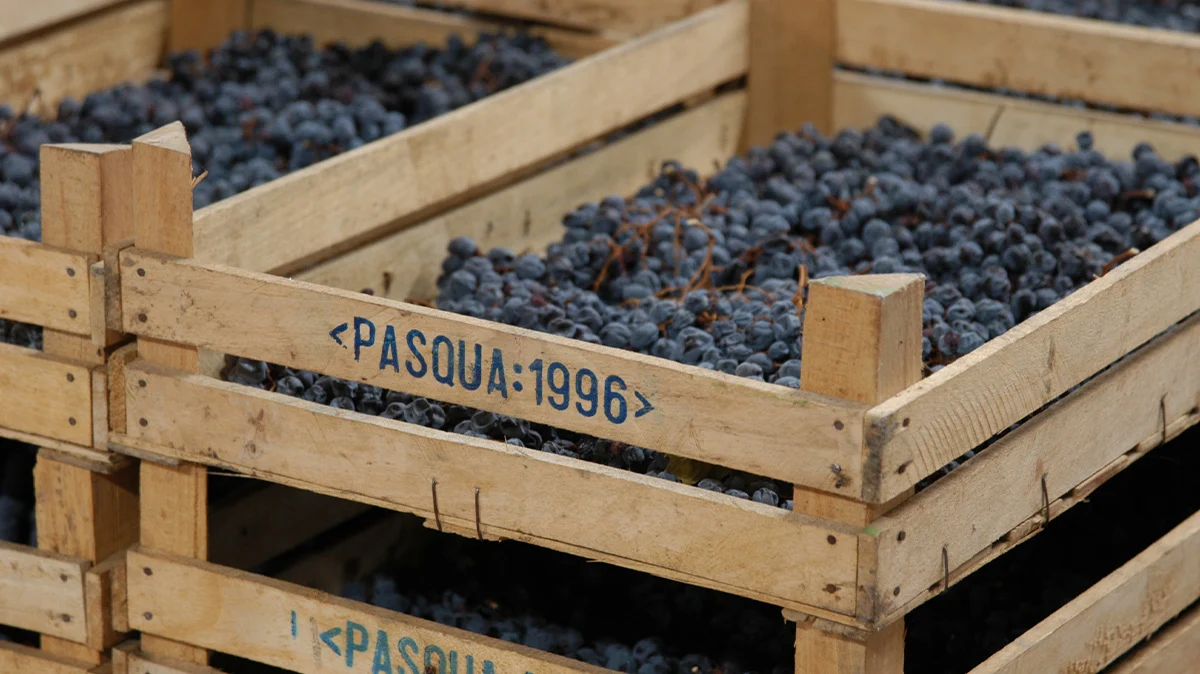
The soul of Amarone lies in appassimento—a process where freshly harvested grapes are laid out on straw mats or in shallow wooden crates to dehydrate for three to four months. This turns the grapes into raisins, concentrating their sugars and flavors.
In the past, this process often resulted in wines that felt "jammy" or overly oxidized. By starting with grapes grown at higher altitudes, winemakers now begin the appassimento process with fruit that possesses lower sugar and higher natural acidity. This acts as a structural foundation for the wine, ensuring that even after the concentration of the drying phase, the finished product remains balanced and vibrant.
Marta Galli, third-generation family member and sales director of Le Ragose, emphasizes the criticality of this approach. Her estate’s Amarone della Valpolicella Classico Riserva is sourced from vineyards situated between 820 and 1,310 feet. "Altitude is one of the most important factors in Amarone production," Galli notes. "Being above the fog line and benefiting from cooler, breezier summer conditions is essential for producing high-quality Amarone. Thanks to elevation, ours achieves remarkable elegance and balance, while maintaining relatively low residual sugar levels."
Expert Perspectives: The Sommelier’s View
The shift in production is being met with enthusiasm by the hospitality sector. Brian Mitchell, corporate beverage director at Connecticut-based Max Hospitality Group, notes that these higher-elevation wines are fundamentally changing how Amarone is perceived in a restaurant setting.
"The estates located at elevation are going to be more expressive of their unique fruit aromas and flavors," Mitchell explains. "The acidity that is captured in wines from elevation tends to lift the fruit flavors even more, really making these wines stand out across the region."
Mitchell acknowledges that while there is still a market for the traditional, "big, alcohol-driven" expression of Amarone, the modern consumer—and specifically the restaurant diner—tends to favor the new style. "Especially in restaurants, where the wines will most likely be opened while young, the combination of expressive fruit- and acid-driven freshness is a much better fit for pairing with food. The main difference between these wines and lower-elevation producers will be the acidity and lift they provide."

The Science of Terroir: Temperature and Light
The entire Valpolicella zone is influenced by the cooling effects of Lake Garda and the Adige River. However, the higher sites benefit from even more pronounced environmental advantages.
Giovanni Lai, general manager of Cesari and Tenute Caviro, highlights the importance of diurnal temperature variation. Regarding their Bosan vineyard—which sits at 1,640 feet—Lai points to "pronounced day-to-night temperature swings, especially during the grape ripening period." These fluctuations, combined with steady breezes and south-facing slopes, allow the grapes to ripen slowly. This slow ripening is the secret to preserving aromatic complexity and acidity while still achieving the deep concentration required for the Amarone designation.
Matteo Allegrini, export coordinator at Allegrini, echoes this sentiment regarding his family’s Fieramonte Amarone Classico Riserva, which hails from a 1,361-foot-high vineyard. "These conditions slow maturation naturally, allowing the grapes to develop aromatic complexity and preserve the natural acidity that is essential for producing a refined, age-worthy Amarone," he says. The thicker skins and higher phenolic density of these high-altitude grapes provide a structure that is simply impossible to replicate in the warmer, humid valley floors.
Implications: A New Era of Amarone
The move toward high-elevation viticulture has significant implications for the future of Italian wine.
- Biological Integrity: As Allegrini notes, appassimento is a complex biological metamorphosis. Grapes with higher integrity and natural acidity—those grown at altitude—are better equipped to undergo this transformation without losing their varietal character.
- Market Positioning: By moving away from the "heaviness" that previously defined the category, Amarone is reclaiming its status as a sophisticated, age-worthy wine that can pair with a broader variety of cuisines.
- Brand Innovation: Producers like Pasqua Wines are using their high-altitude sites to push the boundaries of what is expected. Their "Mai Dire Mai" (Never Say Never) project, grown in the 1,150-foot-high Monte Negro Vineyard, utilizes clay and calcareous soils to impart a distinct minerality. "The result," says CEO Riccardo Pasqua, "is an Amarone with all the depth, texture, and complexity expected of the category, but also with greater vertical energy, vibrancy, and elegance."
Ultimately, the rise of high-altitude Amarone is a testament to the region’s willingness to evolve. By looking to the heights, the winemakers of Valpolicella are proving that even a legendary, 90-year-old accident can be transformed into a modern masterpiece. The Amarone of the future will not be defined by its weight, but by its lift, its energy, and its unwavering sense of place.
 Lina Hope
 Jia Lissa
 Ali Ikhwan
