

Introduction and Main Facts
The debate over automated mass surveillance in the United States has reached a legislative boiling point. On Friday, Senator Bernie Sanders (I-Vermont) introduced the Ban Flock Act, a sweeping piece of federal legislation designed to systematically curb the deployment and utilization of automated license plate readers (ALPRs) by the federal government.
While the title of the bill directly targets Flock Safety—the dominant player in the private ALPR market, boasting a valuation north of $8 billion—the legislative text actually sweeps much broader. It seeks to outlaw the use of any ALPR system by federal agencies, while simultaneously cutting off federal access to databases compiled by local law enforcement agencies and private contractors.
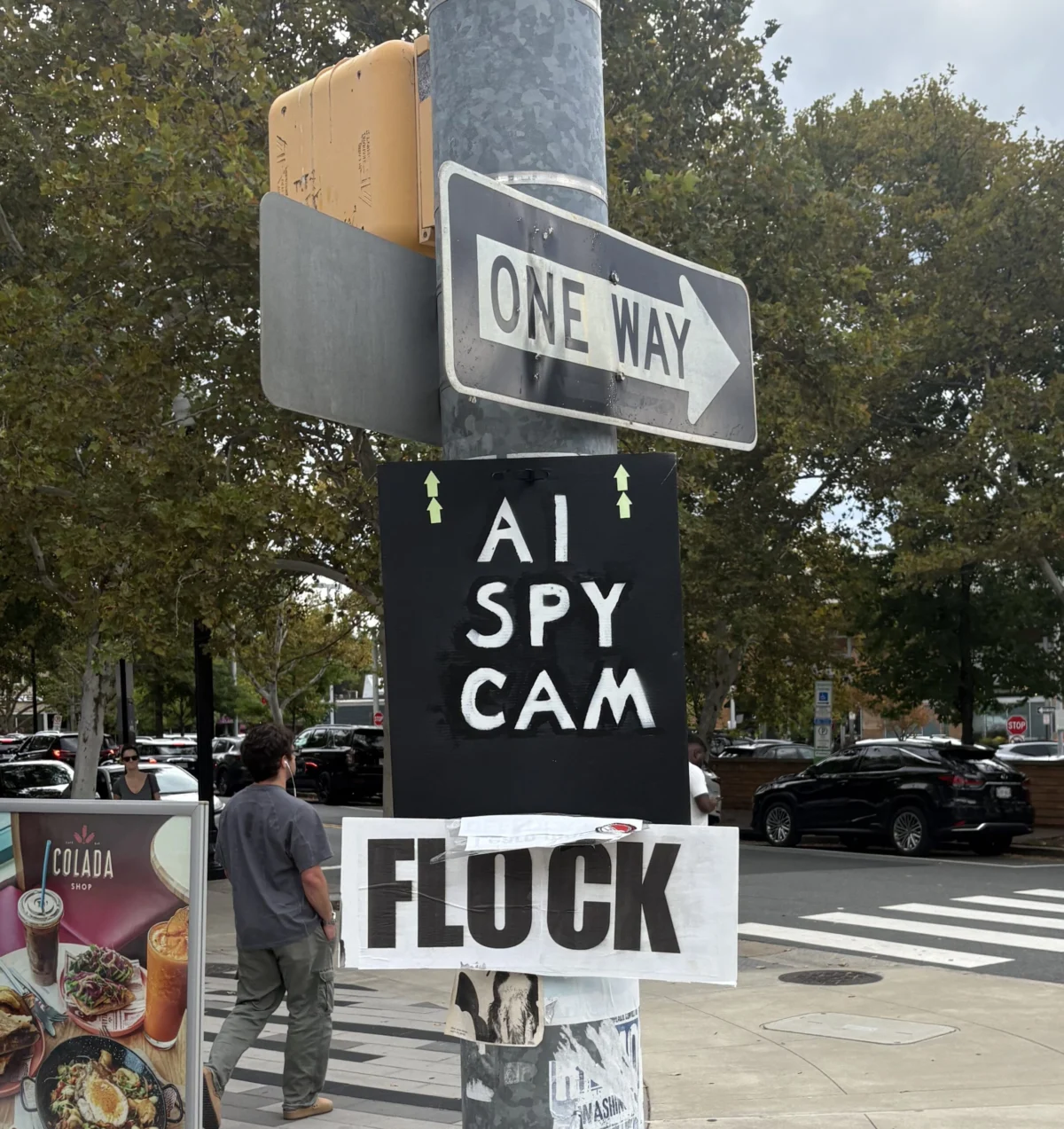
The introduction of the bill comes at a precarious time for Flock Safety and the broader surveillance tech industry. Across the nation, public outcry regarding civil liberties, unmonitored data collection, and scope creep has triggered a massive backlash. Municipalities are canceling contracts at unprecedented rates, major police departments—such as the Los Angeles Police Department—have suspended their reliance on the technology, and citizens are mobilizing in vocal protests.
Despite facing long odds in a deeply divided Congress, the Ban Flock Act carries serious financial teeth. Under the proposed legislation, state and local governments that fail to purge or ban ALPR systems would face severe financial penalties, losing vital federal grant money distributed by five major agencies, including the Department of Justice and the Department of Homeland Security. Furthermore, the bill opens the door for private citizens to file civil lawsuits against the federal government over privacy violations, while empowering state attorneys general to enforce compliance within their borders.
Chronology: From Silicon Valley Startup to National Scrutiny
To understand how automated license plate reading technology became a flashpoint in American politics, it is necessary to examine the rapid ascent and subsequent turbulence surrounding Flock Safety.
- 2017: Founded nine years ago, Flock Safety begins carving out a niche by offering solar-powered, high-definition cameras specifically designed to capture and read license plates in real-time. Marketed heavily toward suburban neighborhoods, homeowners’ associations, and municipal police departments, the pitch centers on crime prevention and property protection.
- Early 2024: Backed heavily by venture capital firms—including prominent investors like Andreessen Horowitz (a16z) and Tiger Global—Flock scales at a breakneck pace. By early 2026, the company’s valuation surges past $8 billion, processing an astonishing volume of more than 20 billion vehicle reads every single month across a network exceeding 120,000 cameras.
- Summer 2026: Public friction turns into an open firestorm. Communities nationwide begin staging high-profile protests against the omnipresent tracking of everyday citizens. In July 2026, the Los Angeles Police Department takes the dramatic step of suspending its use of Flock surveillance cameras amidst mounting concerns over civil liberties and data privacy.
- August 2026: Municipalities terminate existing contracts with the vendor at record-breaking speeds. Reacting to the compounding public pressure, Flock CEO Garrett Langley announces structural policy adjustments. Previously, the company maintained that how police departments used the captured data was strictly an internal matter for local agencies. Under the new guidelines, Flock implements a default data retention window shortened from 30 days down to seven days, alongside new auditing tools designed to lock out officers when unusual search patterns are detected.
- Late 2026: Federal lawmakers step into the fray. Senator Bernie Sanders, alongside co-sponsors Representative Alexandria Ocasio-Cortez (D-N.Y.) and Senator Jeff Merkley (D-Ore.), formally introduces the Ban Flock Act, turning localized privacy battles into a unified national legislative crusade.
Supporting Data: The Scale of Flock Safety’s Surveillance Network
To fully appreciate why lawmakers are targeting ALPR technology with such urgency, one must look at the raw data defining the scale of modern automated surveillance.
According to metrics outlined by Senator Sanders’ office and statements published by Flock Safety itself, the infrastructure underpinning contemporary traffic monitoring is vast and deeply integrated into daily American life:
- 120,000+ Cameras: Flock operates the largest ALPR vendor network in the United States, placing hundreds of thousands of specialized optical devices on street corners, highway off-ramps, and neighborhood entrances nationwide.
- 20 Billion Monthly Reads: The company’s centralized cloud infrastructure processes more than 20 billion vehicle records every month. Every time a car passes a camera, its license plate, make, model, color, and distinguishing features are cataloged, timestamped, and geolocated.
- The 48-Hour Standard vs. 7-Day Reality: While privacy advocates push for near-immediate data destruction—with federal proposals like the Ban Flock Act demanding a strict 48-hour retention limit for any authorized exceptions—commercial operators have traditionally leaned toward month-long storage pools. Even after recent concessions by Flock dropping the default retention window to seven days, millions of driving logs for ordinary citizens remain stored on private servers.
- Multi-Departmental Funding Leverage: The proposed legislation threatens to strip non-compliant state and local entities of grants spanning five critical federal departments, creating a massive financial incentive structure designed to force local police forces to abandon commercial ALPR contracts.
Official Responses and Perspectives
The debate over the Ban Flock Act exposes a profound philosophical schism regarding public safety, technological innovation, and constitutional rights. Stakeholders across the political and corporate spectrum have offered divergent views.
Proponents of the Ban Flock Act
Supporters of the legislation argue that ubiquitous vehicle tracking represents an unconstitutional erosion of the Fourth Amendment. By tracking the movements of citizens who have committed no crime, automated readers create comprehensive dossiers of private lives—documenting visits to medical clinics, political protests, houses of worship, and estranged family members.
"The federal government has no business funding or participating in the mass surveillance of everyday Americans," advocates of the bill argue. Lawmakers like Senator Sanders, Representative Ocasio-Cortez, and Senator Merkley contend that without strict federal guardrails, corporate surveillance capitalism and municipal policing will continue to merge into an unaccountable panopticon.
Flock Safety and Industry Defenders
For its part, Flock Safety maintains that its technology is an indispensable tool for law enforcement agencies struggling with property crime, stolen vehicles, and violent offenders. Company leadership emphasizes that the cameras do not engage in facial recognition, nor do they track individuals directly; rather, they scan metal plates to help police solve active crimes.
In response to growing criticism, CEO Garrett Langley has attempted to strike a balance between corporate growth and data governance. Following instances of platform abuse—such as a high-profile case in Milwaukee where a former police officer pleaded guilty to misconduct after running 179 improper searches on his former partner and her ex—Flock introduced automated audit systems.
Furthermore, during recent industry discussions, concepts like a "double-key" authorization system—requiring two separate approvals before a sensitive search can be executed—have been floated. Langley noted that such security safeguards are actively being evaluated, signaling a corporate pivot toward tighter self-regulation under the weight of legislative threats.
Implications: What the Ban Flock Act Means for the Future
If enacted, the Ban Flock Act would fundamentally alter the landscape of modern American law enforcement and private tech enterprise. However, industry analysts note that the bill faces steep obstacles in a gridlocked legislative environment.
1. Legal and Constitutional Ramifications
Should the bill pass, the provision allowing ordinary citizens to sue the federal government over privacy violations opens a powerful new avenue for civil rights litigation. Furthermore, empowering state attorneys general to enforce compliance ensures that federal mandates translate directly into regional enforcement actions.
2. The Commercial Impact on Startups
An $8 billion valuation rests heavily on the assumption of uninterrupted municipal and federal contracts. If federal grant money is tied to the total elimination of ALPR technology, cash-strapped local police departments will likely be forced to choose between federal funding and private surveillance subscriptions. This financial squeeze could devastate the business models of Flock Safety and its smaller competitors.
3. The Ongoing Debate Over Security vs. Privacy
The conflict highlights a broader societal dilemma: How much privacy are citizens willing to sacrifice in the name of algorithmic crime fighting? As public resistance mounts and high-profile politicians bring the issue to the steps of Congress, the conversation surrounding automated license plate readers has graduated from a local nuisance into a defining civil rights battle of the digital age.
Industry watchers and tech professionals will have a front-row seat to the unfolding debate when Flock Safety CEO Garrett Langley takes the stage at the upcoming TechCrunch Disrupt event, scheduled for October 13–15 in downtown San Francisco, where these privacy controversies are expected to take center stage.
 Asep Darmawan
 Siti Muinah
 Ali Ikhwan
