

The digital storefront has long been the lifeblood of the independent gaming industry. For developers, Steam represents a global stage, a chance to turn a passion project into a career-defining success. However, a recent, highly public controversy involving the co-op "friendslop" game Paddle Paddle Paddle has exposed a structural tension in Valve’s business model that has been simmering for over a decade.
When developer Mateo took to social media to reveal that his game had been refunded 55,000 times, he wasn’t just venting about lost revenue. He was highlighting a systemic issue: the "beat-and-return" phenomenon. In an era where many indie games are intentionally designed to be concise, high-impact experiences, Steam’s rigid two-hour refund window is inadvertently enabling consumers to treat full-priced games as free rentals.
The Anatomy of the Conflict: What Happened?
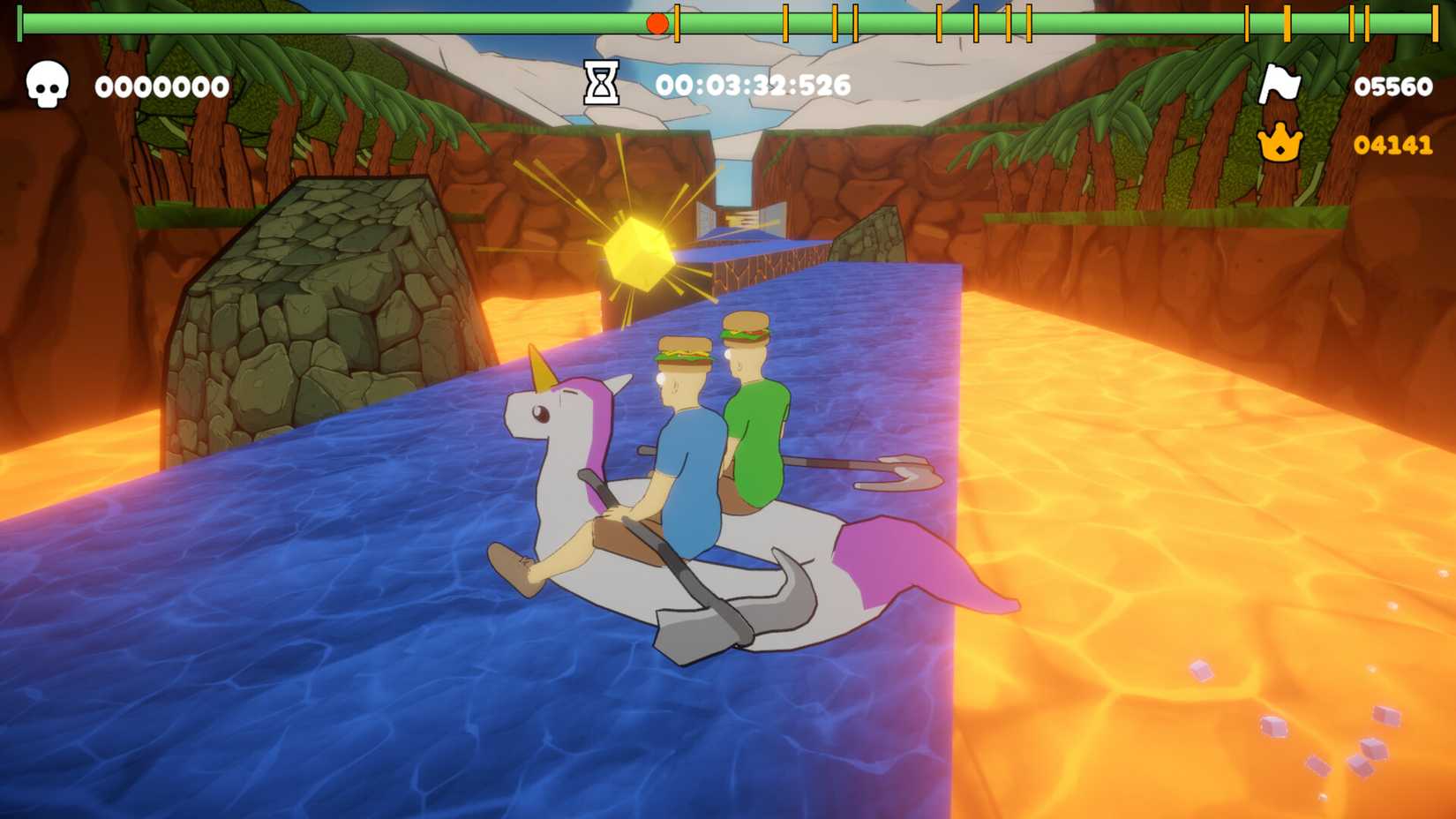
The situation surrounding Paddle Paddle Paddle serves as a case study in the modern indie developer’s struggle. The game, an aquatic, chaotic take on physics-based party games like Super Monkey Ball, has garnered over 1,300 user reviews, with a "Very Positive" rating. Despite this critical reception, the game is suffering from a staggering 21% refund rate.
The core of the issue lies in the intersection of game design and platform policy. Mateo, a 23-year-old part-time developer, created the title in less than two weeks. It is a short, punchy experience—the kind of game that can realistically be finished or fully enjoyed within 90 minutes. Under Valve’s current policy, any user who plays a game for less than two hours is entitled to a "no-questions-asked" refund within 14 days of purchase.
For a game that retails for $4.99 (and is frequently discounted to $2.99), the math is brutal. When a player buys the game, enjoys it for an hour and a half, leaves a glowing review, and then requests a refund, they are essentially signaling that the game was worth playing, but not worth keeping.
A Chronology of the Refund Policy Debate
To understand why this is reaching a boiling point now, one must look at the evolution of Steam’s policies.
- 2015: The Dawn of Liberal Refunds: Valve introduced the modern refund policy, a monumental shift that protected consumers from "broken" or "false advertising" titles. At the time, it was hailed as a massive win for consumer rights, effectively curbing the tide of "shovelware" that plagued the platform.
- 2016–2020: The "Short Game" Problem Emerges: As the indie scene exploded, developers of "narrative-first" or "art-house" games—titles like Firewatch or Gone Home—began reporting issues. Because these games are meant to be consumed in a single sitting, the two-hour window effectively allowed users to play through the entire story and then demand their money back.
- 2026: The Paddle Paddle Paddle Flashpoint: Mateo’s public outcry in July 2026 served as a tipping point. By sharing a screenshot of a player who left a positive review after playing for 90 minutes—only to refund the purchase—he provided tangible proof of a behavior that many developers had previously only discussed in private circles.
Supporting Data: The Economic Reality
The numbers behind Paddle Paddle Paddle are both impressive and sobering. According to data provided by Sensor Tower and industry reports, the game has reached a significant milestone of over 100,000 units sold. Its gross revenue sits at approximately $826,000.
However, gross revenue is a misleading metric for the independent creator. Once Valve’s platform cut (30%), taxes, and the impact of 55,000 refunds are factored in, the take-home pay for the developer drops significantly—to an estimated $250,000. While a quarter-million dollars is a life-changing sum for a 23-year-old, the disparity between the "gross" and "net" highlights a harsh reality: the platform’s policies effectively act as a tax on shorter, innovative indie experiences.

Critics of the developer, however, point to the market value of the product. The top-voted review on the game’s Steam page argues that the developer is "crying" about a product that he admits was rushed. This highlights a secondary, equally contentious debate: Does the developer have a right to charge for a "short" experience, or does the market dictate that if a game is short, it is inherently disposable?
Official Responses and Platform Governance
Valve has remained largely silent on the specific case of Paddle Paddle Paddle. Historically, the company has maintained that its refund policy is designed to be "customer-centric" to build trust in the platform. Valve’s position is that if a customer is unhappy, they should be able to get their money back, and the company has shown little interest in creating a "tiered" refund policy that would differentiate between a 100-hour RPG and a 90-minute party game.
The implications for the industry are profound. Some developers have begun to "pad" their games with artificial length—grinding mechanics or repetitive tasks—solely to keep players in the game for over two hours, thereby protecting their sales. This is widely viewed as a negative outcome for game design, as it forces developers to dilute their creative vision to satisfy the bureaucratic requirements of a storefront.
The Implications for the Future of Indie Gaming
The discourse triggered by Paddle Paddle Paddle has polarized the gaming community. On one side are the "pro-developer" advocates who argue that Valve should implement a "pro-rated" system or allow developers of shorter, high-quality games to opt-out of the unconditional refund policy after a certain percentage of the game has been completed. They argue that the current system rewards "bad faith" behavior—players who enjoy a game but feel no obligation to support the artist.
On the other side are the "pro-consumer" advocates who fear that any restriction on refunds will lead to a resurgence of predatory marketing. They argue that if a game is good enough, players will keep it, and if it is "short," it should be priced accordingly. They maintain that the burden is on the developer to prove the value of their product, not on the platform to police how long a customer plays.
Conclusion: A Need for Nuance
The Paddle Paddle Paddle incident is more than just a squabble over a few hundred thousand dollars; it is a symptom of a maturing industry. As game development tools become more accessible, the variety of games hitting the market—ranging from two-minute art pieces to 200-hour open-world epics—has outpaced the policies of the platforms that distribute them.
Valve stands at a crossroads. By maintaining the status quo, they continue to support a consumer-first environment that has made Steam the industry standard. However, by ignoring the pleas of independent creators, they risk alienating the very people who provide the platform with its most innovative and diverse content.
Whether through automated "game completion" triggers that negate refund eligibility or a more flexible, developer-friendly policy, change appears inevitable. For now, the lesson for indie developers is clear: in the current landscape of digital distribution, your game isn’t sold until the two-hour mark has passed, and for thousands of players, that is exactly when the "trial" ends.
 Basiran
 Suro Senen
