

“America received its official invitation to flirt this week,” read the press release dated March 21, 2006. The announcement heralded the arrival of Aperol, Italy’s most popular light spirit, into the United States. It was a bold, if slightly awkward, attempt to translate the soul of Italian aperitivo culture for an audience that, at the time, viewed cocktails through the narrow lens of martinis and sugary, neon-colored concoctions. Looking back from the vantage point of nearly two decades later, the language—specifically that “invitation to flirt”—feels like a quaint relic of a pre-social media era, when brands were still figuring out how to articulate the nuance of a bittersweet liqueur to a population raised on high-fructose corn syrup.
Today, Aperol is ubiquitous. From the sun-drenched terraces of the Amalfi Coast to the dive bars of Reno and the chic cocktail dens of Reykjavik, that iconic, luminous orange hue is a universal shorthand for leisure. Yet, its journey to the center of the American liquor cabinet was neither immediate nor inevitable. It required a combination of strategic marketing, the rise of the craft cocktail movement, and a handful of visionary bartenders who saw potential where others saw only an unidentifiable, syrupy import.
The Chronology of an Italian Invasion
The story of Aperol does not begin in 2006, of course. It began in 1919 in Padua, Italy, created by the Barbieri brothers. For decades, it served as the backbone of Italian social life—a drink designed for the aperitivo hour, meant to stimulate the appetite before dinner. By the time it landed on American shores, it was already a century-old institution in its home country, yet it remained a complete mystery to the average American consumer.
When the 2006 press release was issued, the landscape of American drinking was vastly different. The “Craft Cocktail Renaissance” was still in its infancy, largely confined to a few influential rooms in New York City. The challenge for importers was significant: how do you sell a bitter, orange-rhubarb liqueur to a country that hadn’t yet learned to appreciate the complexity of the bitter profile?
The turning point occurred not through mass-market advertising, but through the hands of masters. Legendary bartenders, such as Audrey Saunders of the famed Pegu Club, became the unlikely evangelists for the brand. Saunders, recognizing that consumers couldn’t be expected to understand Aperol in isolation, decided to create a bridge—a drink that would teach the palate how to enjoy the liqueur.
The “Inverted” Breakthrough: The Intro to Aperol
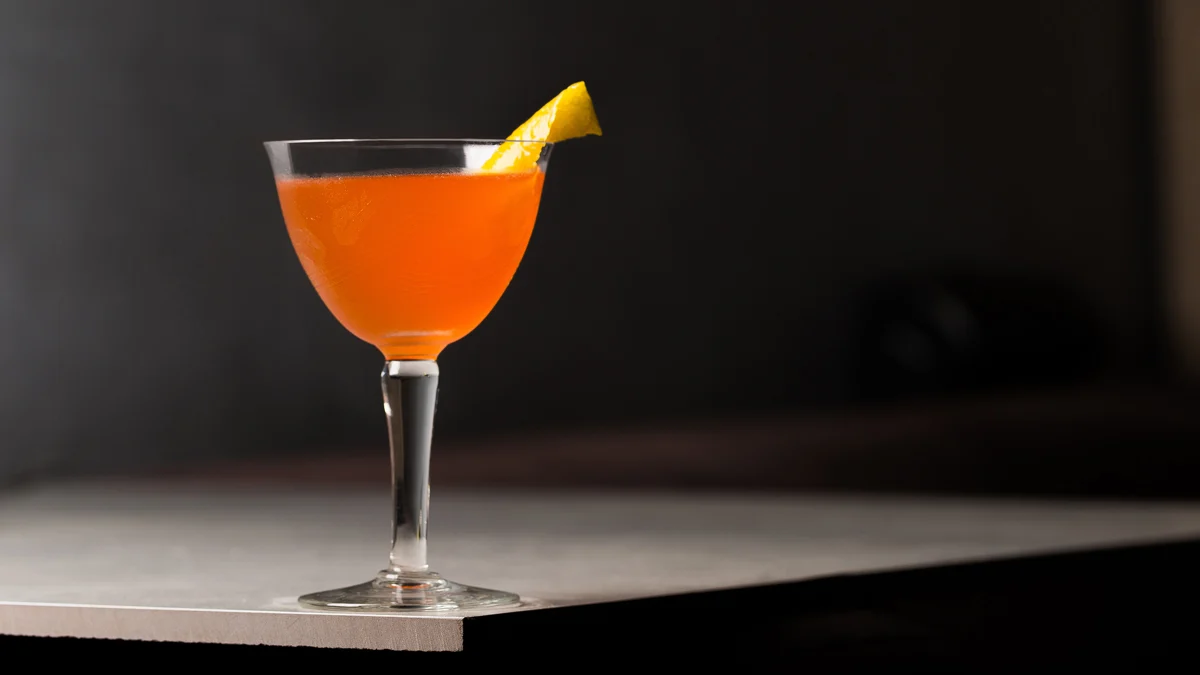
Audrey Saunders’ contribution to the Aperol story is the cocktail known as the "Intro to Aperol." In the context of modern mixology, the drink is a masterclass in balance. Saunders, treating the liqueur not as a mere modifier but as the base spirit, inverted the traditional structure of a sour. By using two full ounces of Aperol—a daring move at a time when the ingredient was relegated to a splash—she forced the drinker to confront its true character.

To temper the inherent sweetness of the liqueur, she introduced gin, effectively flipping the standard ratio of base spirit to modifier. A precise measure of lemon juice provided the necessary acidic structure, while a dash of Angostura bitters served as the aromatic glue, tethering the citrus brightness to the deeper, herbal, and earthy notes of the Aperol.
The result was a drink that allowed the consumer to experience the full arc of the liqueur: the initial citrus burst, the mid-palate notes of rhubarb and orange, and the lingering, spicy, bitter finish. It was, as the name suggested, an education in a glass. While the cocktail itself has faded from the popular spotlight, replaced by the simpler, more approachable Aperol Spritz, the "Intro to Aperol" served its purpose. It established the flavor profile of the brand in the minds of the people who mattered most: the gatekeepers of the American cocktail scene.
Supporting Data: From Niche to Necessity
The meteoric rise of the Aperol Spritz in the 2010s transformed the brand from a bartender’s secret into a cultural phenomenon. The Spritz, a simple combination of Prosecco, Aperol, and soda water, hit the trifecta of modern drinkability: it is low-ABV, visually striking, and perfectly suited for the "Instagrammable" era of food and beverage.
However, the proliferation of the Spritz has occasionally obscured the technical versatility of the liqueur. In recent years, Aperol has become a foundational element in modern classics. Drinks such as the Naked & Famous (a modern cult favorite featuring mezcal, Aperol, Yellow Chartreuse, and lime) and the Paper Plane (bourbon, Aperol, Amaro Nonino, and lemon) demonstrate that the liqueur’s profile—its unique interplay of sweetness, spice, and bitterness—is robust enough to stand up to high-proof spirits like mezcal and bourbon.
Market data confirms this shift. Over the past decade, Aperol has consistently been one of the fastest-growing spirits brands in the United States. Its appeal spans demographics, moving from the sophisticated bar-goer to the casual weekend drinker. This growth is not merely a result of effective marketing; it is a testament to the fact that the American palate has undergone a fundamental shift toward the appreciation of "bittersweet" profiles—a trend that the American coffee industry (with the rise of the craft espresso tonic) and the craft beer industry (with the dominance of the IPA) helped cultivate.
Official Perspectives and Industry Nuance
In discussing the proper use of Aperol, industry professionals remain protective of the ingredient’s integrity. The debate often centers on whether or not the liqueur should be used in isolation or modified.

The consensus among high-end bartenders is that Aperol is a product that rewards precision. When asked about potential substitutes, most experts are dismissive. While the market is flooded with "aperitivo" style liqueurs—some sweeter, some more bitter, some more herbal—there is a specific chemical and flavor balance in the original Aperol that has allowed it to remain the standard-bearer. As with its "big brother," Campari, the success of Aperol lies in its ability to be both distinct enough to be recognized and neutral enough to play well with a vast array of other ingredients.
Furthermore, there is a subtle evolution in how these drinks are prepared. For instance, many contemporary bartenders now view the "simple syrup" component of early-2000s recipes as an unnecessary addition. As our collective tolerance for high-sugar drinks has decreased, the reliance on extra sweetener has been abandoned, allowing the natural sugars and botanical profiles of the liqueur to shine through without the need for additional dilution.
Implications for the Future of Drinking
The "Intro to Aperol" serves as a reminder that the most successful spirits are those that can bridge the gap between tradition and innovation. The arrival of Aperol in 2006 was not just about bringing a new bottle to the US; it was about introducing a philosophy of consumption. The aperitivo culture, which encourages drinking for appetite and social connection rather than intoxication, has become deeply embedded in the American dining experience.
As we look toward the future, the implications for the spirits industry are clear: the American consumer is no longer afraid of the bitter. The success of Aperol has paved the way for a broader acceptance of Italian amaros, quinine-forward tonics, and complex, herbal liqueurs that were once considered too "challenging" for the American market.
For those looking to recreate the "Intro to Aperol" today, the recipe remains remarkably simple, yet it requires a commitment to quality. By combining two ounces of Aperol with one ounce of a high-quality dry gin and three-quarters of an ounce of fresh lemon juice, shaken vigorously with ice, one can experience the drink that truly introduced America to the complexity of one of Italy’s most cherished exports.
In the final analysis, the 2006 press release’s "invitation to flirt" was more accurate than its authors could have possibly known. It wasn’t just an invitation to try a new liqueur; it was an invitation to a long-term, evolving relationship with the bittersweet—a relationship that has permanently altered the landscape of the American glass. Whether enjoyed in the effervescent, sun-soaked simplicity of a Spritz or the nuanced, structural elegance of a classic sour, Aperol has secured its place as a permanent fixture in the global cocktail canon. The flirtation, it seems, has turned into a lasting romance.
 Ali Ikhwan
 Laily UPN
 Raul Delapena Setiawan
