

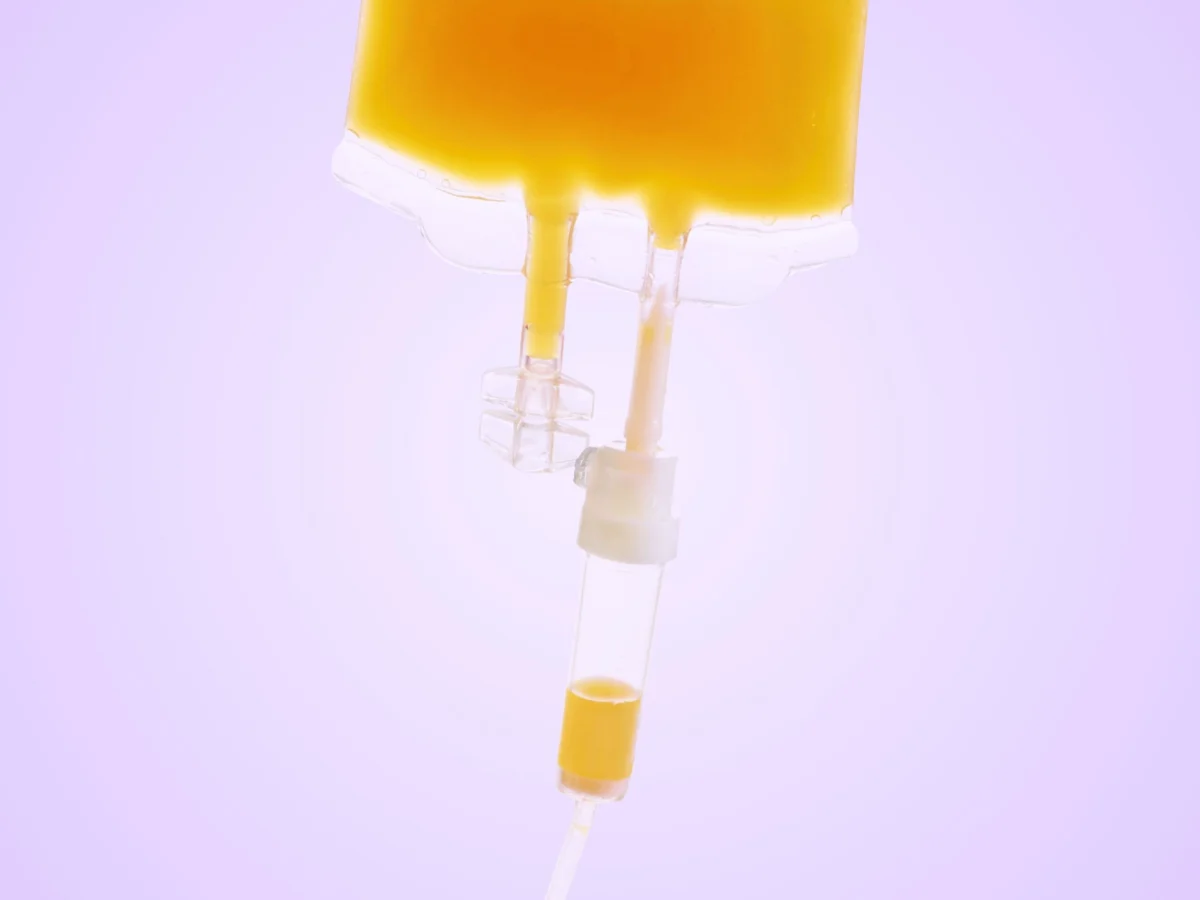
For centuries, the quest for the "fountain of youth" has driven human curiosity, shifting from the mythological search for magical springs to the cold, sterile laboratories of modern biotechnology. Today, the latest frontier in anti-aging science isn’t a miracle cream or a secret diet, but the very fluid that courses through our veins: blood plasma.
A recent study published in Aging Cell has ignited intense debate among longevity enthusiasts and medical professionals alike. The research explores "therapeutic plasma exchange" (TPE), a procedure that filters and replaces the liquid portion of the blood. The findings—which suggest the technique could potentially shave two and a half years off a patient’s biological age—have made headlines worldwide. However, as with any breakthrough in the nascent field of geroscience, the reality is far more nuanced than the soundbites suggest. Before the wellness industry begins marketing "plasma clinics" as the next stop for the biohacking elite, it is essential to peel back the layers of this study to understand what it truly means for the future of aging.
The Vital Role of Plasma: More Than Just a Transport System
To understand the hype, one must first understand what plasma actually is. It is not merely the liquid base that suspends our red and white blood cells. Dr. Andrea Maier, a geriatrician and board member of the Academy for Health and Lifespan Research, describes plasma as the body’s ultimate "DHL delivery system."
"It is a fluid packed with information," Dr. Maier explains. "It acts as a vehicle, shuttling proteins, metabolites, hormones, and inflammatory signals from the brain to the muscles, from the kidneys to the lungs, and everywhere in between."
Because plasma acts as a wide-angle lens for the body’s internal state, it has become the primary target for longevity research. By analyzing the thousands of circulating proteins within this fluid, scientists can derive a snapshot of "biological age." Unlike your chronological age—the number of candles on your birthday cake—biological age is a dynamic measure of how well your systems are functioning. A person might be 40 years old chronologically but possess the cellular integrity of a 30-year-old, or conversely, a 50-year-old.
Dr. Keenan Walker, a senior investigator at the National Institute on Aging, notes that while biological age is not a single, fixed metric, it is a powerful prognostic tool. "There is no single ‘biological age,’ but we attempt to estimate it," he says. "Studies consistently show that individuals whose biological age exceeds their chronological age face a significantly higher risk for chronic conditions, age-related diseases, and premature mortality."
A Chronology of Discovery: From Mice to Modern Medicine
The interest in blood-based anti-aging is not a new phenomenon. It traces its roots back to experiments conducted roughly 15 years ago involving a surgical technique called parabiosis. In these studies, researchers surgically linked the circulatory systems of two mice—one old and one young—to see if the younger organism’s blood could revitalize the older one.
The results were, at the time, startling. The older mice showed increased resilience to tissue damage and organ stress, effectively "rejuvenating" their internal systems through the infusion of young plasma. This provided the "proof of concept" that launched a thousand scientific inquiries: Could there be something in our circulation that we could either filter out or infuse to extend the human lifespan?
This biological insight eventually made its way into clinical settings, where plasma exchange has been used for years to treat severe autoimmune disorders, specific neurological conditions, and blood cancers. These patients undergo a process where their plasma is removed and replaced with purified albumin and saline. While these medical applications are well-established for treating illness, using the technique purely as a "rejuvenation elixir" for healthy aging is a significant leap—one that remains fraught with scientific and ethical questions.
The Aging Cell Study: Deciphering the Data
The study published in Aging Cell involved 42 participants who underwent a rigorous plasma exchange protocol. Researchers replaced the participants’ plasma with a combination of purified albumin and saline, with some participants also receiving an immune therapy known as intravenous immunoglobulin (IVIG). To measure the impact, the team used sophisticated laboratory tests designed to track molecular aging.
At first glance, the results appeared to be a watershed moment: some participants saw their biological age decrease by approximately 2.5 years. However, Dr. Maier urges caution, noting that the data is often stripped of its necessary context.
"If you dig deeper, that ‘2.5 years younger’ statistic is a comparison between the midterm results and the baseline," Dr. Maier explains. "It is not comparing the end-of-study results to the baseline. By the end of the intervention, the effect had largely dissipated."
This oscillation is key to understanding the body’s reaction to the procedure. When a large volume of plasma is removed and replaced, the body is essentially put through a state of "controlled shock." The influx of fresh components provides a short-term, superficial boost, but the body’s homeostatic mechanisms quickly work to recalibrate. The result is a brief window of rejuvenation followed by a return to the original biological trajectory as the body adapts to the intervention.
The Variable of Personal Health
Another crucial takeaway from the study involves the health status of the participants. Dr. Walker points out that the effectiveness of the intervention was not uniform across the board.
"Those who were less healthy saw a stronger intervention effect," he observes. "This suggests that the ‘rejuvenation’ we are observing might be a return to baseline function for someone whose systems were already struggling, rather than a genuine ‘clock-reversing’ effect for a healthy person."
This nuance highlights the necessity for a more personalized approach to longevity science. If plasma exchange is to be a viable therapy in the future, it cannot be a "one-size-fits-all" procedure. Instead, researchers must identify exactly who stands to benefit and why. Is it the removal of harmful, pro-inflammatory proteins in older individuals, or is it the addition of specific restorative factors found in younger blood? The current "blanket" filtering approach may be too imprecise to provide lasting health benefits.
Implications for the Future of Longevity
Both Dr. Maier and Dr. Walker agree that while the field of blood-based interventions is promising, the Aging Cell study should be viewed as a Phase 1 trial—a foundational step in assessing safety rather than a roadmap for clinical practice.
"We have learned that we can perform this procedure safely, which is a success in itself," Dr. Maier says. "However, we need much larger, long-term studies to understand the systemic impact. It is not a ‘crazy’ idea; it is grounded in evidence. But we are nowhere near ready to implement this in standard clinical practice. It is, quite frankly, very rough on the body."
The broader implication is that the future of anti-aging likely lies in precision medicine rather than massive systemic overhauls. Instead of filtering the entire blood supply, future therapies may involve the targeted removal of specific proteins that accumulate with age, or the precise supplementation of molecules that decline over time.
For the general public, the lesson is one of patience. Innovation in the longevity space is moving at an unprecedented pace, and while the idea of a "blood reset" is compelling, it remains an experimental pursuit. As Dr. Maier concludes, "The future is bright in our field, and this study is a small, necessary step. But I believe the future will offer us something much more refined, effective, and less taxing on our biology than what we see today."
In short: stay skeptical of "plasma clinics" offering miracle cures. The fountain of youth is not a simple transfusion away; it is a complex puzzle that scientists are only just beginning to piece together. For now, the most effective longevity strategy remains the "boring" science: a balanced diet, consistent physical activity, restorative sleep, and regular medical screenings. These remain the gold standard for maintaining a biological age that stays in lockstep with, or even trails behind, your chronological years.
 Asro
Asro
 Suro Senen
 Azzam Bilal Chamdy
