

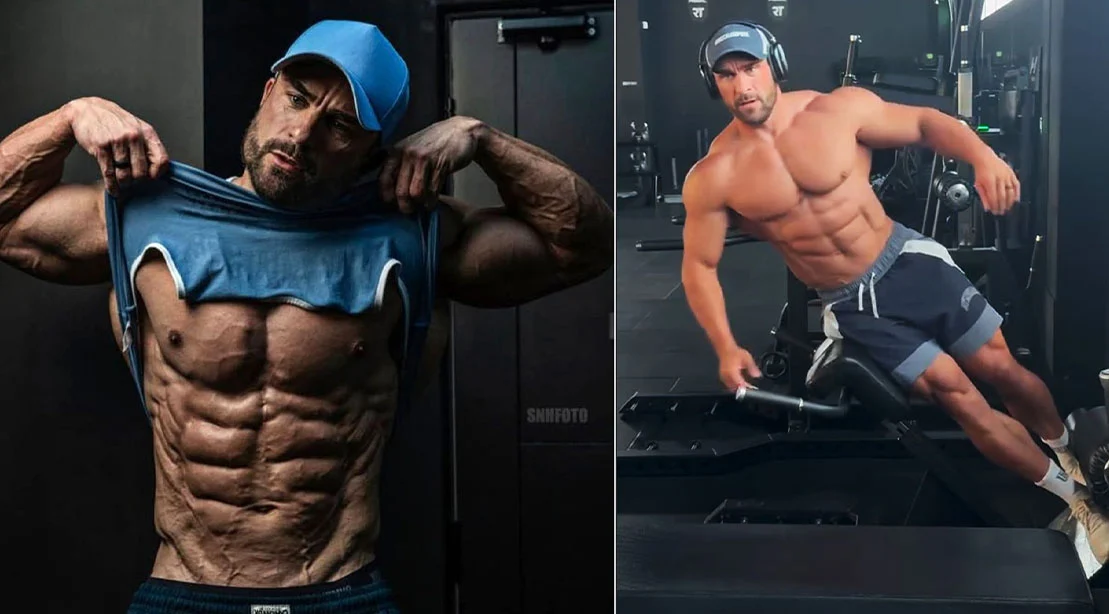
With the 2026 Olympia looming on the horizon in Las Vegas, the pressure is mounting for the world’s elite bodybuilders. Among them stands Ryan Terry, the reigning Olympia Men’s Physique champion, a man whose career has become synonymous with consistency, aesthetic perfection, and an unwavering commitment to the craft. As he approaches the final ten-week countdown to the biggest stage in the sport, Terry has pulled back the curtain on the grueling routine he is employing to defend his title—specifically, the introduction of a high-intensity A.M. abdominal protocol designed to etch his midsection into historical perfection.
The Main Facts: A Champion’s Pivot
For the British bodybuilding icon, the ten-week mark is a psychological and physiological threshold. It is the moment when "training" evolves into "pre-contest preparation." Addressing his 2.6 million followers on Instagram, Terry announced the addition of dedicated morning abdominal sessions to his already rigorous regimen.
"I’m introducing A.M. abs workouts," Terry stated, noting that this phase of his preparation signals that "things are getting serious." This shift is not merely about adding volume; it is a strategic maneuver to ensure that his midsection—arguably the most scrutinized muscle group in the Men’s Physique division—is hardened, defined, and capable of maintaining peak vascularity under the harsh, high-intensity stage lighting of the Olympia.
Chronology of a Champion: The Road to 2026
Ryan Terry’s journey to the top of the Men’s Physique division is a masterclass in longevity. Unlike many athletes who burn out through aggressive, short-term tactics, Terry has cultivated a year-round physique that allows him to start his prep from a position of strength rather than damage control.
- Early Career: Terry first rose to prominence by prioritizing structural balance and aesthetic symmetry, qualities that would eventually become his signature.
- The Olympia Ascent: After years of near-misses and top-tier placements, Terry cemented his legacy by securing the Olympia crown, proving that a disciplined, "slow and steady" approach yields greater dividends than sporadic, high-risk training cycles.
- The 2026 Prep: As of the current ten-week out mark, Terry has transitioned from a general hypertrophy phase into the "sharpening" phase. The introduction of morning core work is a deliberate attempt to prioritize the midsection before his central nervous system is fatigued by the heavy lifting that dominates his afternoon sessions.
Supporting Data: The Mechanics of the Terry Core Protocol
Terry’s approach to abdominal training rejects the common misconception that the core only requires high-repetition, low-weight circuits. Instead, he applies the principles of traditional bodybuilding hypertrophy to the rectus abdominis, obliques, and transverse abdominis.
1. The GHD Reverse Crunch
Terry utilizes the Glute Hamstring Developer (GHD) to perform weighted reverse crunches. By allowing the legs to drop below the torso, he creates a deep stretch in the rectus abdominis. This "negative" portion of the movement is critical for muscle fiber recruitment, while the contraction phase ensures the deep, blocky look required for a championship-caliber six-pack.
2. Side Oblique Crunches
To frame the waist, Terry incorporates targeted oblique work. By focusing on the muscles above the hip, he creates the "taper" that is a hallmark of the Men’s Physique division. His form is characterized by slow, controlled repetitions, keeping the tension constant rather than relying on momentum.
3. Incline/Decline Bench Situps
Terry’s programming often utilizes the bench to manipulate the angle of resistance. By working against gravity on an incline, he increases the time under tension. This exercise is pivotal for thickening the abdominal wall, ensuring that his midsection does not appear "flat" when he hits his front-facing poses.
4. V-Situps (Jack Knives) on the Bench
The use of a bench for V-situps is a testament to Terry’s advanced level of stability. By performing these off a bench rather than the floor, he removes the lumbar support, forcing the core to stabilize the entire body. This not only engages the rectus abdominis but also targets the hip flexors and deep core stabilizers, which are essential for maintaining a tight, vacuum-like appearance on stage.
Official Responses and Philosophy
The most significant aspect of Terry’s preparation is his philosophical shift regarding nutrition. In a previous discourse to his audience, Terry cautioned against the "crash diet" mentality that plagues the fitness industry.
"The real job isn’t training your abs harder. It’s reducing overall body fat," Terry explained. He argues that even the most muscular core remains invisible if shrouded in body fat. His approach is rooted in a moderate caloric deficit—eating slightly less than he burns—coupled with extreme patience.
"I’ve seen too many people lose weight fast, including me in my early career, sacrifice muscle, then end up right back where they started," he remarked. By prioritizing muscle preservation over rapid scale weight drops, Terry ensures that when he steps onto the Olympia stage, he is not just lean, but full and "stage-ready."
Implications for the Industry
Ryan Terry’s approach carries profound implications for both competitive bodybuilders and fitness enthusiasts. By demonstrating that the "secret" to a world-class physique is not a hidden exercise or a miracle supplement, but rather the boring, repetitive, and disciplined execution of the basics, he provides a blueprint for sustainable success.
The Myth of Spot Reduction
Terry’s emphasis on the link between nutrition and abdominal visibility serves as a necessary reality check. The industry is saturated with marketing for "ab-sculpting" machines and supplements that promise fat loss in specific areas. Terry’s evidence-based reality—that the body loses fat systematically through a caloric deficit—remains the gold standard of sports science.
The Evolution of Men’s Physique
As the Men’s Physique division becomes increasingly competitive, the margins for victory are shrinking. Athletes are no longer just "lean"; they are required to have extreme muscle maturity and a perfectly balanced midsection. Terry’s move to include A.M. ab sessions reflects a growing trend in the sport: the necessity of high-frequency training to elicit a specific aesthetic adaptation.
Strategic Conclusion: The Road to Vegas
With the 2026 Olympia fast approaching, the focus on Ryan Terry is intense. His transition into this high-intensity abdominal phase is a calculated risk—designed to push his physique into the realm of the untouchable.
For those looking to replicate his results, the takeaway is clear:
- Prioritize Form: Never trade controlled repetitions for ego-driven weight.
- Sustainability is Key: Adopt a nutritional plan that allows for muscle retention; crash diets are the enemy of longevity.
- Consistency in Programming: The "A.M. Abs" routine is not a quick fix; it is a cumulative process that requires the same commitment as his heavy compound lifts.
As Ryan Terry continues his march toward a fourth consecutive title, he remains a beacon for the natural-looking, aesthetic-focused side of bodybuilding. Whether he succeeds in Las Vegas remains to be seen, but one thing is certain: his preparation is as meticulous as his physique is iconic. The champion is not just training for a show; he is training for his place in the history books.
 Lina Hope
 rifanmuazin
 Laily UPN
