

This story is from an installment of The Oeno Files, our weekly insider newsletter to the world of fine wine.
For centuries, the oak barrel has reigned supreme as the gold standard of viticulture. From the structured, toast-forward profile of a Bordeaux blend to the velvety, vanilla-kissed tannins of a premium Napa Cabernet, the marriage of wood and wine has defined the sensory lexicon of the modern wine drinker. Yet, in the rolling, sun-drenched hills of Tuscany, a quiet revolution is taking place. A vanguard of forward-thinking estates is turning its back on the cellar’s industrial workhorses, looking instead to a vessel that predates the Roman Empire: the terra-cotta amphora.
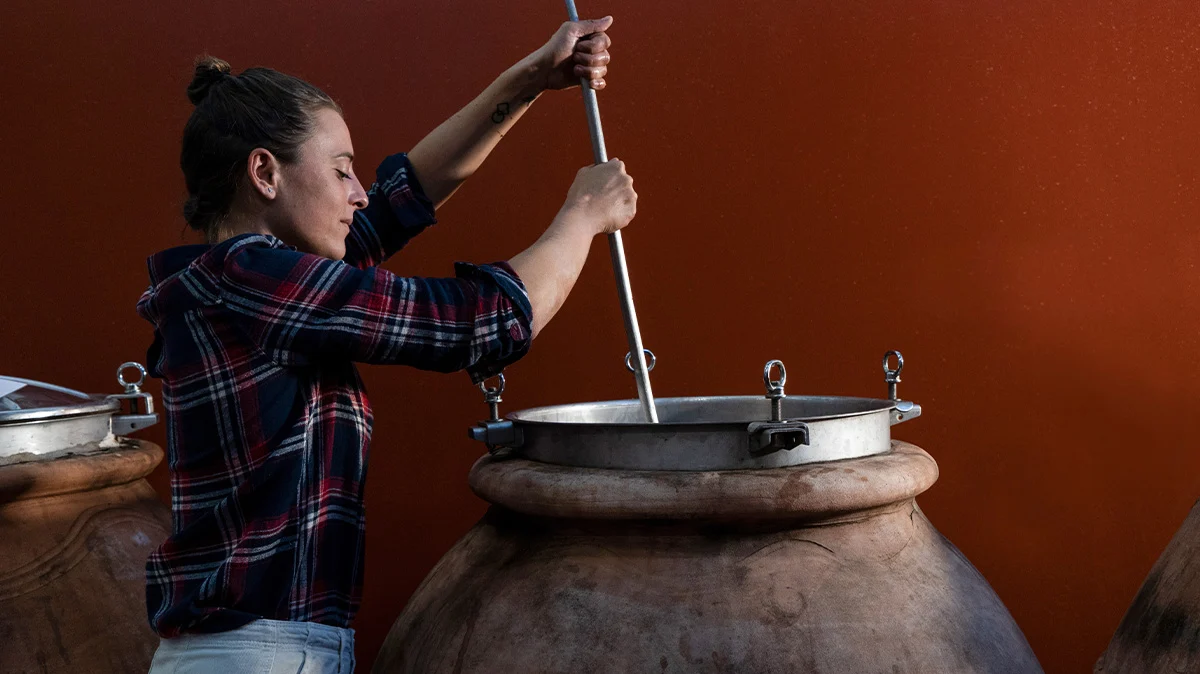
Once the primary storage solution for the Etruscans, who revered the region’s iron-rich clay pits, these porous, earthenware vessels are enjoying a renaissance. What began as a fringe experiment among artisanal producers has blossomed into a sophisticated dialogue regarding terroir, purity, and the future of Tuscan winemaking.
The Main Facts: A Return to Origins
The fundamental appeal of the amphora lies in its neutrality. While oak barrels act as a seasoning agent—imparting vanillin, wood tannins, and spice—the terra-cotta amphora functions as a silent witness. Its primary purpose is not to add, but to reveal.
The material’s unique porosity allows for a measured, slow exchange of oxygen, facilitating a graceful maturation process that mimics the micro-oxygenation of a barrel without the aggressive aromatic interference. For winemakers, this creates a laboratory of sorts, allowing the inherent characteristics of the Sangiovese grape—its high acidity, mineral drive, and savory, herbaceous spine—to express themselves without the "makeup" of toasted wood.
A Chronological Perspective: From Etruscan Clay to Modern Innovation
The history of wine in Tuscany is written in clay. Long before stainless steel tanks were standardized, Etruscan producers utilized local terra-cotta vessels to ferment and age their yields. However, the 20th century saw a massive industrial shift toward convenience and consistency, leading to the near-total dominance of stainless steel and French oak.
- Ancient Period: Etruscan winemakers pioneer the use of local Tuscan clay to create storage vessels, recognizing the material’s thermal stability.
- The Industrial Era (1950s–2000s): Wineries pivot toward stainless steel for temperature-controlled fermentation and barriques for aging, prioritizing the extraction of flavor and longevity through wood.
- The Modern Resurgence (2010–Present): A small group of innovators, seeking to capture the "unadulterated expression" of their vineyards, begin reintroducing amphorae. Initially used for small-batch trials, the practice has now evolved into a cornerstone of production for estates like San Polo, Avignonesi, and Le Anfore di Elena Casadei.
Supporting Data: Comparative Profiles
The shift to amphora is not merely an aesthetic choice; it is a technical one. Producers are increasingly using side-by-side analysis to understand the impact of the vessel on the final juice.

At San Polo in Montalcino, owner Marilisa Allegrini oversees a production that highlights this contrast. Her San Polo Amphora Vignamasso Toscana IGT is produced entirely in clay, while her Rosso di Montalcino undergoes a year of maturation in large oak casks. Both wines are derived from 100 percent Sangiovese grown in high-elevation vineyards.
"Both wines share the mineral-driven character and lively acidity we associate with our vineyards," Allegrini notes, "but their aromatic and textural profiles are quite different. Oak tends to soften the wine while contributing sweet-spice notes, whereas amphora allows the savory character of our terroir to come forward more clearly, with a very different texture."
This data-driven approach is echoed by Alessio Gorini, COO of Avignonesi. For him, the amphora acts as a filter that clarifies the winemaker’s decisions. "Without the aromatic contribution or textural sweetness of wood, characteristics such as aroma, acidity, tannin, and texture remain particularly easy to identify," he explains.
Official Responses: The Philosophy of the Winemaker
The movement is defined by a philosophical shift toward "minimal intervention." The goal is not to force the wine into a pre-determined flavor profile, but to shepherd it through its evolution.
Elena Casadei, of Le Anfore di Elena Casadei, represents a new generation that bridges the gap between local traditions and global influences. Utilizing both local Impruneta clay and traditional Georgian qvevri, Casadei views the vessels as a link to an ancient, UNESCO-recognized culture.
"I find it incredible that one of the oldest winemaking tools in history can still feel so contemporary today," Casadei says. "Working with amphorae has taught me to observe, to taste, to wait, and above all to accept that not everything has to be the same every time."
Addressing the common criticism that terra-cotta leads to sediment or "gritty" textures, Casadei is firm. She argues that these issues are not inherent to the clay, but rather to poor winemaking. "We aim to achieve clean, precise wines through time, natural settling, and careful management throughout the entire winemaking process. For me, minimal intervention does not mean accepting imprecision."

Implications for the Future: Beyond the Experiment
The adoption of amphorae is having a ripple effect on cellar operations throughout Tuscany. The implications are profound, ranging from sustainability to the very definition of a "Tuscan wine."
1. The Reduction of Sulfur
One of the most significant discoveries at estates like San Polo is the ability to reduce sulfur additions. Because the amphora is less porous than oak and provides a more stable, neutral environment, the need for chemical preservatives is diminished. This allows for a more "natural" expression that resonates with the current consumer demand for transparent, low-intervention winemaking.
2. A Total Re-evaluation of Materials
The success of these experiments has emboldened winemakers to look beyond the "standard" kit of the last century. At San Polo, the success of the amphora program has led to a total overhaul: starting with the 2025 vintage, the estate has eliminated stainless steel entirely, opting instead for a blend of concrete, oak, and amphora.
3. The "Terroir" of the Vessel
Perhaps the most intriguing implication is the realization that the source of the clay matters. Just as a forest’s terroir influences the flavor of an oak barrel, the mineral composition of the clay in the amphora affects the wine. Many producers are now sourcing clay from the very pits that defined the region’s history, effectively putting the "earth" of Tuscany into the bottle in a literal sense.
Conclusion
As the wine world continues to oscillate between the technological extremes of the modern era and the wisdom of the ancient world, Tuscany has found a middle path. The amphora is no longer just a museum piece; it is a precision instrument. By stripping away the structural and aromatic layers added by modern wood aging, these winemakers are conducting an ongoing, grand-scale experiment in identity.
Whether this trend will eventually eclipse the use of oak remains to be seen. However, as Marilisa Allegrini points out, the transition is about more than just the vessel. It is about a fundamental change in mindset: "The lessons we have taken from the past are now actively helping to shape the future." In the quiet, cool depths of the Tuscan cellars, the earth is once again speaking, and the world is finally listening.
Do you want access to rare and outstanding reds from Napa Valley? Join the Robb Report 672 Wine Club today.
 Ali Ikhwan
 Laily UPN
 Raul Delapena Setiawan
