

Welcome to Taste Test, where every week our critic Jonah Flicker explores the most buzzworthy and interesting whiskeys in the world. Check back each Sunday for his latest whiskey review.
For the seasoned whiskey enthusiast, autumn marks a period of profound anticipation. As the leaves begin their seasonal descent, the spirits world prepares for the arrival of its most coveted “unicorns”—the rare, highly allocated bourbons that define the apex of the collector’s market. In recent years, the conversation surrounding these heavy hitters has been dominated by the Buffalo Trace Antique Collection (BTAC), the elusive Pappy Van Winkle lineup, and the perennial excellence of Four Roses.
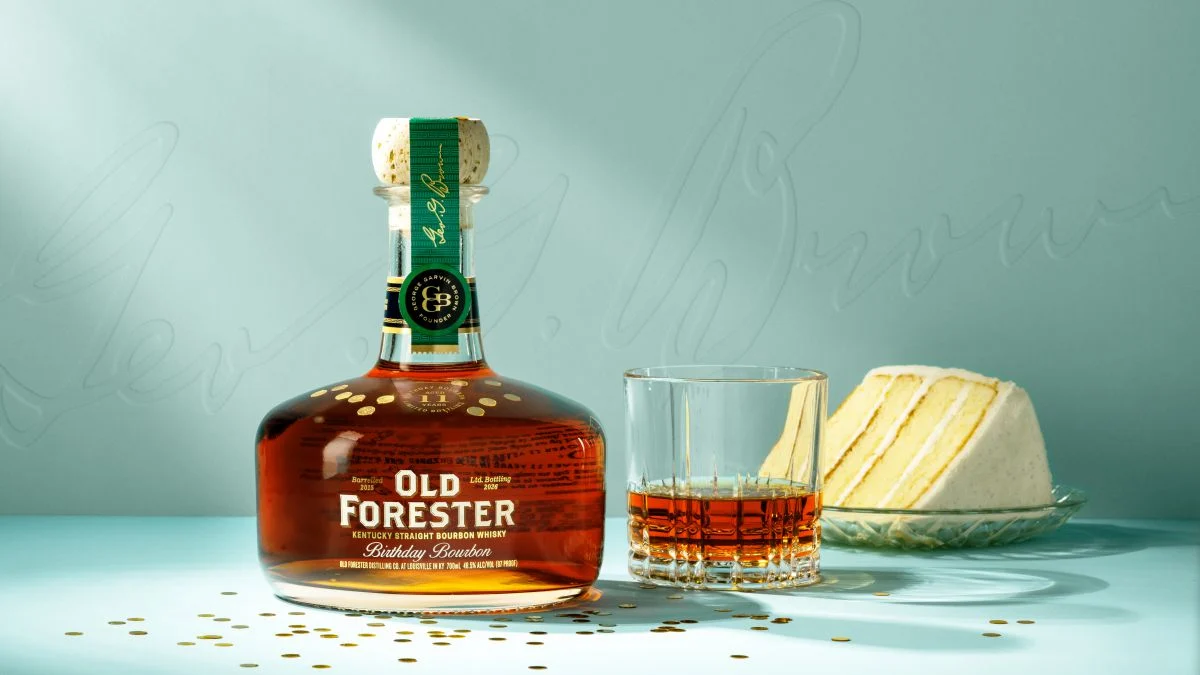
Amidst this crowded field of titans, Old Forester’s Birthday Bourbon has occasionally felt as though it were fading into the background, overshadowed by the sheer noise of its competitors. However, the 2026 edition serves as a definitive "return to form." This year’s release is not merely a collector’s item; it is, quite arguably, the finest iteration of the expression in recent memory.
The Chronology of an Icon: 26 Years of Birthday Bourbon
To understand the weight of the 2026 release, one must look at the history of the label. First introduced in 2002 to honor the birthday of Old Forester founder George Garvin Brown, the line has become a staple of the American whiskey calendar. Because it was released twice in 2003, the 2026 edition marks the 26th bottling in the series.
Over more than two decades, the Birthday Bourbon has functioned as a yearly experiment in terroir and maturation. The specifications have shifted wildly since its inception. The strongest release arrived in 2024 at a robust 107 proof, while the 2003 release sat at a much softer 89 proof. The maturation timeline has been equally fluid; the oldest juice in the series was bottled in 2006 at 13 years, while the youngest—a bright, youthful expression—was released in 2004 at just eight years old.
The 2026 edition finds itself in a comfortable middle ground, aged for 11 years and bottled at 97 proof. While these statistics provide a baseline, they rarely capture the full story of what happens inside the rickhouse.
The Chemistry of "Production Happens"
What sets the 2026 release apart from its predecessors is a seemingly minor technical anomaly that occurred during the production phase. According to the team at Brown-Forman, a scheduling quirk involving a holiday meant the new-make spirit remained in the cistern room longer than intended before entering the barrels. This delay resulted in a slight reduction of the entry proof, moving it from the standard 125 down to 124.4.
To the casual observer, a difference of 0.6 proof points sounds negligible. However, in the high-stakes world of craft distillation, such variables can be transformative. I spoke with Old Forester assistant master distiller Caleb Trigo to parse out the implications.
“It’s something that can affect flavor development because it means there’s a different ratio of ethanol to water in the barrel, which affects solubility,” Trigo explained. “That affects how much vanillin and lignin is absorbed from the barrel staves over time. As we like to say, ‘production happens.’ Things don’t always go as planned.”
While it is impossible for a consumer to conduct a perfect A/B test—comparing the 2026 batch against an identical spirit entered at a higher proof—Trigo’s explanation highlights the volatile nature of aging. The interaction between the spirit and the wood is a delicate dance, and even a fraction of a percentage change in ethanol content can alter the extraction of sugars and tannins from the charred white oak. This specific batch was aged on the third floor of Warehouse B at the Brown-Forman Shively distillery, a location known for its unique microclimate and airflow, further contributing to the whiskey’s distinct profile.

Tasting Notes: A Vibrant, Complex Evolution
Having sampled the previous few releases, I found that while they maintained a high standard, they often lacked a distinct identity. The 2026 Birthday Bourbon, by contrast, is a revelation. It manages to be both vibrant and profoundly rich, hitting the "sweet spot" of maturation where age and proof harmonize perfectly.
The most striking feature of this year’s palate is the presence of spice. Where many modern bourbons lean heavily into the sweeter, dessert-like profiles of caramel and vanilla, the 2026 Birthday Bourbon introduces a complex layering of black pepper, cinnamon, and a distinct, cooling cardamom note. This spice profile acts as a sophisticated anchor for the palate.
Perhaps most nostalgic is a recurring note of cream soda, a flavor profile I rarely encounter in high-end bourbon. It is a whimsical, sweet element that is expertly balanced by deeper, more brooding notes of leather, pecan pie, and a surprising, welcome hint of menthol. The addition of a grape jelly sweetness rounds out the experience, creating a finish that is both long and memorable. It is a bourbon that demands slow sipping, revealing new layers as the glass breathes.
Market Implications and the Price of Prestige
As with any limited release from a heritage distillery, the MSRP serves as only the starting line. The 2026 Old Forester Birthday Bourbon carries an official suggested retail price of $200. However, the realities of the secondary market are stark.
While the "Birthday" label may not yet command the astronomical, four-figure prices seen for the oldest Pappy Van Winkle expressions, it remains a high-demand commodity. A quick survey of secondary market trends suggests that fans should expect to pay between $600 and $1,000 per bottle.
This raises the perennial question: Is it worth it?
For the casual drinker, the answer is undoubtedly no. But for the collector, or the enthusiast looking for a special-occasion pour that bridges the gap between traditional Kentucky profiles and experimental, modern complexity, this bottle is a standout. It offers an experience that is demonstrably different from the standard core lineup, and it possesses a structural integrity that justifies its reputation as a "unicorn."
Conclusion: The Verdict
The 2026 Old Forester Birthday Bourbon is a masterclass in the unintended consequences of production. By embracing a minor deviation in entry proof and allowing the spirit to age with patience, the team at Brown-Forman has delivered a whiskey that feels intentional, refined, and deeply satisfying. It stands as a testament to the fact that, in whiskey making, the best results often come from the perfect storm of process and serendipity.
If you are in the position to hunt down a bottle—and are prepared for the secondary market markup—this is a release that rewards the effort. It is not merely a birthday celebration; it is a victory lap for one of the most storied names in American spirits.
Final Score: 91
Quick Stats:
- Age: 11 Years
- Proof: 97
- Distillery: Brown-Forman (Shively, KY)
- Warehouse Location: Warehouse B, 3rd Floor
- Market Price: $200 (MSRP) / $600–$1,000 (Secondary Market)
 Ali Ikhwan
 Raul Delapena Setiawan
