

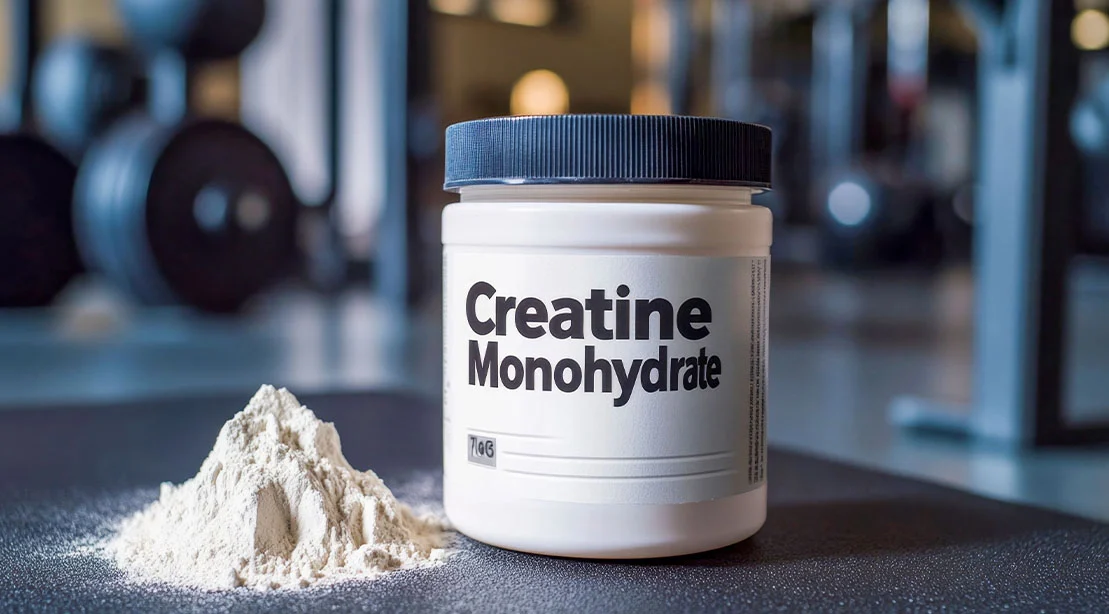
Creatine monohydrate has been a bedrock of the fitness industry for decades. It is the rare supplement that has withstood the relentless cycle of trend-chasing, fads, and marketing hyperbole. Affordable, extensively studied, and proven effective when paired with progressive resistance training, it has earned its place in gym bags worldwide. However, a recent study published in the Journal of the International Society of Sports Nutrition (ISSN) has ignited a firestorm of speculation: could creatine actually build muscle in the absence of exercise?
As the bodybuilding legend Ronnie Coleman famously remarked, "Everybody wants to be a bodybuilder, but nobody wants to lift no heavy-ass weights." For many, the prospect of bypassing the physical toil of the weight room via a simple daily scoop is the ultimate siren song. But as with most things in the realm of sports science, the truth is far more nuanced—and perhaps less miraculous—than the viral headlines suggest.
The Study: Methodology and Initial Findings
In August, researchers at Texas A&M University launched a study that would soon be echoed across social media platforms and health forums. The trial sought to understand the effects of creatine supplementation on sedentary adults, specifically those in the 45 to 65 age bracket.
The Experimental Setup
The study recruited 73 sedentary participants, with 64 successfully completing the full 12-week protocol. The researchers divided the cohort into groups based on their personal choice regarding diet and exercise: some elected to follow a structured training program, while others remained sedentary. Within these groups, participants were randomly assigned either 10 grams of creatine monohydrate daily or a placebo.
The "Lean Tissue" Discovery
The headline-grabbing result was that the sedentary participants who took creatine gained approximately 2.4 pounds of "lean tissue" compared to the placebo group, who saw no such increase. Furthermore, the creatine group showed modest improvements in specific strength tests. On the surface, this appears to be a landmark finding—a potential "shortcut" to hypertrophy. However, a deeper dive into the mechanics of human physiology suggests we should temper our expectations.
The Physiological Reality: Muscle vs. Water
To understand why a sedentary person might "gain" 2.4 pounds of lean mass, one must look at how medical technology measures body composition. The researchers utilized DXA (Dual-energy X-ray Absorptiometry) scans. While these are the gold standard for body composition testing, they have a critical blind spot: they cannot distinguish between contractile muscle protein and the water stored within the muscle cells.
Creatine is osmotically active; its primary mechanism of action involves pulling water into the muscle cell. When an individual begins a high-dose regimen (10 grams daily is significantly higher than the standard 3–5 gram maintenance dose), the body often retains a substantial amount of intracellular fluid. Therefore, the "lean tissue" recorded by the DXA scan is likely a combination of muscle protein synthesis and a significant increase in intramuscular hydration. To claim this represents 2.4 pounds of pure, dense muscle fiber is a leap that the data simply does not support.
Critical Caveats and Limitations
Beyond the confusion of what constitutes "lean mass," the study faces several limitations that are frequently ignored by proponents of the "creatine-only" muscle-building theory.
Small Sample Sizes
The comparison group for the sedentary subjects was remarkably small—just thirteen individuals in the creatine group and thirteen in the placebo group. While statistically significant in a controlled setting, it is hardly representative of the general population. Small sample sizes increase the margin of error and the risk of anomalous data influencing the outcome.
Selection Bias
Crucially, the study did not randomize the decision to exercise. Participants chose whether or not they wanted to engage in a training program. This creates a fundamental difference in baseline health and motivation levels between the groups, making direct comparisons between the exercisers and non-exercisers scientifically shaky.
Exploratory Data on Cognitive and Metabolic Health
The study also reported improvements in memory, blood lipid profiles, and blood-sugar markers. While these findings are compelling, the researchers themselves labeled these as "exploratory." In scientific parlance, this means the results are interesting enough to warrant further investigation but not robust enough to be considered a definitive medical claim. These findings require replication in larger, more diverse cohorts before they can be accepted as clinical fact.
The Role of Industry Funding
Transparency is the currency of the scientific community. It is essential to note that this study was funded by a foundation gift, with a creatine manufacturer providing the supplements and covering the costs of a specific laboratory assay. Furthermore, the senior researcher disclosed a position on that company’s scientific advisory board.
While this does not automatically invalidate the results, it necessitates a skeptical, objective lens. In an era where "science-backed" is a buzzword used to sell products, consumers and journalists must look beyond the abstract and examine the disclosures. The presence of financial backing does not make a study "false," but it does place a burden of proof on the reader to verify the findings against the wider body of independent, peer-reviewed literature.
Implications for the Fitness Community
So, where does this leave the average gym-goer? Does the study render the "no pain, no gain" ethos obsolete? Far from it.
The Superiority of Combined Intervention
The study also followed participants who combined resistance and aerobic exercise with a calorie-restricted diet. This group gained nearly three pounds of lean tissue and showed vastly superior improvements in physical performance metrics compared to the sedentary group. If the goal is to optimize health, improve strength, and change body composition, the evidence remains overwhelming: exercise is the primary driver of progress.
The "Maintenance" Dose vs. High Loading
It is important to emphasize that the study used a 10-gram daily dose. Most athletes find that 3 to 5 grams of creatine monohydrate per day is sufficient to saturate muscle stores and provide the performance benefits associated with high-intensity training. Doubling or tripling this dose for the general population—without the metabolic demand of heavy lifting—is not only potentially unnecessary but may lead to gastrointestinal distress in some individuals.
Conclusion: The Place of Creatine in a Balanced Life
Creatine monohydrate remains one of the safest and most effective supplements on the market. Its ability to support ATP production, increase exercise capacity, and potentially aid in cognitive function is well-documented. However, we must be careful not to turn a useful tool into "magic dust."
The recent findings from Texas A&M are interesting from a physiological perspective. They suggest that creatine might have beneficial effects on body composition and metabolism even in the absence of exercise, which could be particularly relevant for aging populations or those undergoing physical rehabilitation. However, suggesting that this study proves one can build a "bodybuilder’s physique" while remaining sedentary is a gross misinterpretation of the data.
The takeaway for the fitness enthusiast is simple: keep taking your creatine if it suits your goals, but do not look for an exit ramp from the weight room. True, meaningful muscle growth is a product of mechanical tension, metabolic stress, and consistent training. No supplement, regardless of its scientific pedigree, can replicate the physiological adaptations that occur when you push your body to its limit under the iron. The supplement is an enhancement, not a replacement. And in the world of fitness, there is no substitute for showing up and doing the work.
 Lina Irawan
 Lina Hope
 rifanmuazin
