

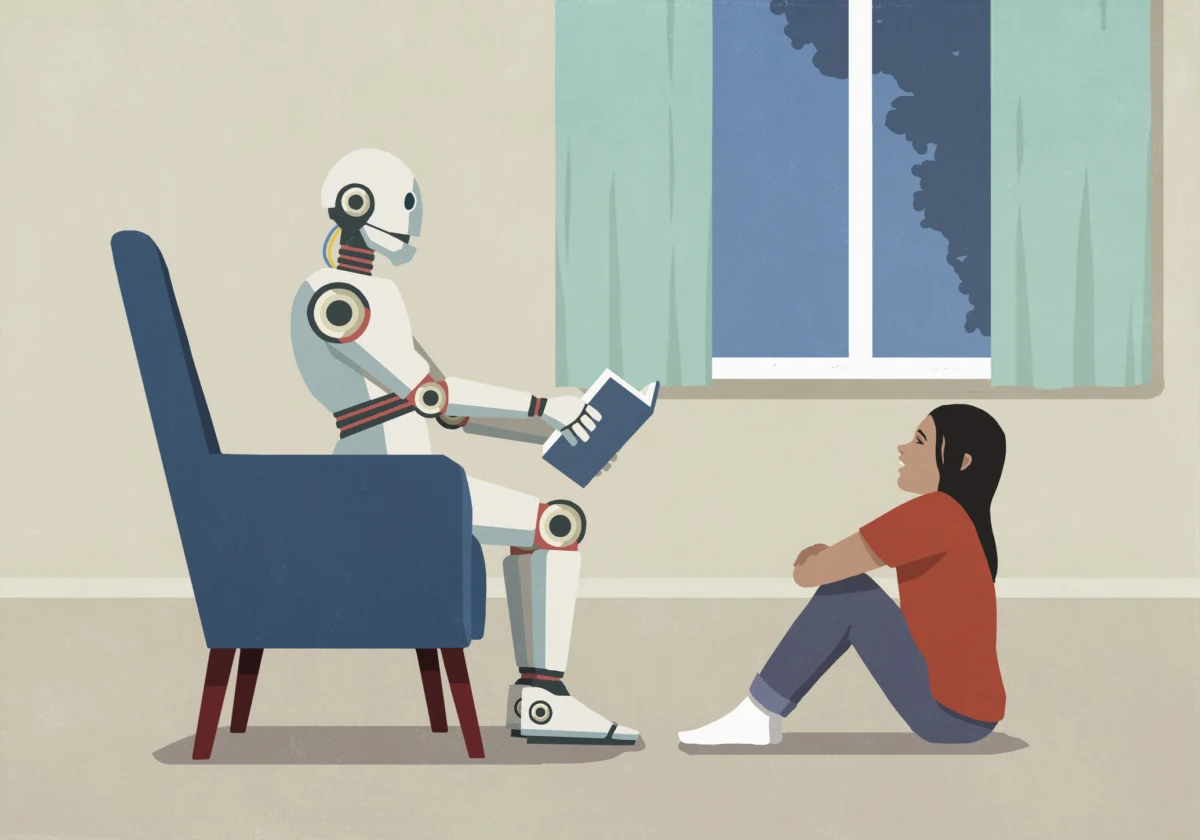
In an era where artificial intelligence is rapidly encroaching on the last bastions of human creative expression—from fine art and symphonic composition to film screenwriting—Meta has set its sights on a surprisingly intimate target: the bedtime story. The tech giant is currently piloting a new application, StoryKit, an AI-powered platform designed to generate personalized children’s narratives complete with custom characters, immersive settings, moral lessons, and musical accompaniments. With the promise that parents "don’t need to write a single word," Meta is positioning itself as the ultimate digital surrogate for the storyteller, effectively outsourcing one of humanity’s oldest and most sacred pastimes to a large language model (LLM).
The Mechanics of Meta’s Storytelling Engine
First identified by 9to5Mac via a quiet appearance on the App Store, StoryKit is a mobile application that functions as a streamlined creative factory. The user experience is designed for maximum efficiency: a parent selects a character—often by simply snapping a photograph of their child’s favorite toy or a family member to "bring them to life"—and then describes the world in which the story should unfold.
The app then prompts the user to select a moral or value to be woven into the narrative, ranging from themes of empathy and kindness to courage and resilience. The resulting product is a cohesive, AI-generated storybook that aims to bypass the "lecture" feel of traditional moral instruction by embedding these values into a bespoke, interactive experience.
For Meta, the app represents a foray into "creative storytelling," though critics argue it is merely the latest attempt to monetize the friction between busy parenting and the need for child engagement. Meta has confirmed that the app is currently in a pilot phase in select international markets, emphasizing that it utilizes robust safety filters and lacks any social media connectivity. Furthermore, to comply with privacy and regulatory standards, the app is restricted to users over the age of 18.
A Chronology of Meta’s AI Pivot
Meta’s development of StoryKit does not exist in a vacuum; it is the latest node in a long, often controversial, trajectory of AI integration.
- The Early Vision: Under the banner of the "Metaverse," the company spent years attempting to move human interaction into virtual reality spaces, a project that famously struggled to find traction, eventually leading to the shuttering of various VR workspace initiatives.
- The Pivot to Generative AI: Following the explosion of interest in LLMs, Meta shifted its R&D focus toward generative tools. This shift has resulted in a mixed bag of deployments, ranging from the well-received Llama open-source models to more polarizing experiments.
- The Backlash: In recent months, Meta has faced intense scrutiny over the implementation of AI features across its ecosystem. Notable examples include the controversy surrounding AI deepfake generators on Instagram and the broader skepticism regarding "smart" hardware, such as the company’s camera-equipped glasses, which critics have often dubbed "pervert glasses" due to privacy concerns.
- The Current Pilot: The emergence of StoryKit in mid-2026 marks a deliberate pivot toward family-oriented consumer software, signaling that Meta sees significant potential in capturing the "at-home" market of young families.
Supporting Data and the "Efficiency" Argument
The appeal of StoryKit is rooted in the harsh realities of modern parenting. As work-life balance continues to erode, many parents find themselves exhausted at the end of the day, leaving little emotional or mental energy for the improvisational demands of bedtime storytelling.
However, the tech industry’s push toward "efficiency" often overlooks the psychological utility of the activity being replaced. Traditional oral storytelling is a messy, inefficient, and highly personal process. It requires the storyteller to gauge the child’s reactions, pause for questions, and adjust the tone based on the emotional climate of the room. AI, by definition, operates on the "most predictable response" to a prompt. It calculates the statistically most likely word to follow the previous one, based on a massive training set of human literature. While this creates a grammatically correct and logically sound story, it lacks the "human error" that makes personal stories resonate.
Official Responses and Safety Protocols
Meta has maintained a defensive, albeit cautious, posture regarding the app. A spokesperson for the company described StoryKit as a tool meant to "craft personalized, imaginative storybooks," emphasizing that the app is designed with a "safety-first" architecture.
By implementing strict content moderation and safety filters, Meta aims to prevent the generation of inappropriate or harmful content—a significant concern for any AI tool targeting children. By keeping the app free of social features, Meta is also attempting to mitigate the risks of online bullying or predatory behavior, which have plagued its other platforms. Despite these guardrails, the fundamental question remains: is the lack of "harm" sufficient to warrant the replacement of human creativity?

The Implications: Is Our Imagination Obsolete?
The launch of StoryKit raises profound questions about the future of human development and the role of technology in our private lives. For as long as we have existed as a species, we have used our imaginations to bridge the gap between our reality and our aspirations. Mythology, folklore, and the epic oral traditions—the very foundations of modern literature—all stem from the human need to "make stuff up."
When a parent relies on an AI to generate a tale about an intergalactic turtle, they are not merely saving time; they are outsourcing a moment of shared vulnerability and creativity. The "whimsy and silliness" of an improvised story is where the parent-child bond is often forged. It is a space where the child learns that their parent is a fallible, creative, and imaginative human being.
The "Trojan Horse" of Convenience
Many critics, including prominent filmmakers and authors, have recently described generative AI as an "obvious Trojan horse." While it arrives under the guise of convenience—helping us write emails, draft reports, or tell bedtime stories—it slowly erodes the very skills we use to perform those tasks. If parents begin to rely on StoryKit to provide the whimsy that they once provided themselves, they may find that their own ability to improvise and create diminishes over time.
The danger is not that the AI will tell a "bad" story. On the contrary, the AI will likely tell a technically perfect, structurally sound, and highly engaging story. The danger is that it will replace the connection inherent in the human storytelling process with a polished, sterile, and ultimately hollow digital output.
A Choice for the Future
Meta’s vision for the future is, by many accounts, increasingly antisocial. From virtual meeting rooms that simulate offices to AI-generated bedtime stories that simulate intimacy, the company is betting that we are willing to trade the messiness of human interaction for the seamlessness of digital convenience.
However, we are not passive consumers of this future. We have the agency to determine which parts of our lives are truly "optimizable." While the fatigue of modern life is real and the temptation to outsource the "exhausting" parts of parenting is understandable, we must weigh the cost.
If we allow our children to be raised on stories written by LLMs, we are signaling that efficiency is more valuable than connection. We are teaching them that their own stories—and the stories we tell them—are products to be consumed rather than experiences to be created. The moral of the story, in this case, is perhaps not the one Meta’s AI is generating for your child; it is the one we are writing for ourselves. We can choose to reject a world where the bedtime story is turned into a data point, and instead, reclaim the simple, flawed, and beautiful act of telling a story ourselves.
Ultimately, StoryKit is a mirror held up to our current society. It asks us if we have forgotten how to be imaginative, or if we have simply become too tired to try. The technology is here, and it is capable of incredible feats of simulation, but it is not capable of love, empathy, or the shared spark of a child’s eyes lighting up when a parent fumbles through a story they made up on the spot. That, for now, remains an exclusively human technology.
 Asep Darmawan
 Siti Muinah
 Ali Ikhwan
