

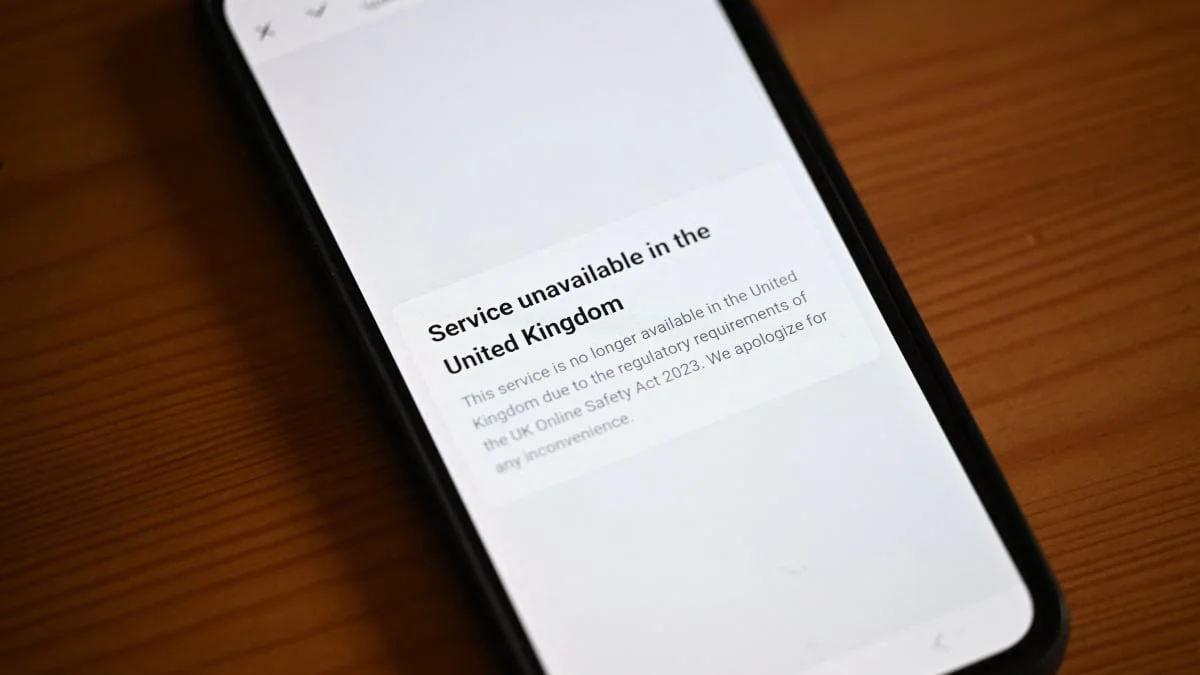
It has been nearly a year since the United Kingdom’s ambitious and controversial Online Safety Act (OSA) fundamentally altered the architecture of the internet for British users. Designed to shield minors from harmful content, the legislation mandated that sites featuring “restricted to adults” material implement robust age-assurance mechanisms. As the UK’s communications regulator, Ofcom, releases its latest progress report, the findings paint a picture of a digital landscape in flux—one where the wall between childhood and adult content is being reinforced, albeit with significant gaps and technological growing pains.
The scope of the Act is vast, encompassing everything from explicit pornography to non-explicit platforms that nonetheless host mature content, such as certain niche subreddits. As the government pivots toward even stricter regulations, including potential bans on social media for those under 16, the data from this first year offers a critical look at whether these digital boundaries are actually holding.
A Chronology of Compliance and Enforcement
The rollout of the Online Safety Act has been anything but uniform. Following its enactment, the period between July 2025 and January 2026 served as a trial by fire for major tech platforms and adult content providers alike.
The Implementation Phase
In the months following the law’s passage, companies were tasked with integrating age-verification software into their existing infrastructure. Ofcom’s report highlights that between July and December 2025, a staggering 69 million age checks were completed across a sample of 32 monitored services. This figure represents a 23-fold increase compared to the previous six-month period, signaling that the "friction" intended by the law is becoming a standard feature of the British web.
The Regulatory Crackdown
By early 2026, Ofcom transitioned from an advisory role to an enforcement body. The regulator has already opened 23 formal investigations into providers of 88 different adult services. This aggressive stance is a response to the lingering availability of explicit material. While 64 of the top 100 most popular pornographic sites in the UK have adopted age-assurance protocols, and 10 have opted to geo-block UK users entirely, Ofcom maintains that the pace of compliance remains insufficient.
Supporting Data: The Efficacy of the Digital Wall
To understand the real-world impact of the OSA, Ofcom conducted a "Children’s Passive Online Monitoring" study. The data provides a nuanced look at how children navigate these new restrictions.
Engagement Metrics
The study found that 8 percent of children aged 8 to 14 surveyed had visited pornographic providers. Encouragingly, half of these visits were intercepted by active age-check barriers. However, the data also reveals a "drive-by" nature to this consumption: 87 percent of these visits lasted under 30 seconds, with 65 percent failing to cross the 10-second threshold. This suggests that while the barrier is successful at stopping prolonged exposure, it does not necessarily prevent the initial click-through that leads a minor to an adult site.
The Search Engine Problem
Perhaps the most significant loophole identified in the report involves search engines. Despite the mandates on site owners, the "discoverability" of adult content remains a major hurdle. Ofcom’s audit found that 33 percent of the first page of Google search results for relevant terms led to pornographic sites lacking age-assurance or geo-blocking. For Bing, that figure rose to 54 percent. While search providers are currently collaborating with Ofcom to mitigate this, the OSA does not strictly mandate age verification at the search-engine level, creating a structural disconnect in the law’s protective intent.
Official Responses and the Future of Age Assurance
Ofcom’s stance is increasingly firm regarding the technology used to verify age. The regulator has issued a stern warning to social media companies relying on "age inference" models—algorithms that estimate a user’s age based on their behavioral patterns rather than verified documentation.
"Our message to social media companies is clear: those which use age inference models to comply with their child protection duties should switch to other methods listed in our guidance as highly effective without delay," Ofcom stated.
The regulator is currently preparing to deliver a formal assessment to Parliament by the end of October regarding what constitutes a "highly effective" age check for users over 16. Furthermore, a broader report focusing on app-store-level age verification is slated for publication by January 2027, which could shift the burden of compliance from individual websites to the platforms that host them.
Broader Implications: A Changing Digital Culture
The ramifications of the Online Safety Act are extending well beyond the initial scope of pornographic site regulation. The UK government is moving toward a comprehensive ban on social media for children under 16, a policy that will rely heavily on the same age-assurance infrastructure currently being refined under the OSA.
The "Curfew" and The Ban
In addition to the proposed under-16 social media ban, the UK has recently introduced a "social media curfew" for teenagers aged 16 and 17. This move suggests that the government views digital interaction as a sphere requiring state-sanctioned temporal and age-based boundaries.
However, critics point to international precedents as a warning. A recent study on Australia’s attempt to implement a social media ban highlighted the ease with which users—particularly tech-savvy minors—can bypass age-estimation software. If the UK’s verification systems cannot prove, with high confidence, that a user is over the age of 16, the entire legislative house of cards may collapse under the weight of its own inefficacy.
Technological and Ethical Challenges
The reliance on third-party verification services raises significant privacy concerns. Forcing users to provide government-issued IDs or biometric data to access standard web services risks creating massive databases of personal information that could become targets for cyberattacks. Furthermore, the "friction" introduced by these checks is criticized by digital rights advocates who fear that the "walled garden" approach will lead to a fragmented internet, where access to information is contingent upon submitting to invasive tracking.
Conclusion: The Long Road Ahead
As the UK nears the one-year anniversary of the Online Safety Act, it is clear that the government has succeeded in creating a high-stakes environment for digital service providers. The "unprecedented scale" of age-check deployment is a testament to the power of regulatory pressure.
However, the path forward is fraught with obstacles. The persistence of pornographic content in search results, the reliance on potentially flawed inference models, and the upcoming implementation of age-based bans on social media suggest that the debate over the Online Safety Act is far from settled. For Ofcom, the challenge will be to balance the mandate of child protection with the practical realities of a global, decentralized internet—a task that will require not just new laws, but a fundamental evolution in how we verify identity in the digital age.
As the October deadline for the new "highly effective" standards approaches, the eyes of the global tech community remain fixed on the UK, watching to see if this grand experiment in digital governance will become a blueprint for the world, or a cautionary tale of regulatory overreach.
 Suro Senen
 Nana Wu
 Neng Nana
