

By [Author Name]
Published June 14, 2026
Steven Spielberg’s 1977 UFO epic, Close Encounters of the Third Kind, stands as a monolithic achievement in the history of science fiction. Nearly half a century after its premiere, it remains a touchstone for the genre, a film that continues to influence contemporary cinema—most notably echoed in the director’s latest project, Disclosure Day. Yet, to view Close Encounters purely through the lens of its legacy is to ignore the film’s inherent, defiant strangeness. It is a work that exists in a state of perpetual tension, caught between the dawn of the modern blockbuster and the raw, unrefined impulses of an auteur working at the peak of his creative obsession.
The Genesis of an Icon: Main Facts and Historical Context
Released in November 1977, Close Encounters arrived just six months after the seismic cultural event that was George Lucas’ Star Wars. The two films are forever linked, not just by their proximity in time, but by a legendary, playful wager. Lucas, skeptical of his own film’s prospects, visited the set of Close Encounters and was so impressed by the scale and ambition of Spielberg’s production that he famously traded 2.5% of the profits of Star Wars for 2.5% of Close Encounters. While both films became massive commercial successes, history remembers the outcome of that bet as a lopsided victory for the galaxy far, far away.
However, the financial comparison obscures a deeper truth: Close Encounters was the final gasp of a specific type of visionary, "ecstatic" sci-fi. It was the film that defined what Spielberg would become, yet it functioned as a roadmap he would rarely follow again. While Raiders of the Lost Ark, Jurassic Park, and E.T. the Extra-Terrestrial would later refine the Spielbergian formula of wonder and adventure, none would capture the specific, jagged edges of Close Encounters.
A Chronology of Obsession: The Evolution of the Film
The history of Close Encounters is a story of constant iteration. Unlike many directors who treat their finished films as immutable artifacts, Spielberg has revisited this work repeatedly. Over the span of two decades, he released three distinct edits, each offering a different window into his evolving perspective.
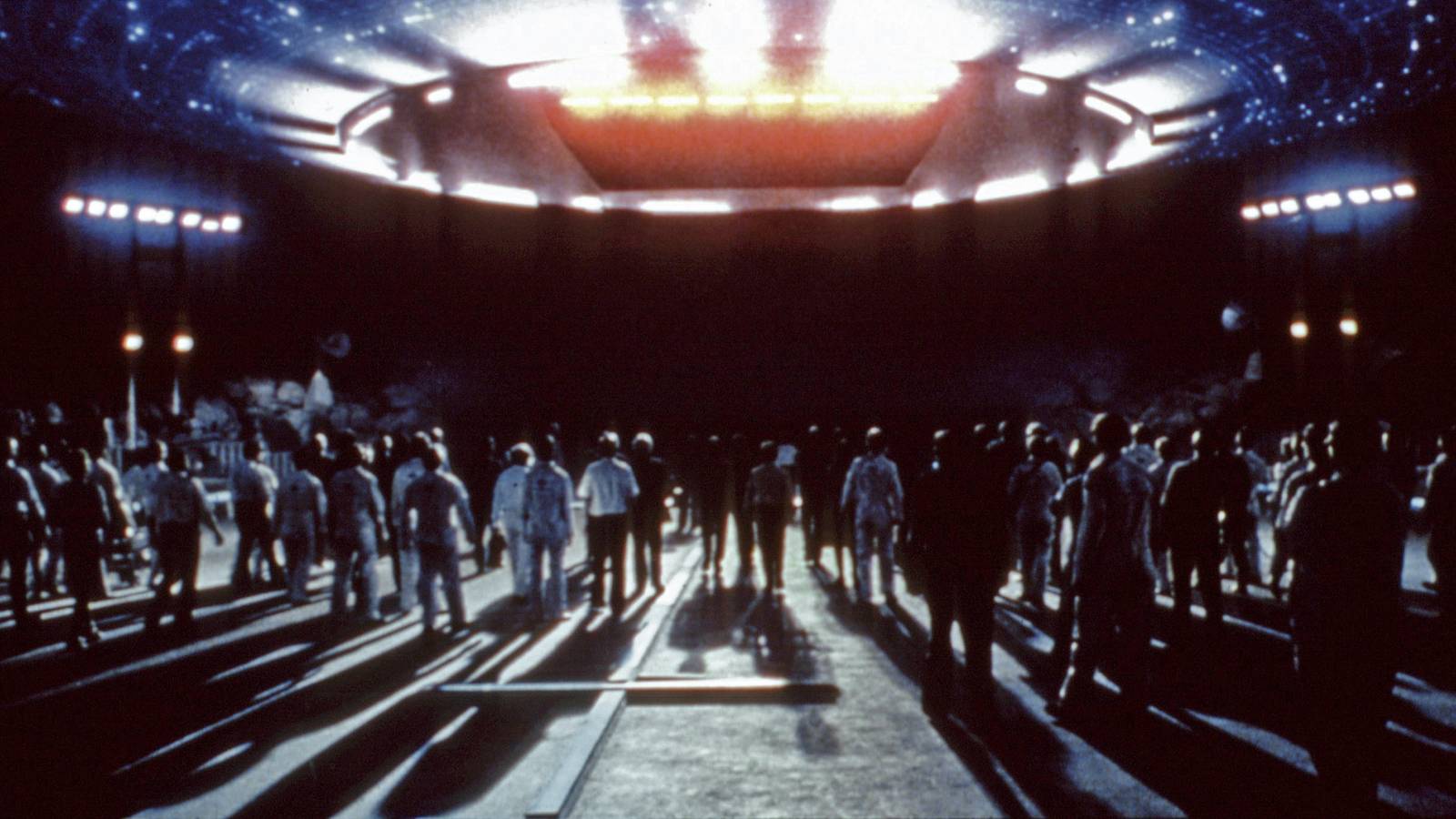
The initial 1977 theatrical release was a raw, mysterious cut that leaned heavily into the psychological unraveling of its protagonist, Roy Neary (Richard Dreyfuss). The subsequent "Special Edition" (1980) and the later "Director’s Cut" (1998) sought to balance the film’s narrative pacing, adding scenes of the interior of the mother ship that Spielberg originally felt he lacked the time or resources to execute properly. These edits serve as a public diary of the director’s own growth, reflecting his shift from a young, manic filmmaker to a seasoned master of his craft.
The Anatomy of a Breakdown: Narrative and Character
The film’s brilliance lies in its refusal to adhere to traditional Hollywood structure. On paper, it follows a standard three-act progression: the introduction of mysterious phenomena, the investigation, and the final contact. In practice, these acts are wildly disproportionate and tonally disparate.
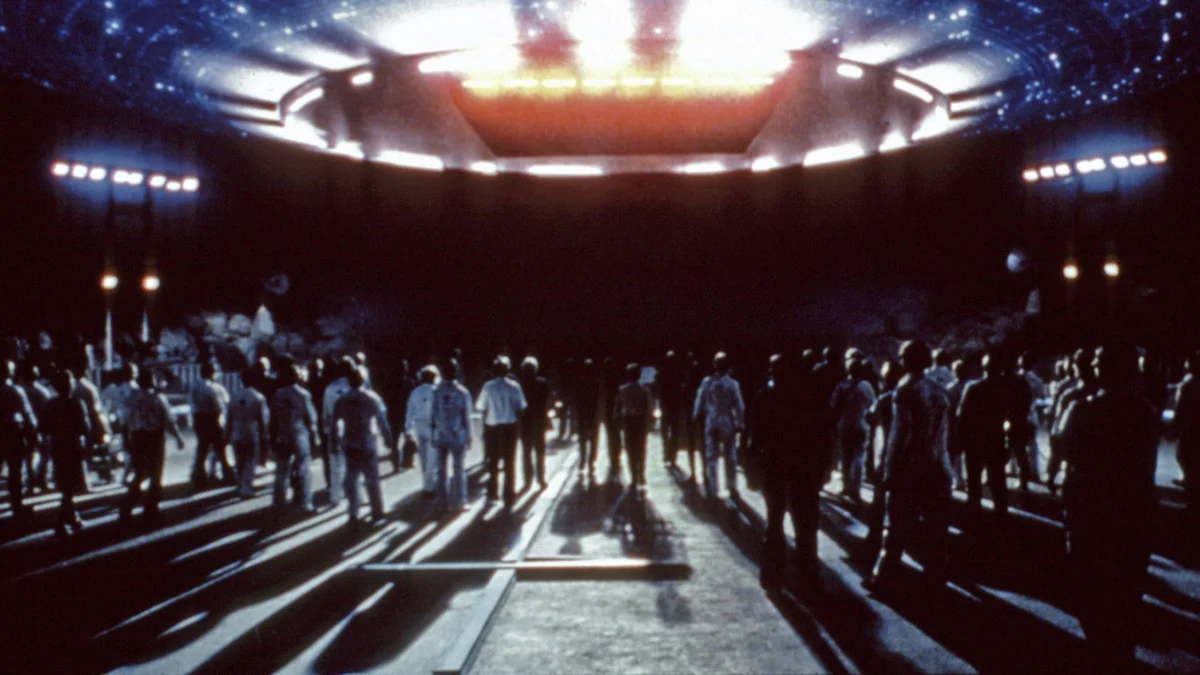
The first act operates as a portmanteau of global weirdness—a series of disconnected, haunting vignettes. The second act shifts into a paranoid psychological thriller, focusing on the domestic destruction of Roy Neary, a power company worker whose life is obliterated by his obsession with a vision of a mountain. Finally, the third act abandons all pretense of narrative cohesion, culminating in a transcendental light show that acts as a religious experience rather than a plot resolution.
By shifting the focus from the personal (the mother searching for her child, the scientist attempting to facilitate communication) to the spectacle, Spielberg suggests that the human experience is, in the face of the infinite, ultimately irrelevant. This is a bold, almost nihilistic choice for a director typically associated with human-centric storytelling.
Supporting Data: Technical Innovation and Musical Language
The technical prowess behind Close Encounters remains astonishing. Douglas Trumbull, the visual effects pioneer, utilized groundbreaking techniques to bring the UFOs to life. Eschewing the sharp, metallic look of traditional sci-fi, Spielberg and Trumbull opted for a hazy, neon-drenched aesthetic. These ships do not follow the laws of physics; they tumble and dance, behaving more like sentient light than engineered craft.

Equally critical is the score by John Williams. The music acts as a narrative device—a linguistic bridge between humanity and the unknown. The famous five-note motif serves as a sonic anchor, evolving from a simple melodic question into a cacophonous, frenzied delirium. Williams’ score does not merely accompany the film; it drives the characters toward their inevitable, and somewhat terrifying, destination. The sound design, too, is a masterclass in controlled chaos, layering dialogue over dialogue until the audience experiences the same breathless confusion as the characters on screen.
Official Responses and Cultural Impact
Upon its release, the film was met with widespread critical acclaim, cementing Spielberg’s reputation as the heir to the tradition of "serious" science fiction, sitting alongside Kubrick’s 2001: A Space Odyssey. The academic and critical community praised the film for its "humanistic" approach to the extraterrestrial, contrasting it with the more militaristic or fearful tropes prevalent in the 1950s.
However, the "official" view of the film has always struggled with its darker elements. While critics often highlight the "wonder" of the finale, they frequently downplay the domestic abuse and mental breakdown inherent in the middle section. The film paints a picture of a man abandoning his children and spouse for a fleeting, if beautiful, encounter—an act of selfishness that the film refuses to judge, or perhaps even acknowledges as a tragedy.
Implications: The Fear of Getting What You Want
Why does Close Encounters remain so unsettling today? The answer lies in its emotional duality. It is a film that demands we feel hope and terror simultaneously.
The imagery—the massive, looming silhouette of Devils Tower, the frantic construction of mud models in a suburban living room, the blinding, all-consuming light of the final act—is etched into the cultural subconscious. Yet, it never loses its power to surprise. Spielberg is often described as a director of "warmth," but Close Encounters is remarkably cold in its final evaluation of humanity.
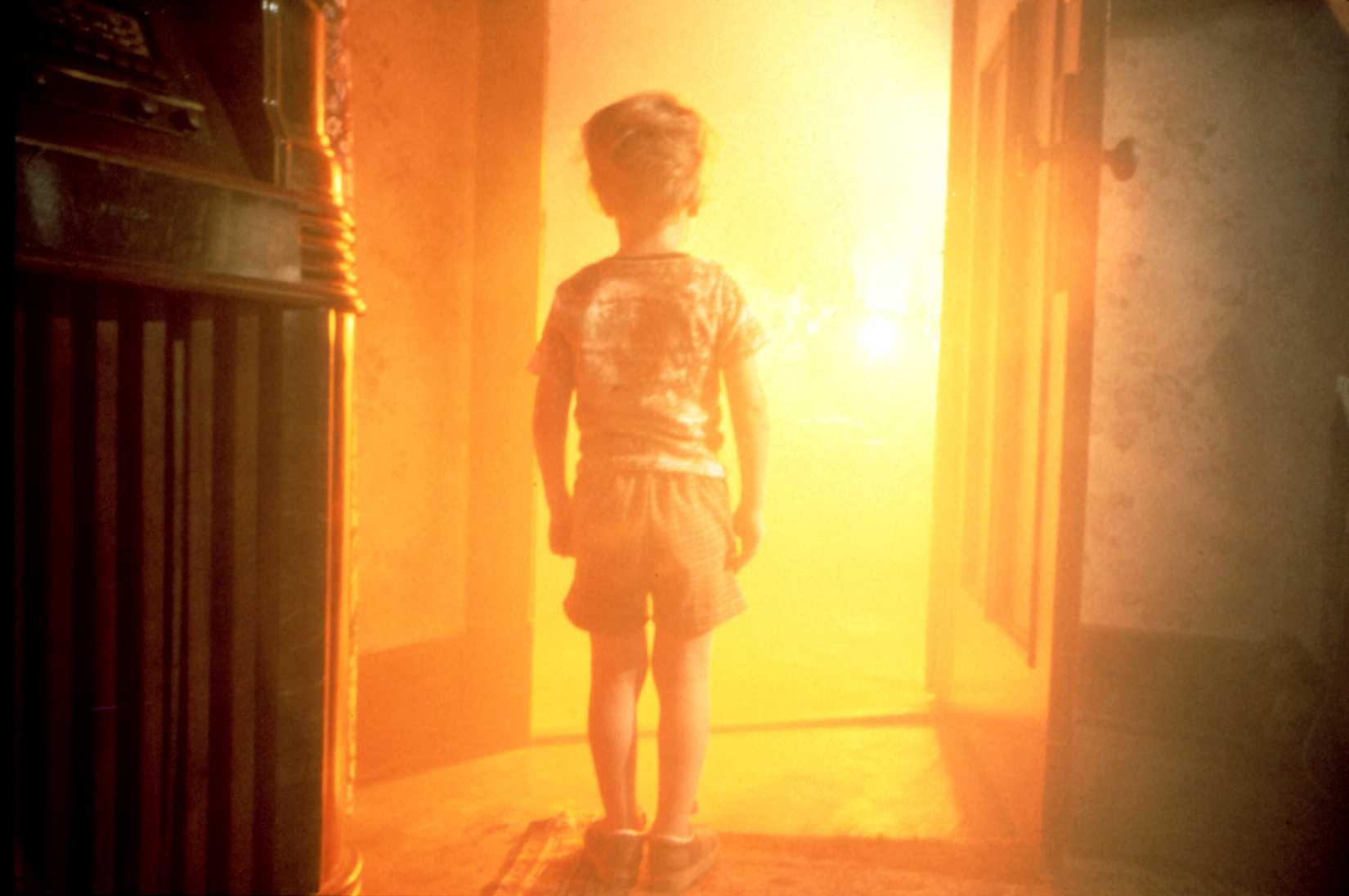
The film is essentially a mirror for the director’s own ambition. Just as Roy Neary is drawn to the light at the cost of his family and his sanity, Spielberg was drawn to the immense cost and logistical nightmares of his production. It is a film about the obsession of creation.
Ultimately, Close Encounters of the Third Kind serves as a profound warning about the nature of desire. It posits that the most terrifying thing that can happen to an individual is to finally achieve the thing they have been searching for their entire lives. When the light finally arrives, it doesn’t just offer knowledge; it wipes the slate clean, rendering everything that came before it—every argument, every struggle, every human connection—part of a past that no longer matters. It is a masterpiece of light and shadow, an ecstatic nightmare that continues to haunt the edges of our imagination, reminding us that sometimes, the most profound encounters are the ones that leave us fundamentally changed, if not entirely undone.
 Basiran
 Nana Muazin
 Layla Zulfa
