

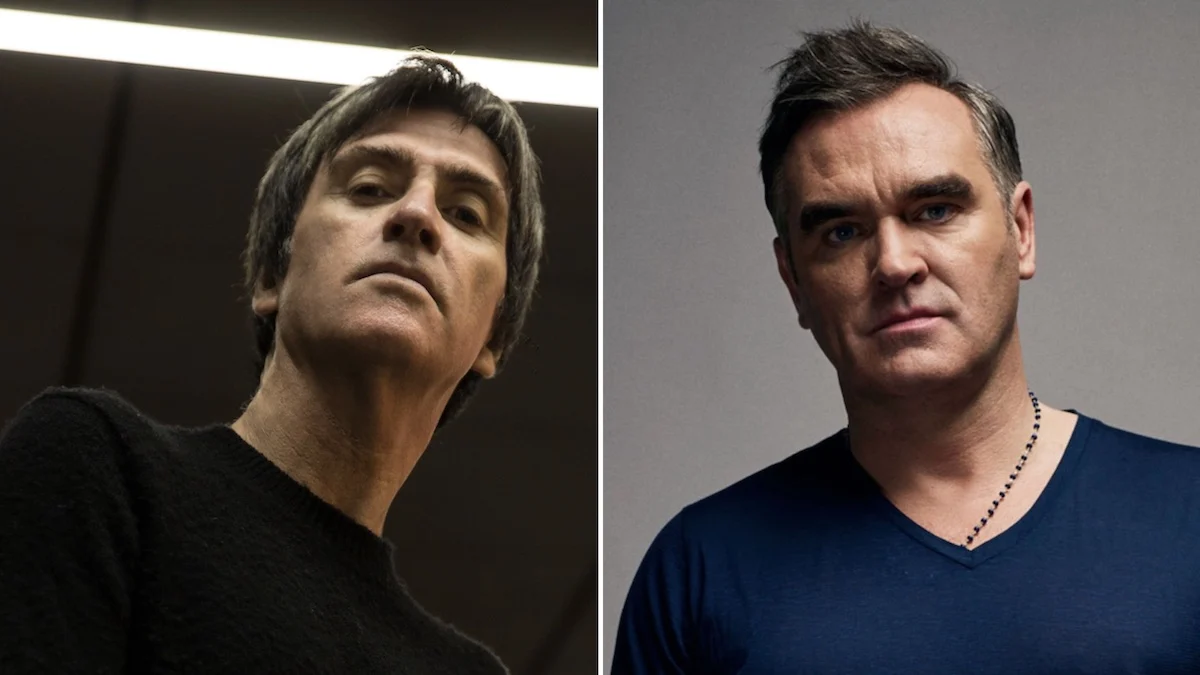
In the annals of rock history, few partnerships have been as artistically fertile—or as destructively volatile—as that of Morrissey and Johnny Marr. Four decades after the dissolution of The Smiths, the friction between the band’s iconic frontman and its legendary guitarist remains a fixture of the music industry. This week, that friction reignited with the intensity of a brushfire, as Morrissey published and subsequently deleted a scathing open letter titled "The Art of Forgery" on his website, Morrissey Central.
The catalyst for this latest explosion is a forthcoming BBC radio program dedicated to the history of The Smiths. According to reports, the documentary, scheduled to air on July 13, takes a critical stance on Morrissey, prompting the singer to launch a preemptive strike against the narrative he believes the network—and his former bandmate—are cultivating.
The Anatomy of the Latest Outburst
Morrissey’s primary grievance, as articulated in his manifesto, is that the BBC documentary serves as yet another vehicle for Johnny Marr to "rewrite history." Morrissey claims the program intentionally paints Marr as the "angel" and himself as the "executioner."
"The souring of the Smiths dream unravels once again through Marr’s mechanical paces, which are by now totally predictable plot development," Morrissey wrote. He argued that the documentary, which he says he was not invited to contribute to, is part of a larger, systemic effort to diminish his role in the band’s formation and creative output.
He further took aim at the enduring myth that he fired former Smiths bassist Andy Rourke via a note left on a car windshield. "I hadn’t hired Andy Rourke and I would have no place nor right to fire him," Morrissey insisted, dismissing the anecdote as a "tired lie" perpetuated by those seeking to cast him as a villain.
A Chronology of a Fractured Legacy
To understand the vitriol behind "The Art of Forgery," one must look at the timeline of the pair’s relationship, which has spiraled from creative synergy to institutionalized animosity.
- The Golden Era (1982–1987): The Smiths release four seminal studio albums, defining the sound of 1980s indie-rock. The partnership is defined by Marr’s shimmering, layered guitar work and Morrissey’s poetic, melancholic lyricism.
- The 2022 Open Letter: Following years of silence, Morrissey publicly pleaded with Marr to stop using his name for press purposes, claiming that the guitarist was exploiting their history to stay relevant.
- September 2024: The rift reached a professional breaking point when Morrissey fired his management team, citing frustrations linked to the ongoing disputes over The Smiths’ trademark rights and the blocking of a proposed greatest hits compilation.
- April 2026: Morrissey publicly attacked a narrative shared by Marr regarding the delivery of a Smiths demo tape to Rough Trade Records, labeling the story "deliberately untrue."
- June 2026: The publication of "The Art of Forgery," signaling a new phase of hostility surrounding the upcoming BBC documentary.
Ownership, Vision, and the "Spiders from Mars" Analogy
Central to Morrissey’s frustration is the question of creative ownership. In his letter, he attempted to delineate the specific contributions that made The Smiths a cultural phenomenon.
"The Smiths was my voice, my lyrics, my song-titles, my album titles, my single and album artwork, my vision, my vocal melodies, my emotions—nobody else’s," he stated. He utilized a pointed comparison to illustrate the absurdity of separating his identity from the band, noting, "When The Guardian say that they love The Smiths but hate Morrissey, it is like saying, ‘We hate David Bowie but we love the Spiders From Mars.’"
This philosophical divide underscores a deeper conflict: the struggle between the "brand" of The Smiths and the individual identities of its creators. Morrissey views the attempts to decouple his persona from the music as an act of historical revisionism, suggesting that figures like writer Gareth Roberts have crossed a line by claiming, "Remove Morrissey from The Smiths and you are left with Haircut 100."
The Counter-Narrative: Where Does Johnny Marr Stand?
Johnny Marr has historically maintained a policy of relative restraint. While he has occasionally addressed the public squabbles, he has largely avoided engaging in the "slings and arrows" of social media warfare.
In past interviews, Marr has emphasized that he views the legacy of The Smiths as something larger than the two individuals who founded it. He has repeatedly stated that Morrissey’s public outbursts do not, and cannot, damage the music itself. However, the tension remains palpable. Marr’s frequent collaborations with other high-profile artists—most notably his public praise for Modest Mouse frontman Isaac Brock, whom he once described as "the greatest lyricist I’ve ever worked with"—are often interpreted by Morrissey as calculated slights.
From Marr’s perspective, the focus remains on his own musical evolution. He has pursued a successful solo career, film scoring, and high-profile collaborations, all while navigating the legal and administrative complexities of The Smiths’ estate. To Marr, the "reunion" that never was—which reportedly failed to manifest in 2025—is simply a matter of timing and artistic incompatibility, whereas to Morrissey, it represents a deliberate act of sabotage.
Implications for The Smiths’ Legacy
The ongoing public battle poses a significant question for the millions of fans who still find solace in the band’s discography: Does the animosity between the two principals erode the sanctity of the work?
1. The Erasure of Nostalgia
Every time a new letter is posted or a new accusation is leveled, the mythos of the band is slightly altered. For fans, the "Smiths" they remember is a nostalgic ideal. These public disputes strip away the romanticism, replacing it with the cold, legal, and personal realities of two men who have clearly grown in divergent directions.
2. Legal and Commercial Consequences
The dispute over the trademark is not merely performative. It has real-world implications for how the band’s back catalog is marketed, how documentaries are produced, and how future legacy projects are managed. By claiming the trademark, Marr has effectively placed himself in the role of the band’s custodian, a position Morrissey views as a hostile takeover.
3. The Media’s Role
Morrissey’s attack on The Guardian and the BBC highlights a growing trend of artists bypassing traditional media to communicate directly with their fanbases. By using Morrissey Central as a megaphone, he attempts to control the narrative. However, the rapid deletion of his posts suggests a lack of consensus on the efficacy of these screeds, even within his own camp.
Conclusion: A Cycle That Refuses to Break
As the July 13 air date for the BBC program approaches, the music world braces for what is likely to be a polarized reception. Morrissey concludes his recent letter with a resigned, yet combative, sentiment: "Let the pie-fights continue. I shall always be reborn."
Whether the documentary will indeed be the "critical" piece Morrissey fears, or simply a balanced retrospective of a complicated musical marriage, remains to be seen. What is certain is that for as long as Johnny Marr and Morrissey remain in the public eye, the ghost of The Smiths will continue to haunt them both. They are, in many ways, two sides of the same coin—forever bound by the music they created, and forever divided by the legacy they now fight to define.
For the listener, the task remains the same: to find the "artistic beauty" in the music, even as the creators continue to battle over the debris of their shared past. As the industry watches "round 4,683" of this feud unfold, the only thing that remains clear is that the wounds of The Smiths are, for the participants, still very much open.
 Muslim
 Pevita Pearce
 Evan Lee Salim
