

The podcasting industry is currently navigating a period of rapid professionalization and strategic diversification. As the medium matures, creators and platforms are moving beyond the "experimental" phase into a robust ecosystem defined by targeted growth strategies, high-fidelity production, and data-driven audience acquisition. This shift is particularly evident in the rise of audio fiction and the increasing importance of cross-platform integration, specifically the symbiotic relationship between podcasting and YouTube.

Main Facts: The New Frontier of Audio Engagement
The contemporary podcasting space is characterized by two major developments: the aggressive expansion of video-integrated podcasting and the continued dominance of high-concept storytelling.

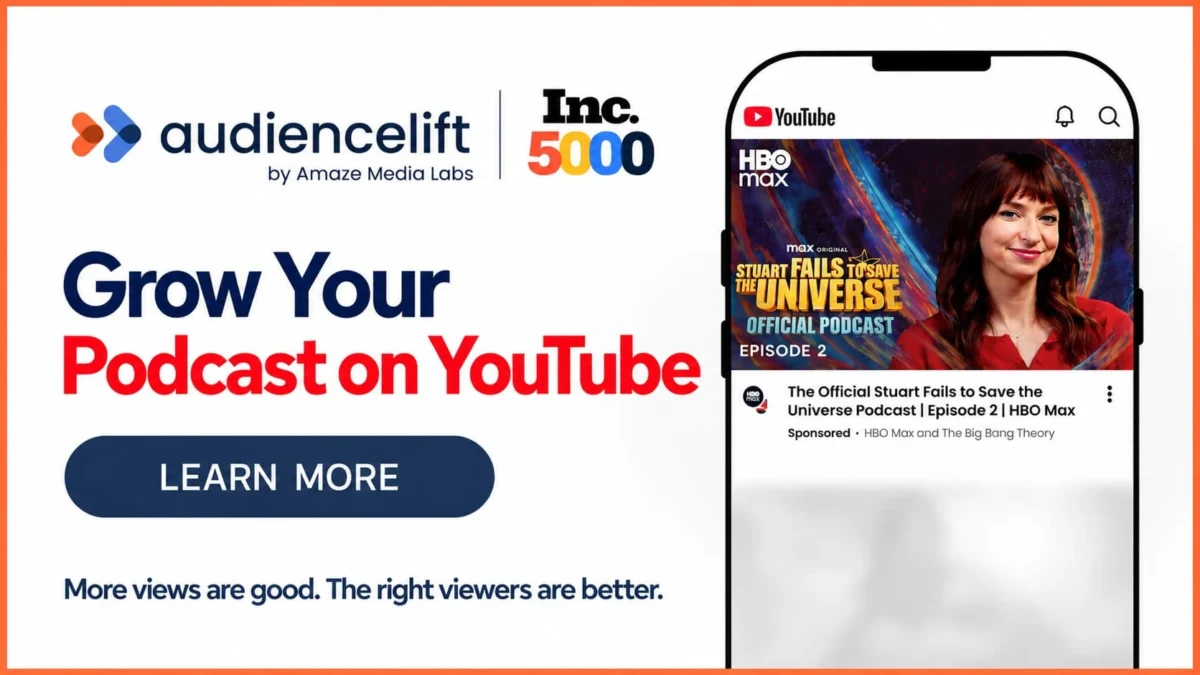
As an official podcast test partner of YouTube, companies like Audiencelift are at the forefront of a paradigm shift. The traditional audio-first model is being challenged by a "video-first" or "video-enhanced" strategy that prioritizes watch time, subscriber conversion, and algorithmic visibility. This strategy acknowledges that for many listeners, YouTube has become the primary discovery engine for audio content.

Simultaneously, the demand for high-quality audio fiction and narrative journalism remains the industry’s north star. Podcasts like the newly released Manufacturing Danger: The BioLab Story from Georgia Public Broadcasting exemplify the trend of "investigative audio"—a format that combines the intimacy of podcasting with the rigorous standards of traditional investigative journalism.

Chronology of Industry Shifts
To understand how we arrived at the current landscape, we must look at the progression of the last few years:

- The Discovery Crisis (2020–2022): The industry faced a saturation point where the sheer volume of content made organic discovery nearly impossible.
- The YouTube Pivot (2023–2024): Recognizing that audio platforms were "walled gardens," creators began moving their content to YouTube to leverage the world’s second-largest search engine.
- The Professionalization of Growth (2025–Present): We are currently in the era of "turnkey campaign management." No longer do independent creators rely solely on word-of-mouth; instead, they employ data-backed strategies to optimize their presence within YouTube Studio.
- The Narrative Renaissance: Alongside these technical shifts, the return of prestige audio fiction and complex narrative series—such as the BBC’s 13 Minutes: Trouble with Hubble—signals a listener appetite for deeply researched, highly produced storytelling that justifies the premium subscription models now common in the space.
Supporting Data: The Power of Targeted Growth
The data highlights a clear divergence between casual hobbyist podcasting and professional-grade content production. Current metrics from top-tier charts, such as those from Apple Podcasts and Spotify, reveal that shows with a multi-platform strategy significantly outperform those that stick to audio-only distribution.

The Metrics of Success
In the United States, heavy hitters like The Daily (Apple) and The Joe Rogan Experience (Spotify) remain anchored at the top, proving that consistency and audience loyalty are the primary drivers of long-term chart success. However, the "Biggest Gainers" and "Highest New Entries" categories, such as The Power of Young People in Australia or La Revue Juridique in Ireland, suggest that there is still significant room for niche, high-value content to capture market share through strategic promotion.

The ROI of YouTube Integration
For creators, the shift to YouTube is not merely aesthetic; it is a financial imperative. By tracking performance directly inside YouTube Studio, creators can now measure:

- Audience Retention: Identifying exactly where listeners drop off.
- Subscriber Velocity: Understanding which episodes lead to long-term channel growth versus those that provide one-off views.
- Click-Through Rates (CTR): Optimizing thumbnails and titles to bridge the gap between "listener" and "viewer."
Official Perspectives: The Value of Narrative Depth
The current crop of new podcasts reflects a broader commitment to depth. For example, Mother Runner, an independent production by Dana Wiker, addresses the emotional labor of motherhood—a topic that has historically been underserved in the podcasting space. By treating this subject with the same production values typically reserved for true-crime or tech reporting, the show carves out a distinct space in the market.

Similarly, Betwixt the Sheets with Kate Lister, which recently debunked historical myths regarding Mary Magdalene, demonstrates the power of "infotainment" as a growth lever. When a podcast provides high-value, fact-checked historical content, it builds an intellectual authority that is far more durable than the viral trends that often drive short-term metrics.

Implications for the Future of Podcasting
The implications of this shift are profound for both creators and advertisers.

For Independent Creators
The "do it yourself" era is evolving. While the barrier to entry remains low, the barrier to success is rising. Creators must now understand the fundamentals of SEO, video editing, and campaign management. The emergence of tools like those offered by Audiencelift signals a democratization of professional growth tactics. Independent creators no longer need to be digital marketers; they can now leverage turnkey services to handle the technical complexities of audience acquisition, allowing them to focus on what matters most: the content.

For Advertisers and Platforms
The move toward YouTube integration provides advertisers with better transparency. Unlike traditional RSS-based podcasting, which has historically struggled with granular tracking, YouTube’s backend offers a wealth of data. Advertisers are increasingly demanding this level of visibility, and the podcasting industry is responding by building structures that mirror the accountability of digital video advertising.

The Sustainability of the Medium
There is an ongoing debate regarding whether the "video-fication" of podcasts dilutes the medium’s unique intimacy. However, the evidence suggests that the two formats are complementary rather than exclusionary. A viewer who discovers a show on YouTube often transitions into a dedicated listener for their daily commute, effectively creating a "funnel" for audience loyalty.

Conclusion: A Data-Driven Future
As we look toward the remainder of the year and into the next, the success stories of shows like 13 Minutes: Trouble with Hubble or Sanctuary: The Power of Resonance and Ritual will serve as blueprints. These shows prove that whether a podcast is a high-concept BBC production or an intimate independent series about the challenges of parenting, the key to success lies in the intersection of high-quality narrative craft and smart, data-driven distribution.

The "Podcast News" landscape is no longer just about who is releasing what; it is about how these stories are finding their audiences in an increasingly crowded digital landscape. As the industry continues to integrate with broader video ecosystems, the creators who thrive will be those who balance the artistic integrity of the spoken word with the technical precision of modern digital growth strategies.

For the listener, this means a better, more discoverable, and more professionalized listening experience. For the creator, it represents the end of the "wild west" of podcasting and the beginning of a mature, sustainable, and highly effective era of media production. The growth strategy for any modern podcast is clear: focus on the story, but never ignore the data.
 Lina Hope
 Evan Lee Salim
 Jia Lissa
