

Main Facts
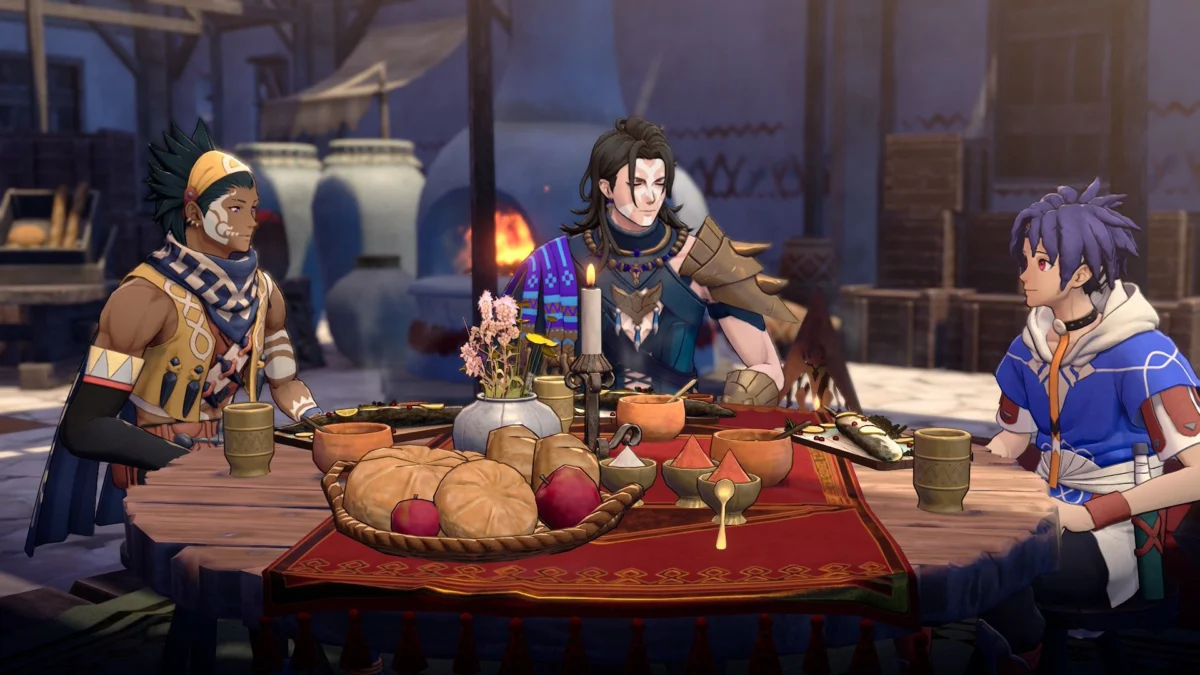
Released by Nintendo and Intelligent Systems, Fire Emblem: Fortune’s Weave has quickly established itself as a massive, sprawling tactical role-playing game that tests not only a player’s strategic acumen on the grid-based battlefield, but also their psychological resilience. Central to the experience is a deeply intertwined system of resource management, world-map traversal, and character recruitment.
Playing as one of four distinct protagonists—Leda, Cai, Deitrich, and Theodora—users are tasked with navigating a complex socio-political landscape across a 12-chapter Act One structure per character. However, the game presents an irresistible trap for completionists: an expansive roster of recruitable characters featuring distinct backgrounds, unique classes, and specific preference thresholds.
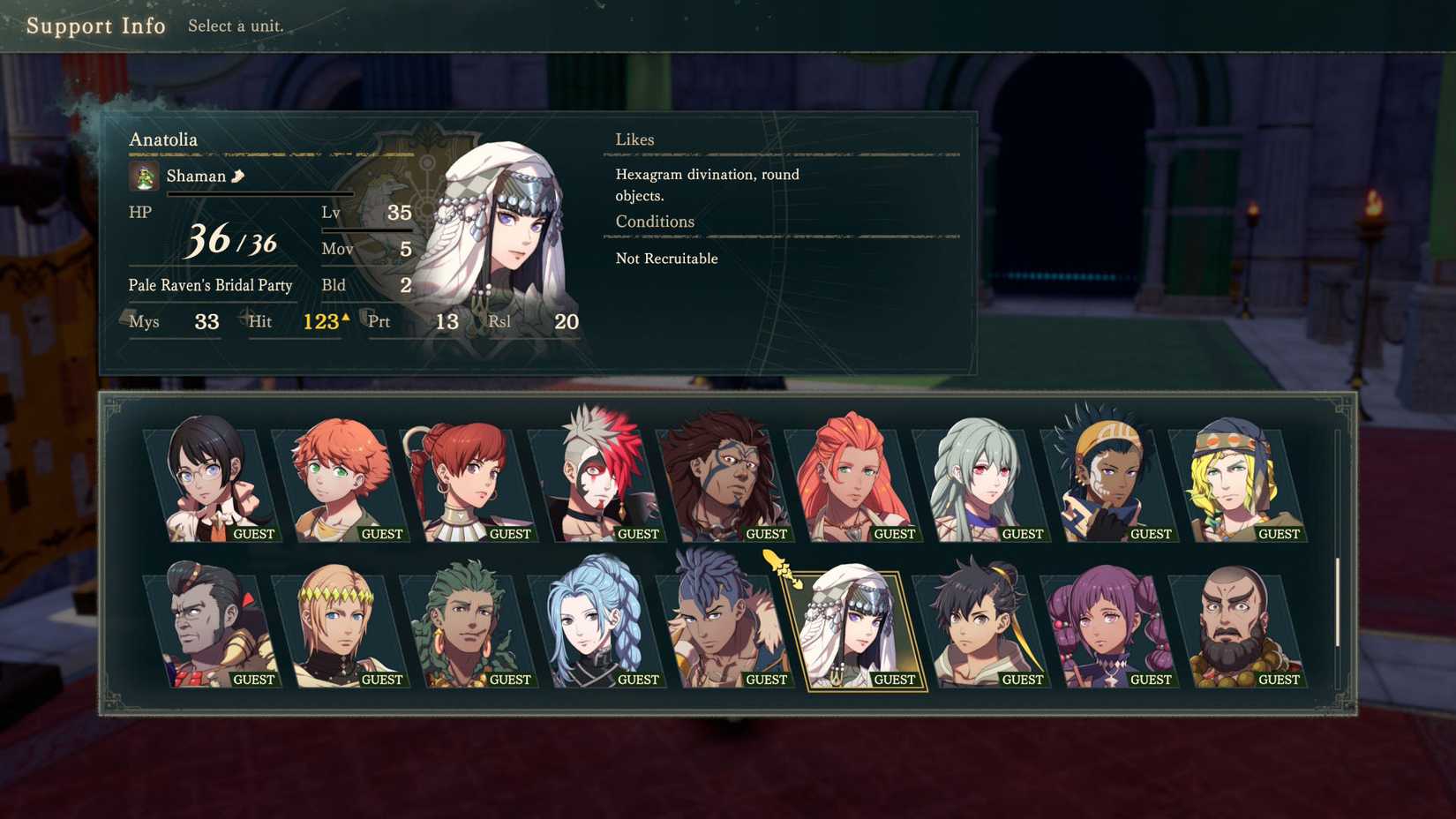
Rather than focusing on tactical optimization or cohesive team-building, many players—compelled by the psychological weight of classic RPG completionism—spend the early and mid-game treating vendors like Black Friday storefronts. They hoard fish sauce, pastries, and luxury gifts to win over dozens of characters, ultimately realizing that quantity rarely equates to quality in tactical combat.

Chronology
The psychological descent into Fortune’s Weave over-recruitment typically follows a predictable timeline:
- The Early-Game Delusion (Hours 1–5): The player is introduced to the sprawling world map and the initial roster. Driven by a completionist mindset reminiscent of tracking down the 108 Stars of Destiny in Suikoden or maxing out Social Links in Atlus’ Persona series, the player marks down every recruitable character as an essential target.
- The Mid-Game Resource Crisis (Hours 6–15): As Act One progresses, the player’s "renown rank"—a core metric required to unlock higher-tier recruitments—begins to rise. This unlocks the floodgates. The player goes broke buying up vendor stock, feeding aloof NPCs expensive dinners at the inn, and systematically handing out specialized items.
- The Tactical Bottleneck: Because funds and combat experience are funneled into buying affection rather than upgrading gear and stats, the core party enters main story battles underleveled and poorly equipped.
- The Revelation (The Turning Point): Players hit a wall during the Heroic Games or primary story skirmishes, where deployment limits strictly cap party sizes between five and seven members. They realize that out of two dozen recruited characters, a vast majority—such as a redundant surplus of six mages—sit permanently on the bench.
- The Acceptance (Late-Game & Beyond): The player abandons the exhausting quest for universal friendship, pivoting instead toward a lean, specialized core team while acknowledging that missed characters can easily be picked up on alternative routes or via chapter replays.
Supporting Data
The structural design of Fire Emblem: Fortune’s Weave inherently highlights the futility of trying to achieve 108-percent completion on a single playthrough:
- Four-Route Architecture: Unlike linear entries in the franchise, Fortune’s Weave divides its narrative across four separate protagonists (Leda, Cai, Deitrich, and Theodora). Certain characters are strictly exclusive to particular routes, making a single-route "catch ’em all" approach mathematically impossible.
- Deployment Constraints: Main story battles during major arcs enforce strict party limits, capping active combatants at five to seven units. This structural bottleneck renders massive rosters functionally obsolete for active combat scenarios.
- Resource Opportunity Cost: Prioritizing gift-buying over weapon forging and stat-boosting items directly impacts survival rates in mid-game chapters. Players who focus on universal socialization frequently find themselves underleveled, struggling against standard enemy scaling.
- Redundancy Metrics: Recruiting broad swathes of characters often yields duplicate classes—such as over-indexing on spellcasters—violating the basic tenets of tactical squad composition, which heavily rewards balanced damage types, tanking capacity, and healing utility.
Official Responses and Developer Intent
While Nintendo and Intelligent Systems have not issued a formal post-mortem regarding player burnout tied to recruitment mechanics, the design philosophy embedded within Fortune’s Weave speaks volumes. Developers purposefully built structural flexibility into the game precisely to alleviate the stress of traditional RPG completionism.

By distributing recruitable characters across four distinct routes and permitting chapter-select replays, the studio intended to decouple the narrative from the anxiety of permanent missables. The inclusion of the renown rank system acts as a natural gating mechanism, signaling to the player that deep relationships are meant to evolve organically alongside military progression, rather than being rushed through heavy capital expenditure in the opening hours. In essence, the developers created a sandbox that accommodates both the hyper-focused tactician and the casual collector, leaving it up to the player to decide whether they want to enjoy the journey or exhaust themselves trying to please everyone.
Implications
The phenomenon observed in Fire Emblem: Fortune’s Weave carries broader implications for the design of modern role-playing games and player psychology:
1. The Burden of Choice in Modern RPGs
When developers offer near-limitless social options, players often feel a self-imposed obligation to experience every interaction. This turns leisure time into a stressful checklist. The realization that "not everyone needs to like you" serves as a necessary pushback against toxic completionism.
2. Narrative Freedom vs. Mechanical Pragmatism
Fortune’s Weave underscores a persistent friction in tactical RPG design: the tension between narrative-driven recruitment and mechanical team synergy. When emotional attachment (collecting every colorful personality) clashes with tactical reality (deploying a tightly managed squad of six), players inevitably experience friction that can dampen pacing.
3. Redefining Replayability
By normalizing cross-route recruitment and accessible chapter replays, games like Fortune’s Weave are shifting the paradigm away from the "perfect first run." Players are increasingly encouraged to let go of ideal outcomes on their initial playthrough, knowing that discovery is an iterative process. Ultimately, the takeaway for modern gamers is simple: save your fish sauce, focus on your favorites, and leave room to chase the occasional sad goth girl down the road.
 Nana Muazin
 Layla Zulfa
 Basiran
