

CUPERTINO, Calif. — The endless cycle of speculation, supply-chain leaks, and concept renders can finally be put to rest. Years after competitors first entered the folding device market, Apple has officially entered the fray.
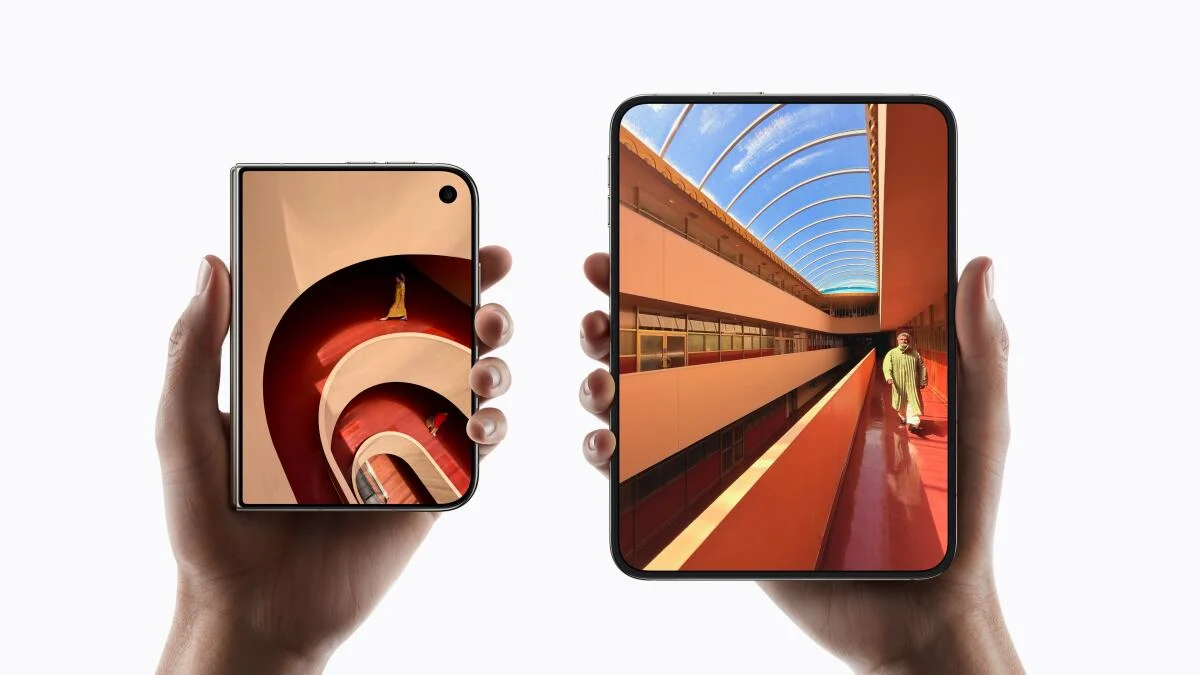
During its highly anticipated "Surprise and Shine" keynote event at Apple Park, the tech giant lifted the veil on its most radical hardware redesign in years: the iPhone Duo. Featuring a sprawling 7.6-inch inner display that folds seamlessly in half, Apple’s luxury-tier entry is designed to challenge established folding powerhouses from Samsung and Google.
Yet, even as industry analysts dissect the device’s technical specifications, pricing, and structural integrity, the broader cultural ecosystem has taken notice. Within minutes of the keynote wrap-up, social media platforms transformed into a digital roasting arena, with tech rivals, linguistic apps, and dictionary publishers jumping on the bandwagon to poke fun at Apple’s long-awaited arrival.
Main Facts: What We Know About the iPhone Duo
The iPhone Duo represents Apple’s official maiden voyage into the foldable smartphone category—a space that has matured significantly over the past half-decade through iterations from Android pioneers.
- The Display: The device features a flexible 7.6-inch inner OLED display, bridging the gap between a traditional smartphone and a compact tablet. When closed, it utilizes an exterior cover screen engineered for standard, one-handed tasks.
- The Pricing and Positioning: True to Apple form, the iPhone Duo enters the market at an ultra-premium price point, aimed directly at early adopters, power users, and enterprise professionals willing to pay a heavy premium for cutting-edge form factors.
- The Leadership Context: The launch marks one of the premier major hardware rollouts under the tenure of newly minted Apple CEO John Ternus, who steered the presentation at the Steve Jobs Theater.
Apple is clearly hoping that its late entry will benefit from years of iterative refinement seen in the broader market, solving persistent consumer pain points such as visible crease lines, battery management under dual-screen loads, and mechanical hinge durability.
Chronology: From Rumor Mill to Reality
The path to the iPhone Duo was paved by nearly a decade of patent filings, industry whispers, and repeated delays.
- 2018–2021 (The Patent Era): As competitors like Royole and Samsung debuted the first generation of fragile, outward-folding devices, Apple quietly secured dozens of patents detailing proprietary hinge mechanisms, self-healing display coatings, and glass-cutting techniques designed to withstand repeated bending.
- 2022–2024 (The Waiting Game): Year after year, Wall Street analysts predicted an imminent foldable iPhone release, only for supply chain reports to push timelines back. Apple famously maintained that the technology—particularly regarding display creasing and structural longevity—was not yet up to Cupertino’s rigorous standards.
- July 2026: Samsung fires a massive salvo across the bow by launching its refined Galaxy Z Fold 8, raising the bar for thinness and multitasking capabilities.
- Wednesday, September (The "Surprise and Shine" Event): Apple officially halts the rumor mill. John Ternus takes the stage at Apple Park, unveiling the iPhone Duo to a packed auditorium and sending shockwaves through the consumer tech landscape.
Supporting Data: The Foldable Market Landscape
Apple’s entry into the folding phone market does not happen in a vacuum. To understand the stakes of the iPhone Duo, one must look at the competitive telemetry leading up to late 2026.
- Market Saturation: Foldables have transitioned from novelty luxury goods to viable premium flagships, accounting for an increasingly lucrative slice of the high-end smartphone market.
- The Competitor Baseline: Devices like the Samsung Galaxy Z Fold 8 and Google’s Pixel 11 Pro Fold spent years establishing software optimization for split-screen layouts, taskbars, and app continuity. Apple enters a market where consumers already expect robust multitasking infrastructure (such as drag-and-drop file sharing and multi-window execution).
- The Consumer Premium: Foldable devices historically command retail prices exceeding $1,700 to $2,000. Apple’s pricing strategy for the iPhone Duo positions it firmly at the absolute ceiling of consumer electronics pricing, testing whether Apple’s brand loyalty can overcome consumer hesitation regarding first-generation hardware reliability.
Official Responses: Brands Hijack the Spotlight
While Apple’s engineering teams celebrated the completion of the project inside Apple Park, the rest of the corporate internet seized the moment for a masterclass in brand-to-brand banter.
Samsung Strikes First
As Apple’s primary rival in the folding space—having released the Galaxy Z Fold 8 just months prior—Samsung Mobile did not waste time. Capitalizing on the collective attention drawn by the Apple event, Samsung’s social media handlers deployed targeted messaging on X (formerly Twitter) highlighting their years of seniority in the foldable category. While the initial post generated significant viral traction, it underscored the fierce turf war brewing in the ultra-premium segment.
Duolingo’s SEO Meltdown
Perhaps the most viral digital reaction came from an unexpected quarter: language-learning app Duolingo. Upon hearing the device’s moniker, the brand’s notoriously unhinged social media team seemingly entered an existential panic over search engine optimization (SEO) and brand confusion.
"It’s called the iPhone WHAT???" the official Duolingo account posted, spiraling online and directly tagging Apple CEO John Ternus in a series of comedic updates. The juxtaposition of a global tech titan launching a multi-thousand-dollar piece of hardware against a green owl stressing over algorithmic dominance provided social media users with peak entertainment.
Merriam-Webster Brings the History Lesson
Not to be left out of the cultural moment, the American dictionary publisher Merriam-Webster delivered a devastatingly dry piece of shade. Weighing in on the concept of things that fold, the official account posted:
"Not to brag, but our product has been foldable since 1828."
The post instantly accumulated hundreds of thousands of engagements, embodying the ultimate "just gonna leave this here" energy that internet users have come to expect from the historic lexicographical institution.
Implications: What the iPhone Duo Means for the Future of Mobile Tech
The launch of the iPhone Duo is far more than just a new gadget launch—it is a watershed moment that will irrevocably reshape the consumer electronics industry.
1. Validation of the Form Factor
For years, skeptics argued that foldables were an unnecessary gimmick prone to mechanical failure. By throwing its immense manufacturing weight and market influence behind a folding device, Apple has officially validated the form factor for the mainstream masses. Brands that struggled to convince mainstream consumers to abandon traditional slabs will now see a rising tide lift all boats, as Apple normalizes the concept of a pocket-sized device that unfolds into a tablet.
2. Software Ecosystem Maturation
Hardware is only half the battle. Apple’s entry forces developers to prioritize tablet-and-folding-optimized layouts for iOS applications. Just as the original iPad catalyzed tablet app development, the iPhone Duo will accelerate the development of adaptive UI design across the App Store, benefiting not just Apple users, but setting a standard that Android developers must continually match.
3. Pricing and Accessibility Realities
With the iPhone Duo commanding an elite price tag, the device reinforces a growing bifurcation in the tech market: standard slab phones are becoming more commoditized and accessible, while revolutionary form factors are reserved for the upper echelons of wealth. Whether this drives future innovation downward into more affordable "standard foldable" tiers remains to be seen.
The Bottom Line
The rumor mill can finally rest, but the competitive war has only just begun. As early reviews roll in and consumers get their hands on the hardware, the iPhone Duo has already succeeded in its primary immediate objective: capturing the entire world’s attention. Whether it can maintain that attention—and justify its lofty ambitions—will define Apple’s hardware narrative for the remainder of the decade.
 Nana
Nana
