

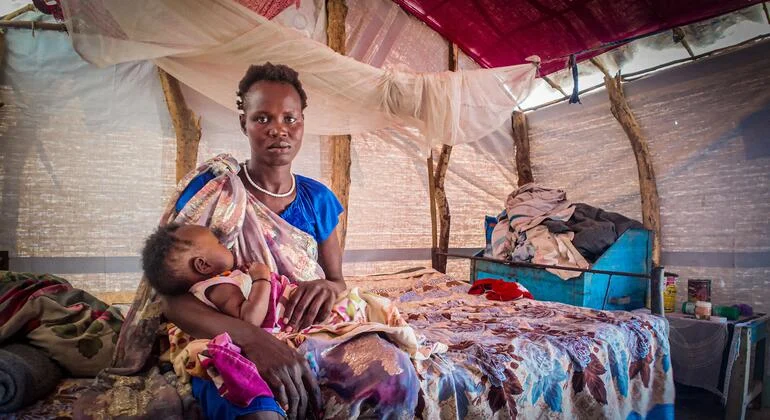
JUBA – As South Sudan approaches its first-ever national elections since gaining independence in 2011, a somber reality has settled over the world’s youngest nation. The United Nations Commission on Human Rights in South Sudan has issued a harrowing assessment: the human cost of violence is not only persisting but actively expanding, driven by a toxic convergence of political gridlock, systemic corruption, and a culture of impunity that continues to erode the foundations of a fledgling democracy.
Following a rigorous four-day mission to the country, members of the Commission warned that the window to secure a peaceful transition is rapidly closing. Despite a 2018 peace agreement intended to silence the guns, the nation remains trapped in a recurring cycle of displacement, sexual violence, and targeted attacks against civilians—a pattern that shows little sign of abating as the December polls draw near.
The Weight of History: A Chronology of Conflict
To understand the current volatility in South Sudan, one must examine the traumatic trajectory of its brief existence.
- July 2011: South Sudan celebrates its independence from Sudan, a moment of global hope and optimism.
- December 2013: A power struggle between President Salva Kiir and Vice-President Riek Machar ignites a devastating civil war, splitting the nation along ethnic and political lines.
- 2018: The Revitalized Agreement on the Resolution of the Conflict in the Republic of South Sudan (R-ARCSS) is signed. While it successfully reduced the intensity of large-scale conventional warfare, it failed to address the root causes of the violence.
- 2023–2025: The period is marked by the "salami-slicing" of peace. Localized conflicts in Jonglei, Upper Nile, and Unity states intensify, often fueled by elite competition for resources.
- August 2026: A critical juncture. The UN Commission warns that the conditions for "credible polls" are largely absent, noting that the political space for opposition and civil society has been systematically dismantled.
The conflict has evolved from a centralized civil war into a fragmented landscape of localized violence, where community-based militias and state-affiliated forces clash with devastating consequences for the civilian population.
The Human Toll: Voices from the Frontlines
The Commission Chair, Yasmin Sooka, conducted a high-stakes visit to Jonglei state, where she met directly with survivors of recent violence. The testimonies gathered were harrowing, painting a picture of a population abandoned by those tasked with their protection.
"Visit after visit, we continue to hear from people who bear the consequences of violence, displacement, insecurity, and the failures of those with political and security responsibilities to prevent and address those harms," Sooka stated.
The accounts provided to the Commission include systematic sexual violence used as a tool of warfare, the forced separation of families, and the total lack of medical or psychosocial support for those suffering from severe trauma. Many survivors expressed a profound sense of abandonment, noting that the infrastructure for basic human security—healthcare, food, and safety—has been replaced by a pervasive, daily uncertainty.
The "human cost" is not merely a statistical exercise; it is the destruction of a generation’s potential. The displacement camps, such as the sprawling facility in Bentiu, remain at capacity, housing thousands who have no home to return to because their lands remain contested or occupied by armed factions.
Humanitarian Concerns: Aid Under Siege
The humanitarian situation in South Sudan is currently classified as one of the most dangerous environments for aid workers globally. The Commission expressed grave concern over the systematic disruption of humanitarian operations, which are often the only lifeline for millions facing acute food insecurity and health crises.
Compounding this tragedy is a decline in international funding, leaving aid agencies with the impossible task of doing more with significantly less. The Commission specifically highlighted a recent, lethal attack on a UNMISS (UN Mission in South Sudan) patrol in Jonglei, which claimed the lives of two peacekeepers.
"This is not just an attack on the UN; it is an attack on the very concept of humanitarian protection," an official noted. The Commission has called for a transparent, independent investigation into the incident, emphasizing that without accountability, the environment for aid delivery will continue to deteriorate.
The Electoral Gamble: A Recipe for Atrocity?
With elections slated for December, the political temperature in Juba is reaching a boiling point. The Commission has issued a stark advisory: elections held without the necessary safeguards are not merely flawed—they are a potential trigger for renewed, large-scale atrocity crimes.
Commissioner Barney Afako underscored the necessity of an inclusive environment. "Even as the country heads for elections, political and civic space has narrowed, while many of the safeguards and conditions for peaceful and credible polls are still missing," he warned.
For an election to be considered "credible," the Commission argues that the following conditions must be met:
- Genuine Inclusive Dialogue: Negotiations must include not only the signatories of the 2018 agreement but also holdout opposition groups, civil society, women’s organizations, and youth leaders.
- Freedom of Expression: The media and political opposition must be able to operate without the threat of harassment, arbitrary detention, or state-sanctioned violence.
- Adjudication Mechanisms: A clear, impartial framework for resolving electoral disputes is essential to prevent losers from resorting to violence as a fallback.
Without these, the election risks becoming a "winner-takes-all" scenario that historically, in South Sudan, has served as a catalyst for renewed conflict.
Corruption and the Engine of Impunity
Perhaps the most persistent obstacle to peace in South Sudan is the institutionalization of corruption. The Commission’s findings echo reports from 2025, detailing how the diversion and misallocation of public resources act as a form of "structural violence."
When state coffers are treated as private wealth, public services—justice, police, education, and healthcare—are effectively starved. This financial depletion weakens the state’s capacity to uphold the rule of law, creating a vacuum that is filled by armed actors and patronage networks.
Commissioner Carlos Castresana Fernández was blunt in his assessment of the judicial landscape: "All these years, the Commission has documented serious violations and identified the same underlying problem: impunity. Too often, those responsible for grave abuses have not been held accountable, while institutions responsible for justice remain weak and under-resourced."
The lack of an effective judiciary means that crimes against humanity are committed with the expectation of total immunity. This cycle of impunity serves as a recruitment tool for violence, as individuals believe that their actions will never face the scrutiny of a court of law.
Implications and the Path Forward
The situation in South Sudan is at a critical juncture. The international community, led by the UN and regional bodies, is watching to see if the government will prioritize the stability of the state over the interests of the political elite.
What Must Change:
- Accountability for Abuses: The establishment of the Hybrid Court for South Sudan, as envisioned in the 2018 agreement, is long overdue. Without it, the cycle of violence will likely remain unbroken.
- Transparent Resource Management: Increased oversight of oil revenues and public funds is necessary to ensure that state resources benefit the citizenry rather than fueling patronage networks.
- Protection of Civic Space: Government authorities must demonstrate a commitment to protecting the rights of journalists, human rights defenders, and opposition figures to ensure the upcoming elections are not a coronation, but a true expression of the people’s will.
As Yasmin Sooka poignantly concluded, "South Sudanese people deserve better than to have their lives shaped by recurring cycles of violence and uncertainty."
The December elections represent a test of the nation’s resolve. If the government fails to create the conditions for a peaceful, inclusive process, the result may not be the democratic renewal the people crave, but a deepening of the humanitarian crisis that has defined the last decade. The world now waits to see if the leadership in Juba will heed these warnings or continue down a path that leads only to further fragmentation and despair.
 Lina Hope
 Asro
Asro
 Layla Zulfa
