

The American television landscape is about to undergo a high-stakes stress test. Since its debut, the U.S. iteration of The Traitors has functioned as a glitzy, high-octane playground for reality television royalty. By pitting stars from Survivor, Big Brother, and The Real Housewives against one another in a psychological game of deception, the show created a "super-group" dynamic that catapulted it to the top of the ratings and earned it critical acclaim, including a string of Emmy Awards.
However, as we approach the September 17 premiere of The Traitors: New Blood, the production team is pivoting in a direction that has sent ripples of uncertainty through the fan base. For the first time in the American franchise’s history, the show is stripping away the celebrity armor, replacing seasoned reality veterans with an ensemble cast of everyday, non-famous citizens. This shift is not merely a casting choice; it is a fundamental transformation of the show’s DNA.
The Evolution of a Cultural Phenomenon
To understand the weight of this new season, one must look at the meteoric rise of the U.S. version. The Traitors arrived at a time when reality television audiences were suffering from format fatigue. By blending the social strategy of Big Brother with the high-stakes intrigue of a murder mystery, the show tapped into a unique vein of viewership.
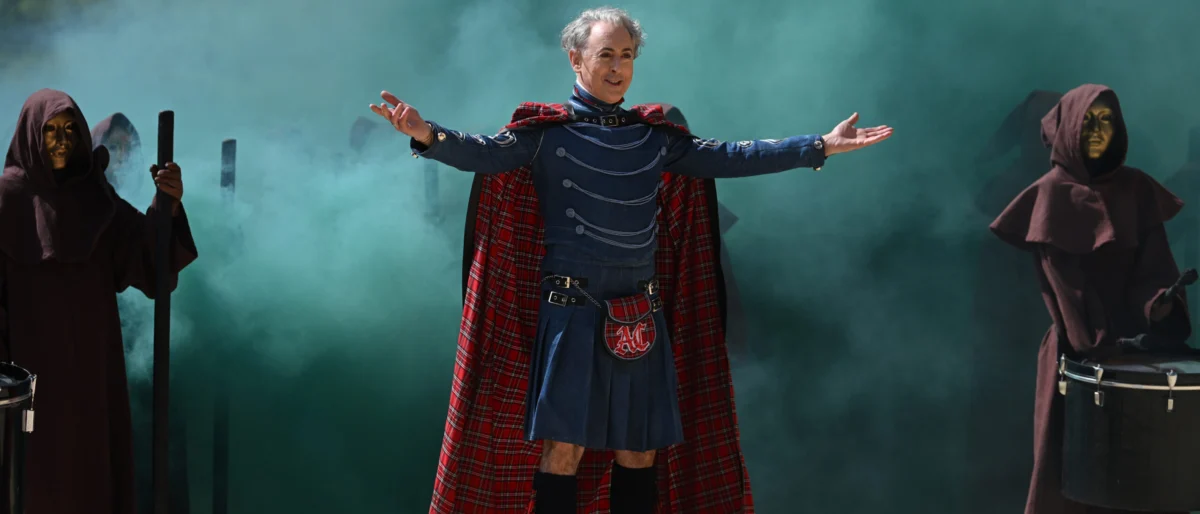
Central to this success has been the enigmatic host, Alan Cumming. With his theatrical flair, sharp fashion sense, and genuine ability to unsettle the contestants, Cumming has elevated the role of the reality host from mere facilitator to central character. His recent third consecutive Creative Arts Emmy win for Best Host underscores his status as a titan of the genre.
Yet, the show’s success has historically relied on the pre-existing parasocial relationships fans have with the contestants. When viewers tuned in, they weren’t just watching a game; they were watching a clash of titans—the Survivor legend versus the Real Housewife powerhouse. Removing that layer of fame forces the audience to engage with the game mechanics entirely on their own merits, rather than through the lens of prior celebrity reputations.
A Chronology of the Transition
The decision to introduce "New Blood" was not made in a vacuum. It follows a deliberate, multi-year strategy by the production team to solidify the show’s viability as a long-term franchise.
- Early 2024–2025: The U.S. version established itself as a ratings juggernaut, relying on the "All-Star" model. This period proved the format worked but left critics questioning if the show could survive without a cast that already knew how to play to the cameras.
- Spring 2026: Rumors began to circulate that the producers were looking to diversify the casting pool. While many expected a "Mixed" cast—part celebrity, part civilian—the announcement of an entirely civilian cast took the industry by surprise.
- August 2026: Following Alan Cumming’s Emmy win, marketing for the new season ramped up, emphasizing the "psychological purity" of a game where no one knows who anyone else is or what they are capable of.
- September 17, 2026: The official premiere date. This date will be remembered as the litmus test for whether the American public is ready to invest in "unknowns" with the same fervor they have shown for reality icons.
The "New Blood" Strategy: Why Now?
The transition to an all-civilian cast is a bold attempt to return to the game’s roots. While the U.S. version has been defined by celebrity, the international versions of the show—where the format originated—have flourished almost exclusively with "regular people."

The British version of The Traitors (BBC) is perhaps the best example of this. By casting school teachers, real estate agents, and retirees, the show achieved a level of grounded, high-stakes drama that felt more relatable to the average viewer. The British edition has swept the National Television Awards and the BAFTAs, proving that when the stakes are high, the identity of the player matters less than their capacity for deception.
The Netherlands’ De Verraders has already run for six successful seasons, utilizing the civilian format to experiment with holiday-themed episodes and variations on the core rules. Australia and New Zealand have followed suit, with the Australian iteration recently pulling in over 500,000 viewers per episode. These numbers suggest that the "celebrity" element may have been an effective training wheel for the U.S. market, but it is not a requirement for the show’s sustained success.
The Risk of the Unknown
Despite the international success, the American audience presents a unique challenge. In the U.S., reality television is often tied to the personal brand of the contestants. The upcoming cast, which includes individuals from various professional backgrounds—save for a few outlier figures like MLB Network analyst Xavier Scruggs—lacks the built-in audience of past seasons.
The risk is twofold:
- Viewer Retention: Will audiences tune in if they aren’t rooting for their favorite reality star from another show?
- Entertainment Value: The "celebrity" cast members are experts at giving soundbites and manufacturing drama. Can "everyday" people provide the same level of narrative drive, or will the game become too clinical and quiet?
However, there is an argument to be made for the "intrigue factor." With a cast of unknowns, the audience starts on a level playing field. We don’t know who has a secret strategy, who has the best social game, or who is inherently deceptive. We are discovering these traits in real-time. This "blank slate" could lead to a more authentic, gritty, and unpredictable game of social deduction.
Official Perspectives and Industry Implications
Network executives have remained tight-lipped regarding specific expectations for the ratings, but their confidence is evident in the scheduling. By keeping the premiere in a prime-time slot on NBC, the network is signaling that they believe in the strength of the format over the strength of the star power.
Industry analysts point out that this move is a necessary evolution for the longevity of the franchise. Relying on a revolving door of reality stars is expensive and potentially limiting. If The Traitors: New Blood succeeds, it opens the door for a future where the show can alternate between "Celebrity" seasons and "Civilian" seasons, effectively doubling the show’s shelf life.

"The format is the star," noted one industry commentator. "Alan Cumming is the bridge, but the castle, the traps, and the paranoia are the real draws. If the producers have done their job in casting, the audience will forget these people are ‘new’ within the first fifteen minutes of the premiere."
The Psychological Hook
What separates The Traitors from other reality competitions is its focus on the psychology of the liar. When you cast celebrities, they are often playing a meta-game—they are worried about their reputation, their future endorsements, and how their fans will perceive them.
With "New Blood," there is a potential for a sharper, more cutthroat game. These players are playing for the money, not for a brand refresh. They are less likely to fall into the "traps" of alliance-building that often plague celebrity reality shows. This could lead to a season of unprecedented backstabbing and psychological warfare.
Looking Ahead: The Verdict
As we count down the hours to the September 17 premiere, the question remains: Can a show built on the backs of reality legends thrive when it cuts the cord?
If the international success of the format is any indication, the answer is a resounding yes. The mechanics of the game are designed to create conflict and tension regardless of who is standing in the circle. The success of The Traitors isn’t just about who is being "murdered" or "banished"; it’s about the universal human desire to see who is lying to whom.
Whether The Traitors: New Blood becomes the new standard for the franchise or a cautionary tale, one thing is certain: the world will be watching. The castle doors are opening once again, and this time, the stakes are not just for the players, but for the future of the game itself.
The Traitors: New Blood premieres on September 17 at 8/7c on NBC. Episodes will be available to stream the following day on Peacock.
 Neng Nana
 Azzam Bilal Chamdy
 Nana
Nana
