

In a maneuver described by industry insiders as a classic “Friday news dump,” the Television Academy sent shockwaves through Hollywood this past week. In an unexpected restructuring of the Primetime Emmy Awards, the Academy announced that five key categories—Supporting Actor in a Limited or Anthology Series or Movie, Supporting Actress in a Limited or Anthology Series or Movie, Directing for a Limited or Anthology Series or Movie, Writing for a Limited or Anthology Series or Movie, and Writing for a Variety Series—will be stripped from the main telecast and moved to the Creative Arts Emmys.
The decision, which aims to streamline the prestigious Primetime broadcast, has been met with immediate, fierce condemnation from the industry’s most powerful guilds. By relegating these honors to the Creative Arts ceremony—often viewed as a secondary event—the Academy faces accusations of devaluing the very craft it was founded to celebrate.
A "Fresh Take" or a Major Mistake?
The Television Academy defended its decision with a brief statement, citing a commitment to “delivering a fresh new take on the Emmys broadcast, with a focus on entertainment.” In an era where linear television ratings are under constant pressure, the Academy is clearly looking to tighten the pacing of the three-hour Primetime show. By cutting categories, producers likely hope to increase the presence of A-list stars and musical performances, aiming for a more "cinematic" and "eventized" feel.
However, the guilds—specifically SAG-AFTRA, the Directors Guild of America (DGA), and the Writers Guild of America (WGA)—were quick to issue a scorching joint rebuttal. "The decision to eliminate these categories from the prime-time broadcast devalues the contributions of the talented people the Academy is meant to honor," the guilds stated. They argue that the prestige of the Primetime Emmy is rooted in the recognition of excellence across all storytelling formats, and that moving these categories effectively demotes the work of actors and creators who contribute to some of the most critically acclaimed limited series on television.
The Cost of Compression: A History of Iconic Moments
To understand why this decision is so polarizing, one must look at the history of the Primetime Emmys. For decades, the broadcast has served as a cultural touchstone, providing a platform for emotional, historic, and unscripted moments that define the television landscape. If the Television Academy had implemented these changes earlier, the history of the Emmys would look significantly different—and much emptier.
The following retrospective illustrates the profound impact these categories have had on the Primetime stage, and why their removal threatens to erase future "water-cooler" moments.

Owen Cooper: The Youngest to Break the Glass Ceiling (2025)
Last year, the world watched as 15-year-old Owen Cooper became the youngest male actor ever to win an Emmy. His portrayal of Jamie Miller in Netflix’s Adolescence was a global phenomenon. His acceptance speech—a humble reflection on stepping out of one’s comfort zone—was not just a win for a young actor; it was a testament to the power of the medium. Removing such a milestone from the main stage minimizes the achievement of the next generation of performers.
Lamorne Morris: The "Fanboy" Moment (2024)
When Lamorne Morris won for his gripping turn in FX’s Fargo, he provided a rare, genuine moment of levity and sincerity. By publicly asking Robert Downey Jr. to sign a poster he kept in his home, Morris captured the human element of celebrity. It was the kind of unscripted, authentic interaction that the Primetime telecast relies upon to remain relevant and relatable to audiences.
Niecy Nash: Speaking Truth to Power (2023)
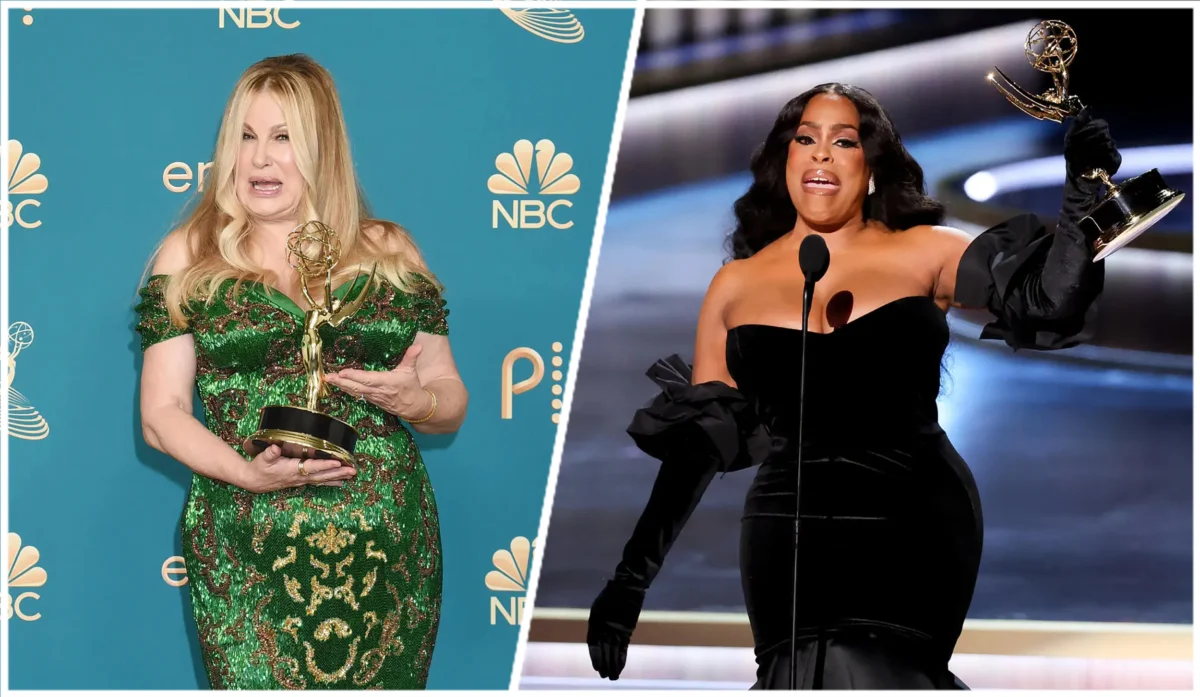
Niecy Nash’s victory for Monster: The Jeffrey Dahmer Story remains one of the most powerful speeches in recent memory. She did not just thank her producers; she thanked herself, highlighted the struggles of marginalized women, and demanded recognition for the unheard. By moving such categories to the Creative Arts ceremony, the Academy risks silencing these vital, necessary voices before they even reach the general public.
Jennifer Coolidge: The Quintessential Emmy Moment (2022)
Jennifer Coolidge’s win for The White Lotus was a masterclass in chaotic charm. Between her anecdotes about a "lavender bath" and her refusal to be played off by the orchestra, she became the face of the modern Emmy broadcast. Her speech was a reminder that the Primetime show is supposed to be fun, messy, and human—all of which is lost if the category is relegated to a pre-taped, edited segment a week later.
Laura Dern: Honoring the Sisterhood (2017)
Laura Dern’s win for Big Little Lies served as a pivot point for the industry, emphasizing the lack of substantial roles for women and celebrating the "fierce women" she worked alongside. It was a poignant moment of advocacy that resonated far beyond the walls of the Microsoft Theater.
Sterling K. Brown: The Journey of a Lifetime (2016)
Sterling K. Brown’s win for The People v. O.J. Simpson was a pivotal moment in his meteoric rise. His emotional plea—"Thank you for giving a brother a chance"—remains a classic example of an actor using his platform to express profound gratitude for a career-defining opportunity.

Regina King and Jessica Lange: Genre-Defining Performances
Regina King’s back-to-back wins for American Crime and Jessica Lange’s groundbreaking work in American Horror Story proved that Emmy voters could look past genre biases to honor elite acting. These wins were televised moments that helped elevate the status of horror and crime anthologies in the eyes of the general public.
The Implications for the Industry
The move to the Creative Arts ceremony—often referred to as the "technical" awards—is not merely an administrative shift; it is a signal of the Academy’s shifting priorities. By prioritizing "entertainment" over the inclusion of supporting actors and creative heads, the Academy is gambling that the audience will appreciate a slicker show more than they will miss the inclusion of these categories.
However, the risk is significant. The Creative Arts ceremony, while technically impressive, lacks the massive viewership and cultural footprint of the main event. Speeches delivered in a room of industry peers are rarely as impactful as those delivered to a global audience of millions. By removing these categories, the Academy effectively tells the public that these roles are "less important" than lead acting roles.
What Lies Ahead?
As the backlash continues, the Television Academy faces a difficult choice: remain committed to their "fresh take" or listen to the guilds that represent the very people who make the Emmys possible. The guilds’ argument is clear: the strength of the Emmys lies in its inclusivity and its ability to showcase the breadth of talent across the industry.
If the Academy proceeds with this plan, they may achieve their goal of a shorter, tighter, more "entertaining" show. But they do so at the risk of stripping the ceremony of the spontaneity, diversity, and raw human emotion that have kept the Emmys relevant for nearly eight decades. As the industry prepares for the 2026 ceremony, one thing is certain: the conversation surrounding these five categories is far from over. The battle for the soul of the Primetime Emmys has only just begun.
 Siti Muinah
 Nana
Nana
 Asro
Asro
