

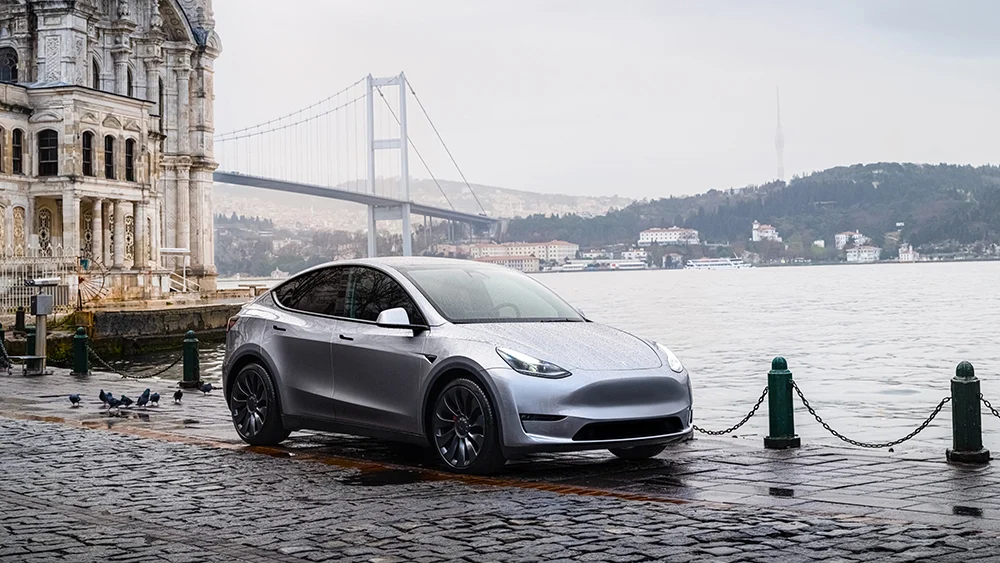
In a dramatic reversal of fortunes that has caught Wall Street and automotive analysts off guard, Tesla has reported a robust second quarter for 2026. Global deliveries reached 480,000 vehicles, a performance that shattered consensus estimates and signaled a profound shift in consumer behavior across the Atlantic. While the American market faces significant headwinds, European enthusiasm for the brand has surged, proving that the electric vehicle (EV) pioneer still commands significant influence in an increasingly crowded and volatile market.
Main Facts: A Global Outperformance
The headline figures for Tesla’s second quarter are, by all accounts, an impressive display of operational resilience. Reporting 480,000 deliveries between April and June, the company has managed a 25 percent increase over the same period in 2025. This surge was largely unexpected; market analysts, according to Tesla’s official statements, had pegged expectations closer to the 406,000 mark.
The engine of this growth remains the "bread and butter" of the Tesla lineup: the Model 3 sedan and the Model Y crossover. Together, these two models accounted for a staggering 97 percent of the company’s total sales volume. While the Cybertruck—Elon Musk’s polarizing angular pickup—continues to command media attention, it remains a niche product in the broader portfolio, contributing only about 3 percent to the total delivery count.
Chronology: The Road to the Q2 Surge
The journey to this quarter’s success was not a linear trajectory. To understand the current momentum, one must look back at the turbulent political and economic landscape of the previous eighteen months:
- 2025 (The Period of Contraction): Last year, Tesla faced significant friction, particularly in Europe. The market climate was heavily influenced by the political association between Elon Musk and President Trump. Musk’s involvement with the Department of Government Efficiency (DOGE) created a polarized brand image that, according to market data, alienated a portion of the European consumer base, leading to a temporary souring of sales.
- Q1 2026 (The Turning Point): As the global energy landscape began to shift due to the escalating conflict in Iran, geopolitical instability began to push gasoline prices to record highs. This external pressure acted as a catalyst, forcing consumers to re-evaluate the total cost of ownership for internal combustion engine (ICE) vehicles.
- Q2 2026 (The European Pivot): The current reporting period shows a definitive "re-coupling" between European consumers and the Tesla brand. Data from the European Automobile Manufacturers’ Association indicates that in the first five months of 2026 alone, sales in the E.U. climbed by 77 percent year-over-year, reaching 89,000 units.
Supporting Data: Regional Divergence
The disparity between regional performance in Q2 2026 highlights the complexities of the modern automotive market. While Europe has become a bastion of growth, the United States market has hit a significant snag.
Research firm Cox Automotive estimates that U.S. sales plummeted by 20 percent during the second quarter. The primary culprit appears to be the federal government’s decision to sunset major tax incentives for electric vehicles in the preceding year. This policy shift effectively raised the "out-the-door" price for American consumers, dampening demand for premium EVs.
The supply chain also tells a nuanced story. Tesla’s internal communications, specifically a recent LinkedIn post from a high-level executive, revealed that the company is scaling production to hit a target of 6,200 Model Y units per week as of July. This aggressive production ramp-up suggests that Tesla is banking on continued, high-volume demand to sustain its market share.
Conversely, the Cybertruck performance remains a point of concern for investors. With an initial internal projection of 250,000 units per year, the current reality of its contribution to the 480,000-vehicle total suggests that the vehicle has yet to achieve the mass-market adoption necessary to become a primary revenue driver.
Official Responses and Corporate Strategy
Tesla has remained characteristically opaque regarding the granular breakdown of its sales by region, preferring to focus on the global narrative. However, the broader automotive industry has been forced to take note.

The industry at large has been in a state of flux. Many major legacy automakers, observing the cooling demand in the U.S. market, have pivoted their capital expenditure toward hybrid technologies rather than pure battery-electric vehicles (BEVs). Lamborghini, for instance, famously canceled its planned Lanzador electric supercar project, signaling a retreat from the "all-electric-at-all-costs" strategy that dominated 2023 and 2024.
Yet, Tesla’s Q2 success complicates the narrative that EVs are a "dying trend." By outperforming expectations despite a lack of federal subsidies in the U.S. and significant political baggage, Tesla has demonstrated that their brand equity remains the primary driver of their success. When gas prices rise, the value proposition of a Tesla—long-range, high-performance, and increasingly integrated into global digital ecosystems—becomes difficult for the average consumer to ignore.
Implications: What This Means for the Future
The current situation holds several long-term implications for the EV industry:
1. The Resilience of Brand Loyalty
Tesla’s ability to rebound in Europe suggests that brand identity can overcome short-term political alienation. As long as the product fulfills a functional need—specifically as an antidote to volatile fuel prices—consumers appear willing to overlook the controversies surrounding the company’s leadership.
2. The Hybrid vs. BEV Tug-of-War
The pivot toward hybrids by legacy manufacturers like Ford, GM, and Stellantis may prove to be a short-sighted move. If gasoline prices remain high due to ongoing instability in the Middle East, the "bridge technology" of hybrids may quickly become obsolete, leaving legacy automakers with stranded assets while Tesla continues to dominate the BEV infrastructure.
3. Policy Sensitivity
The 20 percent decline in U.S. sales serves as a warning to policymakers: the EV transition is fragile. Without tax credits or aggressive infrastructure investment, the market for electric vehicles remains highly price-sensitive. The U.S. experience serves as a control group, showing what happens to EV adoption when government support is withdrawn, while the European experience shows what happens when consumer demand is driven by raw economic necessity.
4. The Production Scaling Challenge
Tesla’s move to produce 6,200 Model Ys per week is a high-stakes gamble. If the global economy experiences a further downturn, these high-volume production lines could become a liability. However, if the current trend of rising fuel costs continues, Tesla will be perfectly positioned to capture the market share that other manufacturers are currently abandoning.
Conclusion
Tesla’s second quarter of 2026 will likely be studied as a pivotal moment in the history of the electric vehicle. By defying the "EV-is-dying" narrative that has permeated the automotive industry for the last twelve months, the company has proven that it is not merely a car manufacturer, but a barometer for the global energy economy.
As the company moves into the second half of the year, all eyes will be on whether the U.S. market can recover from its tax-incentive-driven slump and whether the European momentum can be sustained. For now, Elon Musk’s company has silenced the skeptics, proving that when the world is faced with economic uncertainty, the demand for electrification remains a potent force in the automotive sector. The path forward remains treacherous, but for Tesla, the road ahead appears to be gaining clarity.
 Ali Ikhwan
 Laily UPN
 Raul Delapena Setiawan
