

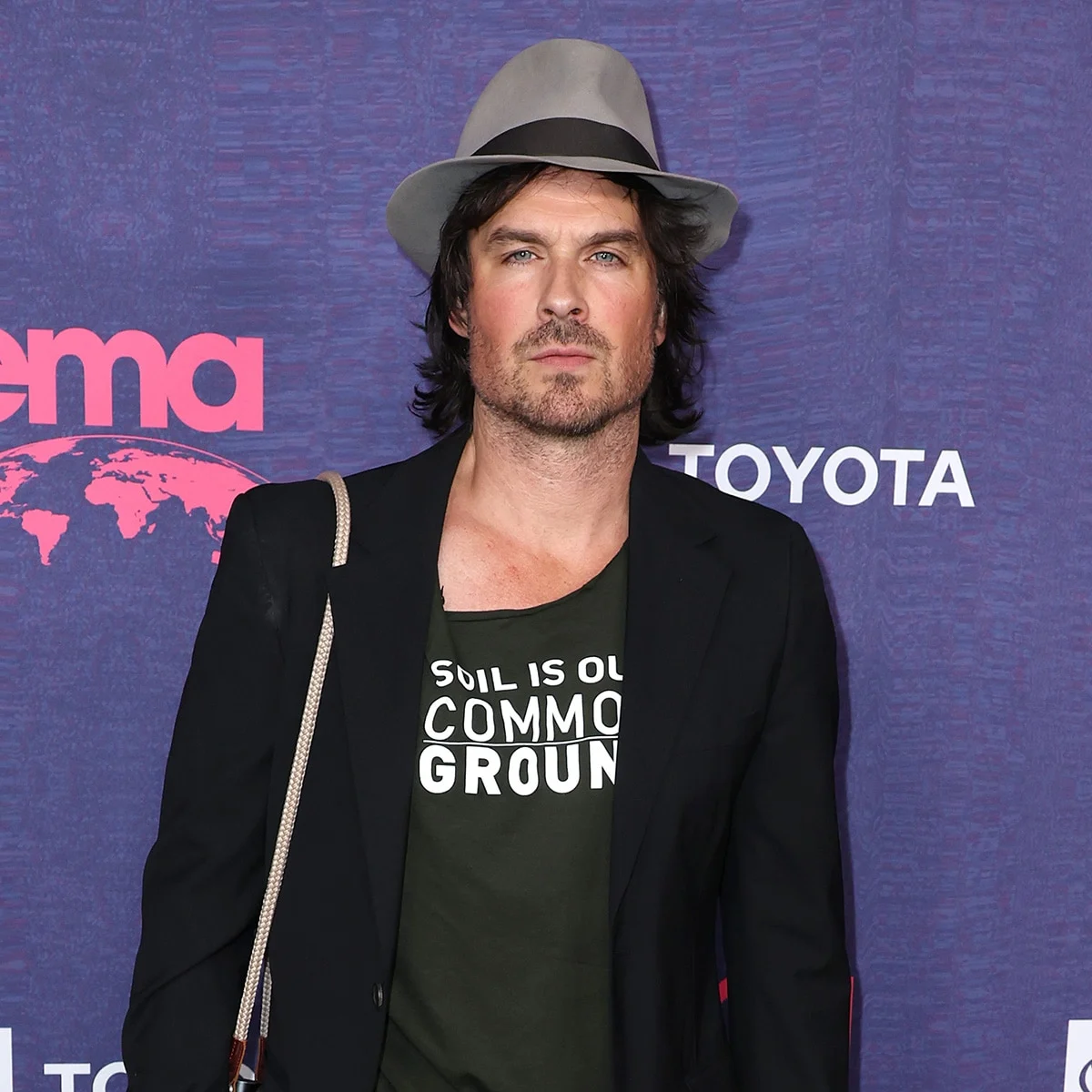
Main Facts: The Catalyst for Somerhalder’s Departure
In the modern entertainment landscape, the allure of Hollywood fame and streaming-era prominence is often assumed to be the ultimate goal for creative talent. However, a growing cohort of high-profile actors is actively choosing to walk away from the camera. At the forefront of this shift is Ian Somerhalder, best known for his defining roles in Lost and The Vampire Diaries.
Somerhalder recently detailed the grueling behind-the-scenes crisis of his 2019 Netflix sci-fi series V Wars—a project that served as his breaking point and prompted his permanent retirement from acting. Somerhalder, who starred as Dr. Luther Swann and served as an executive producer on the series, revealed during an appearance on the Haley on the Go podcast that the initial cut of the show delivered by the studio was "not even watchable."
Determined to protect his professional reputation, Somerhalder attempted to buy back the series from Netflix for millions of dollars. When the streaming giant refused, he and his producing partner, James Gibb, negotiated creative control to overhaul the project. However, Netflix declined to provide additional funding, forcing Somerhalder to raise millions of dollars independently.
The intense pressure of the subsequent reshoots triggered a severe physical collapse, landing Somerhalder in the hospital with a "full body shutdown." Despite the revamped version of V Wars becoming a viewership success upon its late 2019 release, Netflix canceled the series before a second season could be produced. The decision was reportedly made to avoid setting a precedent of allowing talent to demand extensive, costly post-production overhauls.
This experience led Somerhalder to pivot fully to entrepreneurship and regenerative agriculture, alongside his wife, actress Nikki Reed. This transition also required the couple to navigate and overcome a highly publicized, eight-figure financial debt stemming from past business and production ventures.
Somerhalder’s departure is not an isolated incident. It reflects a broader structural trend within the entertainment industry, as veteran actors increasingly exit Hollywood to prioritize physical health, family, geographic relocation, or alternative business ventures.
Chronology of Somerhalder’s Exit and the ‘V Wars’ Crisis
To understand Somerhalder’s departure from the screen, it is necessary to trace the timeline of V Wars and its aftermath, alongside the broader timeline of industry exits.
[2017–2018] Development of 'V Wars'; Somerhalder signs on as lead and Executive Producer.
      │
[Late 2018] Initial cut delivered; Somerhalder deems it "unwatchable" and offers millions to buy it back.
      │
[Early 2019] Netflix refuses buyback; Somerhalder raises $6M independently for rapid reshoots.
      │
[Mid-2019] Grueling production schedule leads to Somerhalder's hospitalization.
      │
[Dec 2019] 'V Wars' premieres on Netflix; achieves strong viewership metrics.
      │
[Early 2020] Netflix cancels 'V Wars' to avoid "setting a precedent"; Somerhalder officially retires.
      │
[2020–Present] Somerhalder and Nikki Reed resolve an eight-figure debt and pivot to regenerative farming.
The Production Overhaul (2018–2019)
After working on the production of V Wars for nearly a year, Somerhalder was deeply disappointed by the initial cut presented by the studio. Desperate to prevent the version from airing, he offered to return his multi-million-dollar salary to the studio in exchange for the rights to the footage.
After Netflix rejected the buyback offer, Somerhalder and Gibb secured creative control but were told they would not receive any additional budget from the network. Needing an estimated $10 million to salvage the series, Somerhalder and Gibb managed to raise approximately $6 million through private channels. They executed a highly compressed 10-to-12-day reshoot schedule, completing the work in half the standard time.
The Physical Toll and Cancellation (2019–2020)
The intense schedule took a severe physical toll, culminating in Somerhalder’s hospitalization due to systemic exhaustion. Although the revised version of V Wars premiered in December 2019 and performed well, Netflix executives canceled the series. According to Somerhalder, platform executives expressed regret but stated they could not renew the show because doing so would set an unsustainable precedent for talent-led post-production overhauls.
At age 40, Somerhalder chose to walk away from the industry rather than remain subject to the decisions of streaming executives. He has since focused on legacy brands, eco-documentaries like Kiss the Ground (2020) and Common Ground (2023), and regenerative agriculture.
Supporting Data: Financial Realities and the Anatomy of Industry Exits
The phenomenon of high-profile talent leaving the entertainment industry is driven by a variety of personal, financial, and professional factors.
The Economics of Somerhalder’s Pivot
Somerhalder’s transition was further complicated by a significant financial burden. In previous public statements, Somerhalder revealed that he and his wife, Nikki Reed, spent years resolving an eight-figure debt ($10 million or more) incurred from past business ventures and early production investments.
The resolution of this debt, achieved through strategic investments and the launch of legacy brands—including their health and wellness companies and Brother’s Bond Bourbon—underscores the viability of alternative business models for former actors.
Categorizing the Broader Industry Exodus
An analysis of other notable figures who have stepped back from Hollywood reveals several primary motivators for leaving the industry:
| Actor | Primary Reason for Leaving | Current Location / Focus | Status of Retirement |
|---|---|---|---|
| Ian Somerhalder | Creative burnout, health crisis, executive overreach | California / Regenerative farming, wellness brands | Permanent |
| Daniel Day-Lewis | Artistic completion, creative burnout | Ireland / Returning for Anemone (directed by his son) | Active Hiatus (Temporary Return) |
| Cameron Diaz | Burnout from production grind, desire for family life | California / Organic wine brand (Avaline), wellness | Returning for Back in Action |
| Bridgit Mendler | Academic pursuit, technological innovation | Massachusetts / CEO of satellite startup Northwood Space | Permanent |
| Josh Hartnett | Burnout from celebrity culture, desire for normal life | Hampshire, England / Select independent film roles | Semi-Active (Geographically Retired) |
| Eva Longoria | Professional relocation, international projects | Spain & Mexico / Directing, international production | Active Abroad |
| Ellen DeGeneres | Toxic workplace controversy, public scrutiny | Cotswolds, England / Simpler lifestyle, animal welfare | Permanent |
| Eliza Dushku | Desire to heal, career transition | Boston, MA / Licensed psychedelic-assisted therapist | Permanent |
Official Responses and Studio Perspectives
The tension between creative talent and major studios highlight the shifting dynamics of the streaming era. Somerhalder’s account of his negotiations with Netflix sheds light on how platforms manage financial risk and creative control.
According to Somerhalder, when he offered to return millions of dollars to buy back the initial cut of V Wars, studio executives were highly surprised:
"I said to the studio, ‘I don’t want to put my name on this. I’ll give you the money back. Literally, I’ll give you millions of dollars. I’ll give it back.’ And they were like, ‘What? What are you talking about? No, no, no.’"
When Somerhalder and Gibb demanded creative control to fix the series, Netflix agreed but held a firm line on the budget:
"We said we need creative control of the show and Netflix said, ‘Sure, we’re not giving you a dollar more.’ And we were like, ‘No, you don’t understand. We need $10 million to fix this show.’"
Ultimately, the decision to cancel V Wars despite its strong performance was framed as a structural necessity by Netflix leadership. Somerhalder recalled their explanation:
"The powers that be at Netflix were like, ‘This is unfortunate. This shouldn’t have happened. We can’t go back because that would set a precedent that would be terrible, so the show is done.’"
E! News reached out to representatives for Netflix regarding Somerhalder’s comments, but the studio has not issued a formal public response. This silence is consistent with industry practices, as major streaming platforms rarely comment publicly on the specifics of talent negotiations or the internal metrics behind cancellation decisions.
Implications: The Changing Landscape of Celebrity and Creative Control
Somerhalder’s experience and the growing list of actors leaving the traditional studio system have several significant implications for the future of Hollywood.
1. The Realities of Creative Control in the Streaming Era
The V Wars incident highlights a growing challenge for creators in the streaming landscape. In the traditional television model, pilots were thoroughly tested, and showrunners had more time to refine episodes. In the current era of rapid content production, entire seasons are often ordered and produced all at once, leaving little room for adjustments if the initial cuts do not meet expectations.
When actors who also serve as executive producers try to fix these issues, they often face strict budget limits, forcing them to choose between protecting their reputation or risking their physical and financial well-being.
2. The Rise of the Celebrity Venture Capitalist and Entrepreneur
Somerhalder’s successful transition to business shows a growing trend: actors using their personal brands to build independent companies rather than relying on acting roles.
- Bridgit Mendler transitioned from Disney Channel fame to earn a PhD from MIT and a JD from Harvard Law, ultimately becoming the CEO of Northwood Space, an aerospace startup.
- Portia de Rossi retired from acting at age 45 to launch General Public, an art curation and publishing company, seeking a more stable career path outside of the entertainment industry.
- Tyra Banks relocated to Australia to personally oversee the expansion of her ice cream brand, SMiZE and Dream, focusing on international business growth.
These examples suggest that high-profile talent no longer views acting as their sole or most reliable source of long-term income and influence.
3. The Geographic Decentralization of Celebrity Culture
For decades, living in Los Angeles was considered essential for maintaining a successful film or television career. Today, many public figures are choosing to relocate, citing high taxes, safety concerns, or a desire for a simpler life.
- Eva Longoria moved her family to Spain and Mexico, noting that the atmosphere in California had shifted significantly after the pandemic.
- Richard Gere relocated to Madrid to allow his bilingual children to grow up in their mother’s native Spain.
- Ellen DeGeneres and Portia de Rossi moved to the English countryside in late 2024, seeking a quieter lifestyle in the Cotswolds.
This geographic shift is made possible by remote work capabilities and international production hubs, which allow talent to remain selectively involved in projects without living in traditional entertainment capitals.
4. A New Approach to Fame and Well-being
Ultimately, the growing number of departures from Hollywood points to a broader reassessment of the trade-offs of fame. Whether driven by sudden health crises, like Antonio Banderas’s 2019 heart attack, or a desire to focus on family, as seen with Elisha Cuthbert and Josh Hartnett, many actors are prioritizing personal well-being over career longevity.
As Somerhalder noted, the realization that he no longer wanted to let streaming executives dictate his schedule or lifestyle was a turning point. For Somerhalder and many of his peers, leaving the screen was not a retreat, but a deliberate choice to regain control over their lives and careers.
 Sagoh
Sagoh
 Siti Muinah
 Nana
Nana
