

India’s e-commerce landscape is undergoing a seismic transformation. What began as a convenient way to order groceries in under 20 minutes has rapidly evolved into a sophisticated, high-stakes battleground for the future of retail. As the "Quick Commerce" (q-commerce) sector moves beyond its infancy, industry giants—specifically Walmart-backed Flipkart and global behemoth Amazon—are engaged in a massive infrastructure land grab, reshaping how the world’s most populous nation shops.
The Milestone: Flipkart Hits 1,000 Micro-Fulfillment Centers
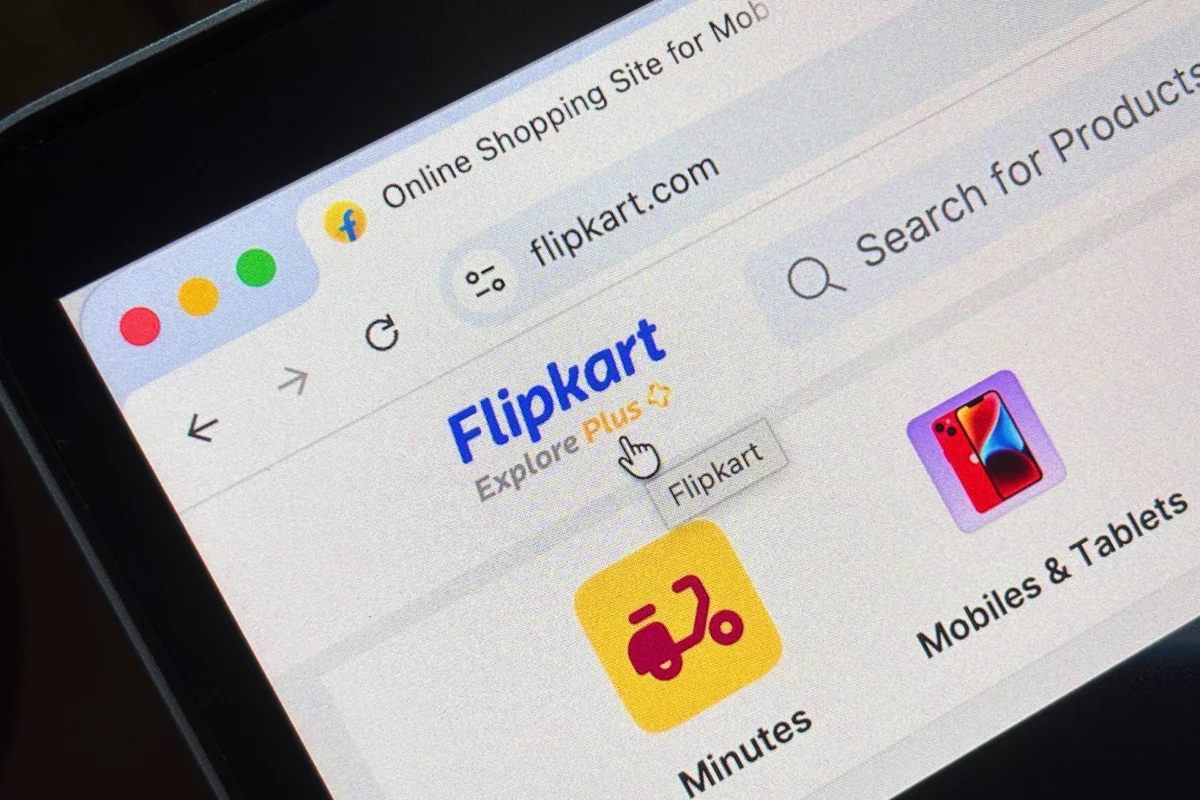
In a significant strategic pivot, Flipkart announced this Wednesday that its "Minutes" service has successfully established a network of 1,000 micro-fulfillment centers (MFCs). These small, strategically placed urban warehouses are the lifeblood of the quick-commerce model, allowing companies to bridge the "last-mile" gap and deliver goods in minutes rather than days.
This milestone is particularly noteworthy given that it was achieved less than two years after the launch of the service. With this deployment, Flipkart is signaling a clear intent to move beyond its traditional role as a marketplace for long-tail e-commerce and cement itself as a dominant player in the hyper-local, rapid-delivery market.
Chronology of a Market Explosion
The rise of q-commerce in India has been nothing short of meteoric. While the industry saw early pioneers like Blinkit and Zepto define the category, the entry of major incumbents has fundamentally altered the competitive equilibrium.
- August 2024: Flipkart officially launched "Minutes," entering the ring with a massive logistical advantage and an existing, albeit traditional, supply chain.
- Late 2024 – Early 2025: The sector witnessed an aggressive expansion of "dark stores" (micro-fulfillment centers) as players sought to capture market share in Tier-1 and Tier-2 cities.
- Mid-2025: Amazon accelerated the rollout of "Amazon Now," its dedicated rapid-delivery infrastructure, signaling that it would no longer cede the "minutes" category to local startups.
- April 2026: Flipkart crosses the 1,000-center threshold, signaling an aggressive push to reach 1,500 locations by the end of the calendar year.
This rapid buildout is not merely about volume; it is about the "maturation" of the market. Companies are no longer just fighting for grocery orders; they are fighting for the total share of the household wallet.
Data-Driven Growth: The Numbers Behind the Surge
The scale of the investment is reflected in the hard data provided by industry analysts and the companies themselves. According to a recent note by Jefferies, Flipkart’s current expansion trajectory could position it as the second-largest player in the space, trailing only Blinkit, which currently operates 2,243 centers.
The growth metrics provided by Flipkart are equally striking. Kunal Gupta, head of Flipkart Minutes, noted that orders on the platform have surged by 400% year-over-year. More importantly, customer retention has improved by 20%, suggesting that consumers are not merely trying the service out of curiosity but are integrating it into their daily lives.
Perhaps most telling is the expansion into smaller cities. Flipkart reports that growth in non-metropolitan markets has spiked by over 4,000% from the previous year. This expansion is supported by:
- Geographic Reach: Presence in over 130 cities and 8,000 postal codes.
- Product Diversification: A clear shift from groceries toward higher-margin categories, including electronics, personal care, and beauty products.
- Order Value: Average order values for fresh produce have risen by 30% year-over-year, indicating that the platform is increasingly being used for primary household replenishment rather than incidental top-ups.
The Amazon Factor: A Global Giant Reimagines Speed
While Flipkart makes headlines, Amazon is quietly but decisively re-engineering its Indian operations. Amazon Now is currently live in more than 15 cities and utilizes a network of over 500 micro-fulfillment centers.
Amazon’s strategy is distinct: it is leveraging its existing Prime infrastructure to drive adoption. By integrating rapid delivery into the Prime ecosystem, Amazon is seeing 70% of its new members coming from smaller markets. The company plans to scale to 100 cities and 1,000 micro-fulfillment centers by the end of 2026. Crucially, Amazon is widening its assortment, moving well beyond groceries into apparel, electronics, and home goods—effectively challenging the traditional e-commerce model that previously relied on 2-3 day shipping.
Official Responses and Strategic Outlook
The leaders driving these companies view this as a permanent shift in consumer behavior. Kunal Gupta of Flipkart remains bullish on the company’s trajectory, stating, "What began as a way to fulfill everyday essentials has evolved into a fundamentally new shopping habit for millions of Indians. Customers are not just ordering more; they are ordering differently."
Gupta highlights that the company is not viewing Minutes as a cannibalization of its core marketplace, but rather a complementary service. Customers are increasingly using both platforms, with Minutes handling the urgent needs and the main app serving as the destination for more considered, larger-basket purchases.
"We will continue to expand rapidly," Gupta added. "We will not slow down after 1,000 stores; we are going all in."
Implications for the Future of Retail
The rapid expansion of micro-fulfillment centers has profound implications for the Indian economy and the global retail sector.
1. The Death of Distance
The "dark store" model is effectively ending the tyranny of distance in urban India. With over 5,500 dark stores already active in the country—and projections suggesting this number could reach 7,500 by 2030—the speed of commerce is becoming a utility, like electricity or high-speed internet.
2. The Tier-2 and Tier-3 Revolution
For years, e-commerce growth in India was concentrated in the "Golden Triangle" of Delhi, Mumbai, and Bengaluru. The current data shows that the next wave of growth is coming from places like Patna, Guwahati, and Siliguri. These cities are showing faster-than-expected maturation, proving that the demand for instant gratification is universal, not just a luxury for the urban elite.
3. Inventory and Logistics Complexity
The operational challenge of managing thousands of micro-warehouses is immense. Companies must balance inventory levels across hundreds of locations to avoid stockouts while minimizing waste, especially for perishable goods. This requires a level of AI-driven predictive analytics that is pushing the boundaries of supply chain technology.
4. Competitive Pressure on Local Retailers
The expansion of these platforms poses an existential threat to traditional neighborhood stores (kiranas). While many kiranas have partnered with these platforms to act as fulfillment nodes, the power dynamic is shifting. The platforms now dictate the pricing, the delivery speed, and the customer interface, effectively turning the traditional merchant into a secondary player in the value chain.
Conclusion: The "All-In" Era
As the dust settles on the initial phase of the quick-commerce war, it is clear that the race is no longer about who can deliver milk the fastest. It is about who can build the most robust, expansive, and high-frequency retail network.
With Flipkart pledging to open between 75 and 100 new centers every month and Amazon scaling its 100-city plan, the next eighteen months will likely determine the long-term winners of this sector. India has successfully become the world’s most significant testing ground for hyper-local, high-velocity commerce. As these companies iterate on their models, the rest of the world is watching, as the lessons learned in the streets of India will inevitably shape the future of global retail.
 Asep Darmawan
 Siti Muinah
 Ali Ikhwan
