

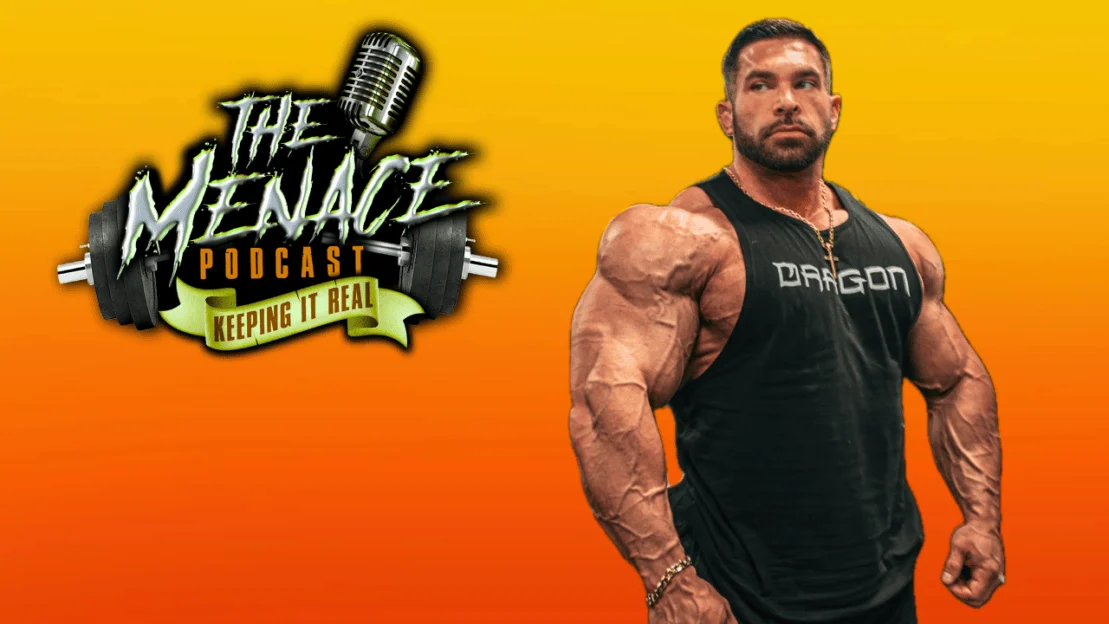
With the 2026 Mr. Olympia fast approaching in Las Vegas, the bodybuilding world finds itself at a philosophical crossroads. As the sport’s premier event draws near, the perennial debate regarding the "ideal" physique has reached a fever pitch. In a recent, wide-ranging episode of The Menace Podcast, host Dennis James—a veteran of seven Mr. Olympia finals—sat down with legendary coach Milos Sarcev and 212 icon Jose Raymond to dissect the industry’s obsession with size.
As athletes like Samson Dauda and Nick Walker push the boundaries of human hypertrophy, the panel questioned whether the pursuit of pure, unadulterated mass is ultimately a pursuit of excellence or a recipe for aesthetic catastrophe.
The Core Conflict: Aesthetics vs. The "More is Better" Mentality
The primary tension in modern professional bodybuilding lies in the divide between fan expectations and the criteria traditionally valued by IFBB Pro League judges. To the casual spectator, the "biggest" bodybuilder on stage is often perceived as the automatic winner. This logic, while simplistic, exerts immense pressure on competitors to pack on as much tissue as humanly possible during the off-season.
Milos Sarcev, known for his "Hyperemia Advantage" training principles and a deep appreciation for classical lines, opened the discussion with a pointed question: "Does size matter?"
The panel noted that this year’s Olympia prep has seen a collective surge in mass-building efforts. Samson Dauda is widely rumored to be bringing a more dense, improved physique to avenge his previous standing, while Nick "The Mutant" Walker continues to display a level of muscular density that defies conventional anatomy. However, the panel argued that this "bigger-is-better" cycle might be reaching a point of diminishing returns.
Chronology of the Debate: From the Golden Era to the Mutant Era
To understand the current obsession with mass, one must look at the evolution of the Mr. Olympia stage over the last three decades.
- The 1990s Transition: The sport shifted from the balanced, vacuum-focused physiques of the 70s and 80s toward the "mass monster" era, ushered in by icons like Dorian Yates and later, Ronnie Coleman.
- The Early 2000s: Dennis James stood on stage during this transition. It was an era where the focus shifted heavily toward weight on the scale and circumference of the limbs.
- The 2020s: We have entered a stage where, thanks to advanced pharmacology, nutrition science, and hyper-specific training protocols, athletes are reaching weights once thought impossible for their frames.
During the podcast, Dennis James reflected on his own competitive history. "If I could turn back the time, I wouldn’t chase size," James admitted. His reflection serves as a warning to the current generation. James, who placed fourth at the 2003 Olympia, realized that the relentless pursuit of mass often came at the expense of his own structural flow and conditioning, a sentiment echoed by his contemporary, Jay Cutler, in previous discussions.
Supporting Data: The Anatomy of a Champion
The panel focused heavily on the current reigning Mr. Olympia, Derek Lunsford. Lunsford, who transitioned from a dominant career in the 212 division to the Open class, represents the pinnacle of the modern physique. However, the panel raised concerns regarding his current trajectory.
Jose Raymond provided a staggering data point: Lunsford reportedly weighed in at 252 pounds during recent prep. For an athlete who stands 5’6”, this is a massive amount of tissue. Raymond, a former 212 Arnold Classic champion, noted the visual impact: "He was an elephant. It was mind-boggling."
Yet, the panel’s concern was not about whether Lunsford looks "big"—he undoubtedly does—but whether he is sacrificing the aesthetic beauty that originally propelled him to the top. Milos Sarcev was particularly blunt, stating that if Lunsford continues to force-feed growth, "he’s going to ruin his shape." The logic here is clear: when an athlete exceeds their natural structural limit, the muscle bellies begin to distort the frame, potentially leading to a "blocky" appearance that lacks the transition points and flow that characterize a true Mr. Olympia winner.
Implications for the 2026 Mr. Olympia
As we look toward the September 27th judgment in Las Vegas, several key implications emerge regarding how the judges may view this "size" race.
1. The Risk of Distension and Proportions
The primary concern for the panel is that excessive size often leads to a loss of core control and waist aesthetics. In a sport that rewards the V-taper, a bodybuilder who sacrifices a tight midsection for an extra five pounds of quad sweep is taking a massive gamble. The judges have shown in recent years that they are willing to reward balance over sheer mass if the mass is accompanied by a lack of flow.
2. Conditioning: The Great Equalizer
Regardless of size, conditioning remains the ultimate tie-breaker. As James, Sarcev, and Raymond discussed, a smaller, perfectly conditioned athlete can often dismantle a "mass monster" who is holding water or lacking the necessary graininess in the glutes and lower back. The "bigger" athletes currently in prep are not just battling each other; they are battling the risk of losing their hardness.
3. The Psychological Toll of the Scale
The podcast highlighted the psychological trap many athletes fall into. When a bodybuilder sees their peers "bulking up" to 260+ pounds, the pressure to follow suit can lead to poor decision-making in the final weeks of prep. The panel suggests that the athletes who remain disciplined and trust their own structural aesthetic—rather than reacting to the Instagram updates of their competitors—are the ones most likely to walk away with the Sandow trophy.
Professional Perspectives: The Verdict
The consensus among the three experts is that the IFBB judging panel, while appreciative of size, is not blind to the nuances of bodybuilding.
Dennis James emphasizes that the "eye test" often favors the individual who looks like they can actually function as an athlete, rather than someone who is simply "colossal."
Milos Sarcev argues for the return of flow and "artistic" posing, suggesting that mass should be the foundation, not the end goal.
Jose Raymond, representing the perspective of a former smaller-stature champion, reminds us that the ability to showcase muscle with clarity is what separates the elite from the merely large.
As the athletes enter the final week of their preparations, the world will be watching to see if the "Bigger is Better" mantra holds true. Will we see a new, unprecedented level of mass that maintains perfection? Or will we see the cautionary tales that Dennis James and Milos Sarcev have warned about?
The 2026 Mr. Olympia is shaping up to be a referendum on the direction of the sport. Whether the winner is the biggest, the best-conditioned, or the most aesthetically pleasing, the decision will set the tone for the next several years of professional bodybuilding.
Conclusion: The Final Countdown
The discourse provided by The Menace Podcast underscores a vital reality: Bodybuilding is an art form as much as it is a sport. While the IFBB Open division will always be the home of the largest human beings on the planet, the title of Mr. Olympia requires more than just raw weight. It requires the mastery of proportions, the discipline of conditioning, and the foresight to know when "more" has officially become "too much."
As the stage lights go up in Las Vegas, fans and athletes alike will have their answer. For now, the debate rages on—and in the world of professional bodybuilding, that debate is often just as exciting as the contest itself.
For more in-depth analysis and the full conversation, viewers are encouraged to watch the full episode on the Muscle & Fitness YouTube channel, where the panel continues to provide expert insights into the ever-evolving world of the IFBB.
 Lina Hope
 rifanmuazin
 Laily UPN
