

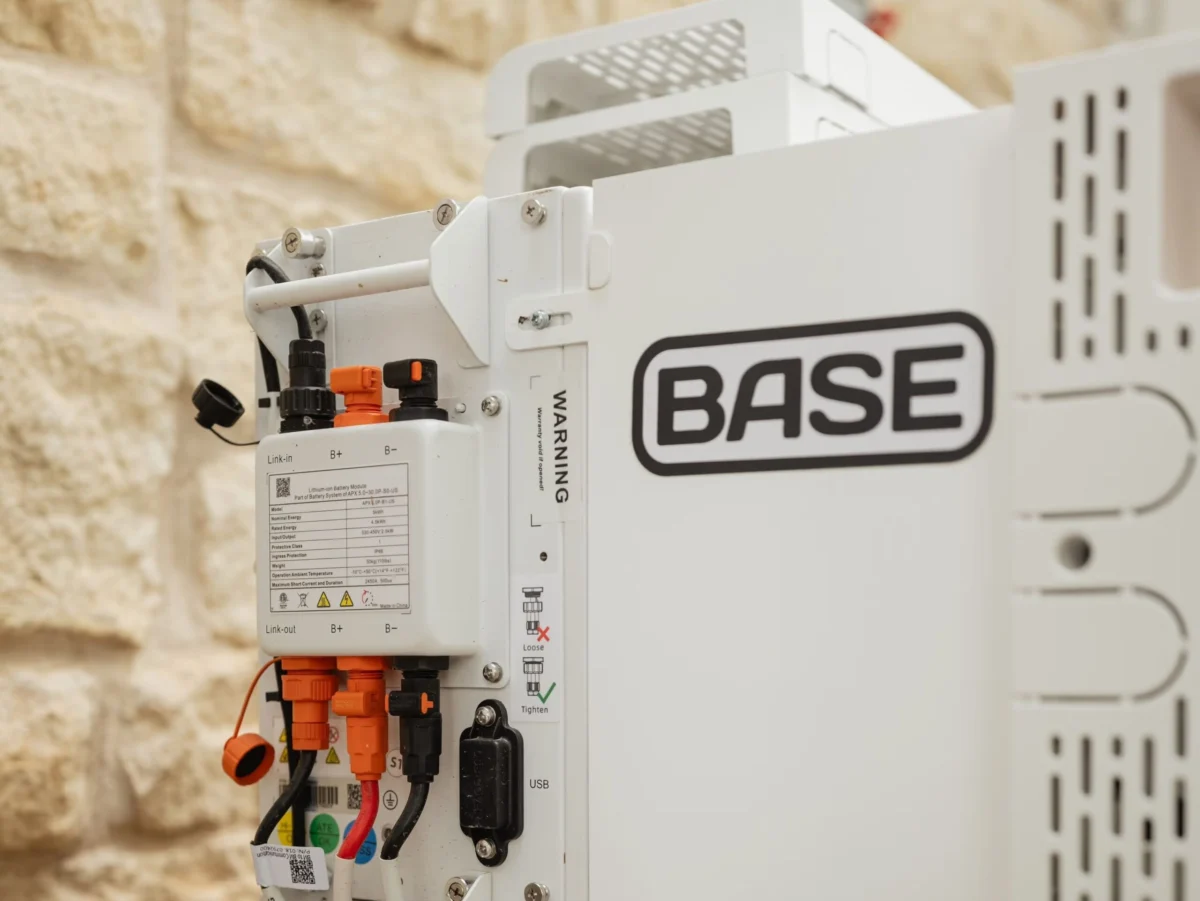
In a move that signals a seismic shift in how American households interact with the electrical grid, energy storage startup Base Power has officially expanded its operations into Illinois. This development marks the company’s first significant entry into the PJM Interconnection, the largest regional transmission organization in the United States. As PJM grapples with an unprecedented power crunch driven by the insatiable energy demands of data centers and artificial intelligence, Base Power’s "virtual power plant" (VPP) model offers a disruptive alternative to traditional, centralized utility management.
By deploying massive, 25-kilowatt-hour (kWh) residential battery systems, Base Power is positioning itself not just as a hardware provider, but as a utility-scale participant. In Illinois, the company is offering electricity rates approximately 25% lower than those of the incumbent utility, ComEd, effectively bypassing the bureaucratic inertia that has historically plagued the PJM grid.
The Power Crisis: Why PJM is at a Breaking Point
To understand the significance of Base Power’s expansion, one must first understand the precarious state of the PJM Interconnection. Serving 13 states and the District of Columbia, PJM is the heartbeat of the American power sector. However, that heartbeat is currently erratic.
The region—which includes Northern Virginia, the global nexus of the data center industry—has seen wholesale electricity prices surge, nearly doubling over the past twelve months. This volatility is a direct result of the "data center onslaught." As tech giants scramble to build infrastructure to support the AI boom, they are consuming massive amounts of power, often far outstripping the pace at which new, clean energy sources can be integrated into the grid.
The strain has become so acute that industry giants are beginning to fray. American Electric Power (AEP), one of the largest utilities in the region, has gone so far as to publicly threaten a departure from the PJM market, citing the grid operator’s inability to manage the supply-demand imbalance effectively. This internal friction reflects a broader institutional failure: for years, PJM’s interconnection queue—the process by which new generation projects receive approval to connect to the grid—was effectively frozen, only reopening in April of this year. By the time the gates opened, the backlog was massive, and the demand for power had already shifted into overdrive.
Chronology: From Texas Roots to Midwestern Disruption
Base Power’s ascent has been as rapid as it has been calculated. The startup launched just two years ago in Texas, a state known for its independent and volatile energy market.
- 2023–2024 (The Texas Foundation): Base Power spent its formative years building a robust virtual power plant (VPP) in Texas. By installing large-scale residential batteries, the company created a decentralized energy network. Today, the startup manages more than 500 megawatt-hours of battery storage in the Lone Star State. Their business model is simple yet sophisticated: the batteries charge when electricity prices are low and dispatch power back to the grid when prices—and demand—peak.
- April 2025 (The Growth Spurt): The company secured a significant $200 million funding round led by Andreessen Horowitz, Lightspeed Venture Partners, and Valor Equity Partners. This influx of capital signaled to the market that institutional investors were betting heavily on the "distributed utility" model.
- October 2025 (The Billion-Dollar Milestone): Momentum accelerated with a massive $1 billion funding round led by Addition. This capital provided the necessary runway for the company to scale its hardware deployment across new territories.
- May 2026 (The Illinois Expansion): Base Power officially enters the PJM territory, launching services in Illinois. This is the company’s first move outside of the Texas market, marking its transition from a regional player to a national energy disruptor.
The Strategy: Bypassing the "Sclerotic" Queue
The genius of Base Power’s approach lies in its operational philosophy. Rather than attempting to build large-scale power plants—which require years of environmental impact studies, community negotiations, and, most importantly, a spot in the agonizingly slow interconnection queue—Base Power deploys its assets "behind the meter."
"We are deploying capacity behind the meter at the residential home, where an interconnection already exists, so we don’t wait in the interconnection queue," explained Zach Dell, founder and CEO of Base Power.
This "end-run" around the traditional utility infrastructure is a masterstroke of regulatory arbitrage. By installing batteries inside the homes of its customers, Base Power effectively creates a decentralized network that behaves like a power plant but is regulated like a consumer appliance. This allows them to bypass the grid operators’ bureaucratic bottlenecks entirely, bringing much-needed storage capacity online in months rather than the decade-long timelines typical of utility-scale projects.
Supporting Data: Efficiency and Economics
The economic value proposition for the consumer is compelling. Base Power’s business model does not involve selling the batteries directly to homeowners; instead, it provides the equipment as part of a service agreement, where the customer buys their electricity from Base.
In the Illinois market, this has translated into rates 25% lower than ComEd’s standard offerings. The efficiency gains are rooted in the physics of the grid:
- Reduced Transmission Losses: By generating and storing power at the point of consumption, the system reduces the need to transmit electricity over long distances, which is inherently inefficient and costly.
- Price Arbitrage: By discharging power during peak demand periods (when wholesale prices are highest) and charging during off-peak hours (when prices are lowest), Base Power captures the "spread" in energy prices, subsidizing the cost of the hardware while saving the customer money.
- Grid Stability: As more households adopt this model, the cumulative effect is a massive, flexible energy buffer that can respond to grid frequency imbalances in milliseconds, a task that traditional fossil fuel plants struggle to perform with similar speed.
Implications: A New Era of Decentralized Energy
The entry of Base Power into the PJM grid serves as a harbinger of a broader transformation in the energy sector. Several implications are already becoming clear:
1. The Decline of Centralized Utility Dominance
For a century, the grid was a one-way street: electricity flowed from a massive, centralized plant to the consumer. Base Power is turning the grid into a two-way, decentralized ecosystem. If companies like Base can capture a significant portion of the retail market, traditional utilities will be forced to pivot from "selling electrons" to "managing network services," or risk becoming obsolete.
2. A Solution to the Data Center Power Crunch
The primary reason PJM is struggling is the rapid growth of data centers. While utilities scramble to build new power lines and substations, Base Power offers a "pop-up" solution. By deploying residential batteries across the suburbs of major cities, they can alleviate local grid stress without requiring new transmission infrastructure. This could provide the breathing room that grid operators desperately need as they attempt to modernize their aging systems.
3. Increased Consumer Agency
The Base Power model shifts power (literally and metaphorically) back to the homeowner. Consumers are no longer passive recipients of electricity who are subject to the volatile pricing of a distant utility. Instead, they are participants in an energy network that prioritizes their cost savings and home reliability.
4. Regulatory Tension
As Base Power scales, it is almost certain to face friction from state regulators and incumbent utilities. Utilities may lobby for "grid access fees" or other charges to recoup the lost revenue as residential customers become more self-sufficient. How regulators treat these "virtual power plants" will be the next major battleground in the energy transition.
Conclusion: The Path Forward
Base Power’s entry into Illinois is more than just a business expansion; it is a stress test for the American energy grid. As the PJM Interconnection continues to struggle with the demands of the digital age, companies that can provide modular, rapid-deployment solutions will find a massive, untapped market.
By leveraging the existing residential grid and turning every home into a node of a larger, smarter network, Base Power has effectively bypassed the traditional barriers to entry that have stalled the energy transition for years. Whether or not they can scale this model to a national level remains to be seen, but one thing is clear: the era of the passive energy consumer is ending, and the era of the decentralized grid is well underway. As Zach Dell and his team continue to deploy capacity at a residential scale, they aren’t just selling electricity—they are selling the future of the grid.
 Asep Darmawan
 Siti Muinah
 Ali Ikhwan
