

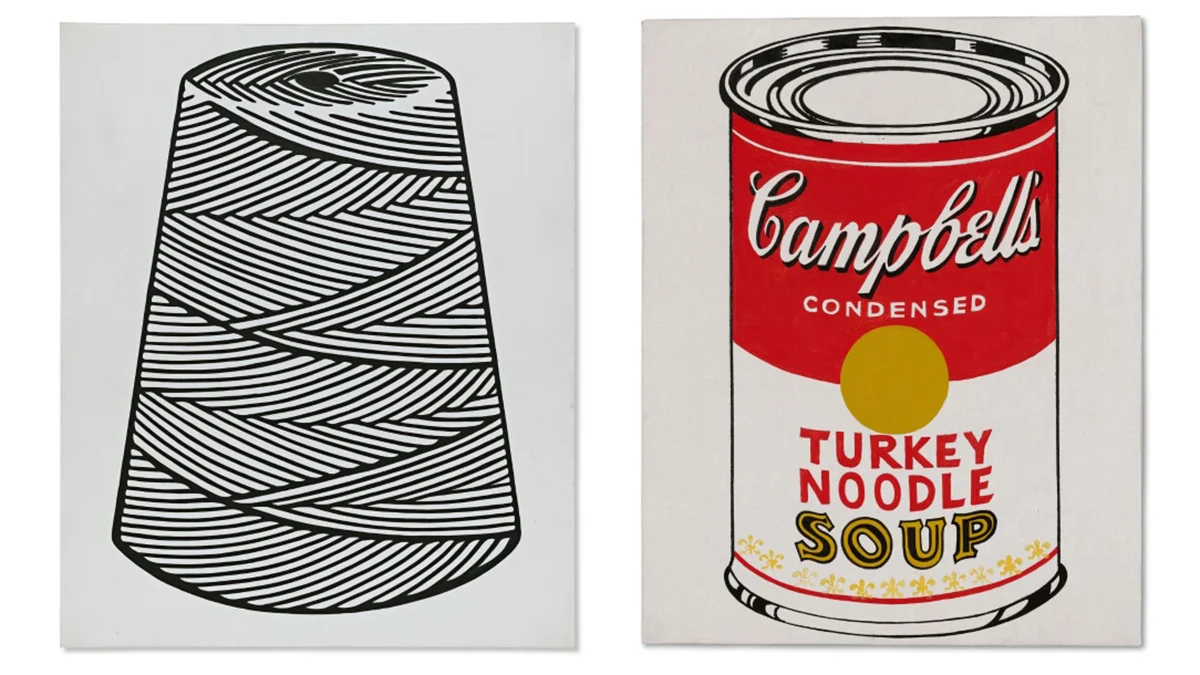
In a landmark event for the international art market, Christie’s has announced that it will bring the legendary Antonio Homem Sonnabend collection to the auction block this fall. With an estimated total value exceeding $50 million, the collection represents one of the most significant caches of postwar and contemporary art to emerge on the public market in recent years. The dispersal of these works, which include masterpieces by icons such as Jeff Koons, Jasper Johns, Robert Rauschenberg, Roy Lichtenstein, and Andy Warhol, marks a poignant transition for a family dynasty that effectively shaped the trajectory of the 20th-century art canon.
The collection, managed for decades by Antonio Homem Sonnabend—the adopted son of the formidable gallerists Ileana and Michael Sonnabend—is a testament to a transatlantic cultural bridge that defined the art world from the late 1950s through the turn of the millennium. The pieces will be presented across Christie’s 20th/21st Century Evening Sales in London, Paris, and New York, offering a global stage for works that have spent decades in the private purview of one of the world’s most influential art families.
A Legacy Forged in Transatlantic Exchange
To understand the weight of this upcoming sale, one must first understand the central role the Sonnabends played in the art historical narrative. Ileana Sonnabend, a titan of the gallery world, was instrumental in the cross-pollination of European and American artistic movements. During the mid-20th century, as the center of the art world shifted from Paris to New York, Ileana was at the vanguard, ensuring that the dialogue between the two continents remained robust.
She was not merely a dealer; she was a conduit. She introduced Europe to the brash, revolutionary energy of American Pop Art—championing Warhol, Johns, Lichtenstein, and Rauschenberg—while simultaneously introducing the American market to the conceptual and Arte Povera sensibilities of European masters like Michelangelo Pistoletto, Mario Schifano, and Giovanni Anselmo.
Antonio Homem Sonnabend, who passed away in March, spent his life in the shadow and the light of these monumental artists. He took the mantle from his parents, guiding the Sonnabend Gallery through its historic iterations—from the bohemian, avant-garde days in Soho in 1971 to its later prominence in Chelsea. His stewardship of the collection was not a passive inheritance but an active preservation project, culminating in the 2009 establishment of the Sonnabend Collection Foundation.
Chronology of a Collection
The journey of this collection spans over six decades, tracing the evolution of modern art through the lens of those who lived it.
- 1957–1969: The formative years of the collection. During this period, the Sonnabends acquired seminal works that captured the birth of Pop Art and the radical experimentation of the era. Highlights include Jasper Johns’ Numbers (1957) and Robert Rauschenberg’s Untitled (Collage with Cuff) (1957), as well as Mario Schifano’s 1962 work A de Chirico.
- 1971: The Sonnabend Gallery opens in New York’s Soho neighborhood, a building shared with legendary dealers Leo Castelli, John Weber, and André Emmerich. This "art hub" became the epicenter of the contemporary scene.
- 2000: The gallery relocates to Chelsea, adapting to the shifting geography of the New York art market.
- 2007: Following the death of Ileana Sonnabend, Antonio assumes the role of gallery director, overseeing the transition of the family’s private holdings into a structured institutional archive.
- 2009: The creation of the Sonnabend Collection Foundation, designed to ensure the permanence and public visibility of the family’s vast inventory.
- 2025: The opening of the Sonnabend Collection Mantova in Italy, a museum project spearheaded by Antonio to provide a permanent home for the collection’s European-focused acquisitions.
- Fall 2024: The announcement of the Christie’s dispersal, a strategic move to provide liquidity for the museum’s endowment and honor the family’s wishes for the collection’s future.
Key Pieces and Artistic Significance
The works heading to auction are not merely assets; they are historical markers. Among the most anticipated lots are:
- Andy Warhol, Campbell’s Soup Can (Turkey Noodle), 1962: A quintessential example of Warhol’s obsession with consumer culture, representing the democratization of art.
- Robert Rauschenberg, Triple Rauschenberg [Bob Rauschenberg #2], 1962: A reflection of the artist’s "combine" technique, blurring the lines between painting and sculpture.
- Jasper Johns, Numbers (1957): A foundational piece that exemplifies Johns’ fascination with iconic signs and the structural nature of perception.
- Jeff Koons, Ode to Love (2010–17): A testament to the collection’s longevity and its commitment to contemporary masters who pushed the boundaries of material and scale.
Sara Friedlander, chairman of postwar and contemporary art at Christie’s, noted that Ileana Sonnabend’s influence on the "trajectory of Post-War and Contemporary art cannot be overstated." She described the collection as an assemblage that "exemplifies the very finest in post-war artistic movements across Europe and the U.S.," suggesting that these works represent the backbone of the contemporary market.
Institutional Future and Official Statements
The decision to auction these works, while significant, is rooted in the preservation of the family’s broader institutional goals. Antonio Phokion Potamianos-Homem, son of Antonio, noted the gravity of the decision in a recent statement. "My father spent his life among these works, and parting with them is not done lightly," he explained.
However, the sale serves a vital purpose: securing the future of the Sonnabend Collection Mantova. By selling select pieces by Lichtenstein and Warhol, the estate intends to build an endowment for the museum in northern Italy. This ensures that while some works move into new private hands, the core of the collection remains available for public viewing and academic research.
"We proudly carry on Ileana and Antonio’s transatlantic vision," Potamianos-Homem added. "We are ensuring a vital exchange of artists and artworks between Europe and America, and ensuring the eye that assembled this collection continues to be seen."
Implications for the Art Market
The arrival of the Antonio Homem Sonnabend collection at Christie’s is expected to send ripples through the auction market. In an era where "fresh to market" masterpieces are increasingly rare, the provenance of the Sonnabend name provides a gold-standard pedigree that historically drives aggressive bidding.
The sheer breadth of the collection—spanning photography, prints, multiples, and design—allows Christie’s to curate a narrative that appeals to a diverse range of collectors. Whether it is the blue-chip collector seeking a canonical Warhol or the contemporary enthusiast interested in the conceptual roots of the 1960s, the auction offers a rare opportunity to acquire items that have been held in the private domain for decades.
Furthermore, the strategic decision to hold the auctions across London, Paris, and New York underscores the global nature of the Sonnabends’ reach. By distributing the sale, Christie’s acknowledges the international reverence for this collection, ensuring that the legacy of Ileana and Antonio is celebrated in every major art capital they once called home.
As the fall auction season approaches, the art world will be watching closely. The dispersal of the Antonio Homem Sonnabend collection is not just a financial event; it is the final chapter of a great family’s personal contribution to art history—a transition that secures their vision for generations to come.
 Ali Ikhwan
 Laily UPN
 Raul Delapena Setiawan
