

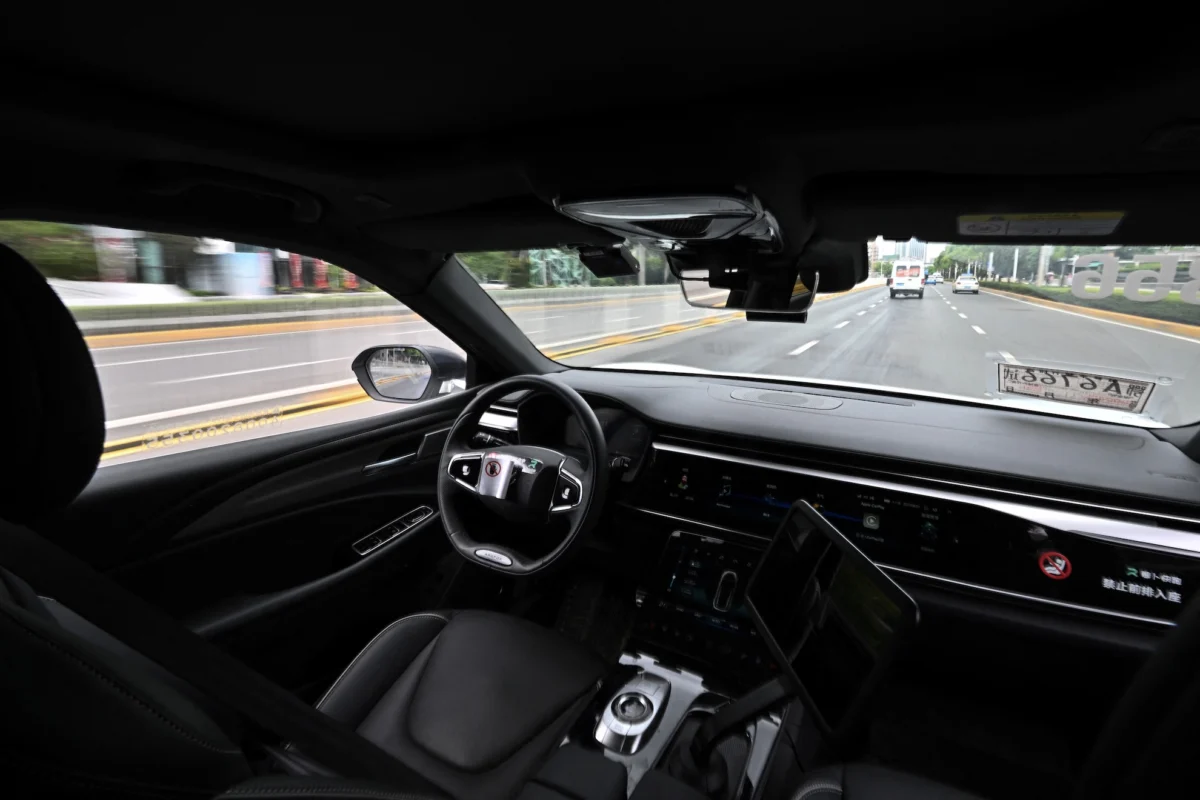
Welcome to this special edition of TechCrunch Mobility. As we observe Juneteenth, a pivotal moment in American history, we are reminded that progress is a continuous, collective journey. Today, we turn our focus to another kind of journey—the race to redefine human transportation through autonomous technology.
For over a decade, the "autonomous vehicle race" was less of a scientific pursuit and more of a speculative marketing exercise. Industry observers and the public alike were bombarded with glitzy demos and eye-watering capital injections, yet the actual, verifiable progress remained obscured behind a wall of corporate secrecy. Who was truly winning? Without a standardized, transparent way to measure performance, the answer remained elusive. Today, that uncertainty is finally being dismantled.
A New Benchmark: The Road to Autonomy Index
The ambiguity surrounding AV leadership is beginning to fade, thanks to the launch of the Road to Autonomy Index. Developed by the advisory and research startup Autnmy AI, this platform utilizes generative AI to create a real-time benchmarking system.
Unlike the speculative ranking lists of the past, this index aggregates data from global public databases, including SEC filings, federal and state transportation reports, and public exchanges. The system updates every 12 hours, providing a dynamic look at the sector across four critical categories: robotaxis, autonomous licensing companies, autonomous trucking, and delivery robotics.
"We agreed early on that we wouldn’t simply scrape the internet," explains Autnmy AI co-founder Rob Grant. "We rely on publicly available data, Creative Commons-licensed information, and specific, licensed data sets that we pay for. This ensures the integrity of the information we process."

The results are already shifting the narrative. While many U.S.-centric observers assumed a domestic lead, the index reveals a remarkably strong performance from Chinese players. As of late last week, China’s Baidu Apollo Go held the top spot for robotaxis, narrowly edging out Alphabet’s Waymo. Following them were Pony.ai and WeRide, with Tesla currently occupying the fifth position.
Chronology: The State of Play in Texas
The regulatory landscape, particularly in states like Texas, serves as a high-fidelity laboratory for the real-world deployment of autonomous fleets. Since the launch of the Texas automated vehicle tracker in May, we have seen a clear trend of fleet expansion among the industry’s heavy hitters.
- Late May: The Texas tracker platform goes live, providing the first granular look at fleet sizes.
- Early June: Waymo reports a 7.5% increase in its registered fleet, climbing from 577 to 620 vehicles.
- Mid-June: Tesla demonstrates aggressive scaling, jumping from 42 to 69 registered autonomous vehicles—a massive 64% increase in under a month.
- Ongoing: Zoox continues its slow, steady expansion, growing from 35 to 43 vehicles, though it remains restricted to non-commercial operations as it awaits a federal exemption to begin charging for rides.
While these numbers are impressive, they are not indicators of immediate, widespread commercialization. For companies like Zoox, registration is only the first hurdle. The second, and often more difficult, is the regulatory approval required to move from testing to revenue-generating operations.
Supporting Data: The Global Investment and Partnership Surge
The ecosystem is not just expanding in vehicle count; it is maturing through capital flow and strategic alliances.
The Funding Landscape
- Cargofy: The AI-driven logistics firm secured $11 million in a Series A round led by u.ventures, Toloka, and Movens Capital.
- XDOF: In a clear signal of where the "brains" of the industry are going, XDOF raised $70 million. The startup focuses on the unglamorous but essential work of collecting and curating robot training data, attracting backing from heavyweights like a16z and Thrive Capital.
Strategic Consolidation
- The Robotaxi Alliance: In a major move to challenge established players, Stellantis, Wayve, and Uber have announced a joint partnership to develop and deploy driverless robotaxi services.
- Freight Autonomy: Gatik and PepsiCo have extended their multi-year partnership, signaling that short-haul autonomous trucking is becoming a permanent fixture of the supply chain in Arkansas, Arizona, and Texas.
- Solid-State Power: QuantumScape is partnering with Honda to accelerate the development of solid-state batteries, a critical component for the long-term viability of high-capacity autonomous fleets.
- Market Expansion: Singapore’s Carro is making moves in the Southern Hemisphere, acquiring Australia’s CarPlace to expand its online marketplace footprint.
Official Responses and Safety Oversight
Innovation in the AV space is rarely a straight line, and the industry continues to navigate significant public scrutiny regarding safety and compliance.

The Avride Incident
A recent incident in Dallas, captured on video and shared on Reddit, showed a human driver running a stop sign and colliding with an Avride robotaxi. When questioned, an Avride spokesperson confirmed the incident and noted that data is being reviewed. "Our safety review is currently ongoing," they stated. "We are working to refine our technology and processes as part of our standard procedures."
Waymo’s Highway Recall
In a move that highlights the complexities of "learning" software, Waymo has recalled nearly 4,000 of its robotaxis. The reason: the vehicles were repeatedly entering closed highway construction zones. While Waymo had already pulled its fleet from freeways, the fact that a software fix is still "under development" underscores the persistent challenge of training AI to handle non-standard road environments.
The "Limousine" Loophole
A curiosity surfaced on X recently: a Tesla was spotted with a limousine permit in San Francisco. While speculation swirled about autonomous operations, the SFO spokesperson was clear: "Tesla has been issued a limousine permit for traditional operations involving a human driver. They have not been issued a permit for any autonomous operations at the airport."
Tesla’s Distracted Driving Woes
Perhaps the most peculiar, if concerning, development involves Tesla owners in China utilizing "tiny plastic heads" to fool the vehicle’s cabin-facing distracted driving monitors. This highlights a recurring theme: as long as there is an automation system, there will be users attempting to circumvent its safety safeguards.
Implications: The Road Ahead
What does all of this tell us? We are witnessing the transition from the "Demo Era" to the "Operational Era."

- The Shift to Operators: The news that Mobileye is pivoting to become a robotaxi operator by 2027—a move founder Amnon Shashua predicted years ago—confirms that the real money is in the service layer, not just the hardware or the software licensing.
- The Uber Strategy: Uber’s planned 2027 robotaxi launch in Houston, in partnership with Lucid and Nuro, suggests that ride-hailing giants are successfully positioning themselves as the "interface" for the future of mobility. They are effectively becoming the neutral platforms that will host fleets from various manufacturers.
- Global Competition: The success of Baidu and other Chinese entities in the Road to Autonomy Index indicates that the U.S. is in a genuine, two-front race. China’s ability to scale quickly in controlled, urban environments is forcing a re-evaluation of Western regulatory frameworks and development timelines.
As we look toward 2027, the industry is clearly moving toward a model of consolidation and hyper-specialization. The winners will not necessarily be those with the most flashy demos, but those who can most efficiently navigate the intersection of public data, regulatory safety, and reliable commercial operation.
For those following the industry closely, stay tuned. The next 12 hours will undoubtedly bring new data, and in this fast-paced sector, that is all it takes to shift the leaderboard.
Do you have a tip, a correction, or a perspective on these developments? Please reach out to our editorial team at [email protected] or contact us via Signal at kkorosec.07. Your insights help us keep this industry transparent.
 Asep Darmawan
 Siti Muinah
 Ali Ikhwan
