

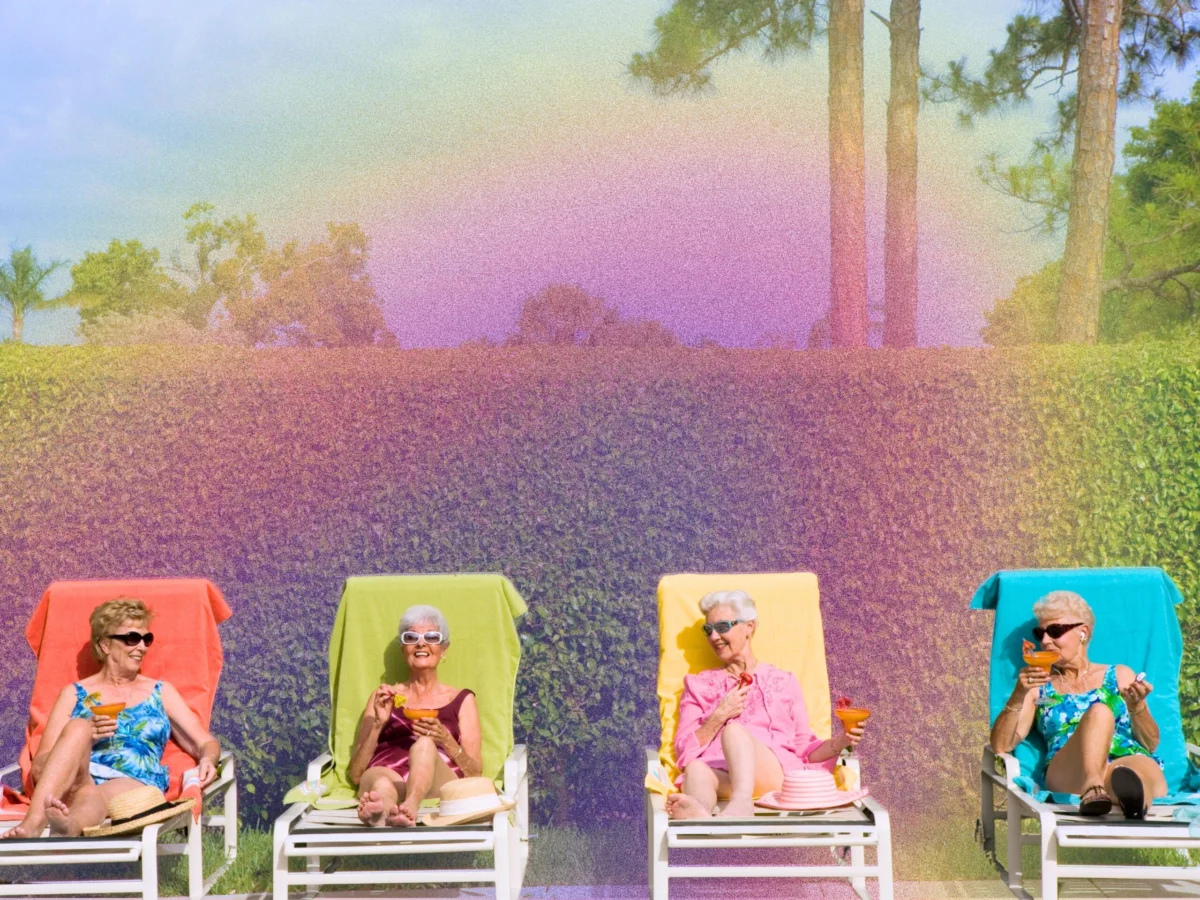
For generations, the narrative surrounding the unmarried woman has been one of deficiency. From the dismissive tropes of the "spinster" and the "old maid" to the modern, politically charged label of the "childless cat lady," society has long insisted that a woman’s life is a story waiting for its second act—marriage—to truly begin. Yet, a quiet, profound demographic shift is currently underway. Across the globe, and particularly in the United States, an increasing number of women are not merely ending up single; they are intentionally, and joyfully, choosing it.
What was once whispered as a "failure to launch" in a therapist’s office has evolved into a legitimate, aspirational life path. For those who have walked this road, the realization is rarely sudden. It is a slow, steady reclamation of self—a transition from viewing singlehood as a waiting room to recognizing it as the main event.
The Evolution of the Narrative: From "Anomaly" to "Autonomy"
In the early 1980s, the panic of being unmarried was palpable. For women then in their 30s, the societal pressure to secure a husband was the primary engine of their adult lives. Joan, now 79, recalls the intense scrutiny she faced when she first expressed a lack of interest in marriage. “A woman who didn’t want a husband was assumed to have something wrong with her,” she says.
During a pivotal session with a therapist—a woman who was herself married but possessed a rare, progressive outlook—Joan was asked a simple, diagnostic question: "What kind of husband would you want, if you had one?"
Joan’s response was characteristically blunt: "Someone busy. Someone deeply absorbed in his own life—his job, his hobbies, his community." When the therapist pressed further, asking if she meant someone intellectually stimulating, Joan clarified the subtext of her desire: "No. I’d want someone who’s never home."
It was a joke that carried the weight of a revelation. Joan realized she didn’t want a partner; she wanted the absence of one. She wanted the total, uncompromised sovereignty over her own time and space. That moment sparked a four-decade journey that has proven her theory correct: some people genuinely live their best lives in solitude.
Supporting Data: The Statistics of Singlehood
The cultural shift is reflected in the numbers. According to the Pew Research Center, as of 2023, 42% of U.S. adults are unpartnered, a significant climb from 29% in 1990. This is not merely a byproduct of delayed marriage; it is a fundamental shift in how people view the necessity of romantic union.
Modern dating, once considered a social imperative, has become a source of widespread exhaustion. A recent Forbes Health survey revealed that 78% of users on platforms like Tinder, Hinge, and Bumble report feeling "burnt out." Among younger adults—those in their mid-20s to early 30s, traditionally viewed as the "prime" years for finding a partner—sexual inactivity is on the rise. Data suggests sexual activity among young women has dropped by nearly 50% over the last decade.
Sociologists note that this is not necessarily a "sexless" movement born of prudishness, but a re-prioritization of energy. When the "cost" of dating—emotional labor, physical risk, and time investment—outweighs the perceived benefits, many women are simply opting out.
The "Single at Heart" Framework
Dr. Bella DePaulo, a social psychologist and author of Single at Heart, has spent her career formalizing the study of those who thrive outside of traditional romantic structures. She argues that for many, being single is not a "Plan B" that follows a failed attempt at marriage, but a fundamental orientation.
"I still smile when I think about the men I dated when I was a very young adult," says Dr. DePaulo, 72. "But I remember even more fondly how I felt when each of those relationships ended: finally free."
The psychological benefit of this freedom, according to DePaulo, is the ability to structure one’s life without the "peripheral presence" of a partner. In a marriage or long-term partnership, one’s attention is often split. Even when a partner is not in the room, they are often in the mind—their preferences, their moods, and their needs occupy a permanent mental real estate. For those who are "single at heart," the liberation from this mental occupation allows for a deeper, more expansive focus on one’s own growth, community, and personal ambitions.
Chronology of a Choice: From Duty to Self-Actualization
For many women of the older generation, the path to singlehood was often paved by the dissolution of a traditional marriage. Alice Foster, 80, followed the script handed to her: marry young, build a home, raise children.
"It was fine, but I felt like it was never really about me," she explains. "It wasn’t my life."
When her marriage ended in 1988, the anticipated tragedy never materialized. Instead, Alice found a vacuum that she eagerly filled with her own interests. She returned to school, pursued a career in nursing, and traveled extensively. Looking back, she describes the subsequent decades as a period of genuine, unadulterated "fun."
The chronology for these women follows a distinct arc:
- The Compliance Phase: Following societal scripts, often resulting in marriage or long-term cohabitation.
- The Realization Phase: The onset of a feeling that one is living a life designed by someone else.
- The Recalibration Phase: The dissolution of the primary relationship and the terrifying, then exhilarating, experience of solo living.
- The Expansion Phase: The building of a life defined by autonomy, where hobbies, friendships, and professional goals take center stage.
Implications: The New Definition of "The Good Life"
Sociologist Dr. Kris Marsh, author of The Love Jones Cohort, notes that we are currently witnessing a historic departure from marriage as a prerequisite for social and financial survival. For centuries, women were tethered to marriage for economic stability. Today, with increased access to higher education and independent careers, that tether has been severed.
"Now, a lot of women are looking for something additive," Dr. Marsh explains. "I’ve heard over and over: ‘I’m already in a very good place on my own. So you can’t be a distraction. You can’t disrupt my peace.’"
This creates a new implication for modern relationships: they are no longer a necessity, but a luxury. This high bar—the requirement that a partner must add to, rather than subtract from, an already fulfilling life—is a radical shift in power dynamics. It moves the focus of life satisfaction away from "who you are with" to "who you are."
Addressing the Skepticism
Despite the rising numbers and the clear testimonials of fulfillment, the question remains: Are they actually happy?
Recent research in the field of well-being suggests that satisfaction with singlehood increases with age, particularly starting in the 40s. Yet, the public remains skeptical. Because marriage is the default, it is rarely interrogated. A person who is married is assumed to be happy, even if they are not. A person who is single, however, is constantly asked to prove their happiness.
Dr. Marsh suggests that this pressure to perform happiness is why so many single women eventually stop explaining themselves. "They have to be extra strong, exceptionally confident to stand comfortably in their singleness," she notes.
Ultimately, the women who have embraced this path share a common trait: they have stopped looking for external validation. Their happiness is not a performance for society; it is a quiet, durable reality. They are not waiting for a story to begin. They are living it, and they have found that the most important relationship they will ever have is the one they have with themselves.
As Alice Foster puts it, "I love being retired. I love traveling. I love not having to answer to anybody. I’ve been single for so long and loving this life so much that, honestly, I don’t want to get tied down."
In a world that equates marriage with success, these women are redefining the terms of the argument. They are proof that a life without a partner is not a diminished life, but a full, rich, and entirely self-possessed one.
 Asro
Asro
 Suro Senen
