

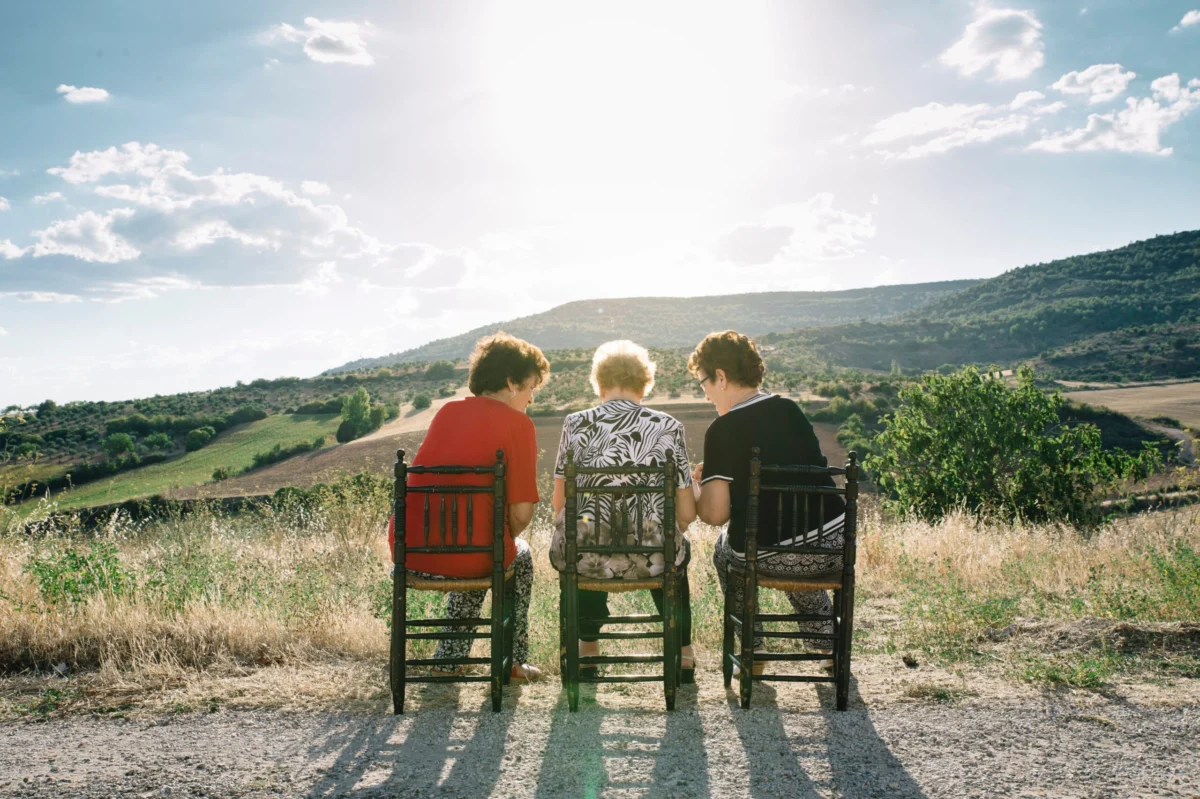
In the bustling piazzas and narrow, winding cobblestone streets of Italy, a quiet revolution in wellness is taking place—not in high-tech gyms or through expensive supplement regimens, but through the time-honored rhythms of the Italian nonna.
As of 2024, the concept of "Nonnamaxxing"—a social media-driven trend celebrating the lifestyle habits of Italian grandmothers—has transcended its viral origins. What started as an aesthetic appreciation for cotton nightgowns and homemade pasta has evolved into a serious inquiry into how we can all maximize our vitality. For health and science journalists, the trend serves as a gateway to understanding why Italy consistently ranks among the world’s leaders in life expectancy and remains home to some of the planet’s most robust Blue Zones, where centenarians are not an anomaly, but a community staple.
The Core Philosophy: Aging as an Act of Self-Love
The fundamental pillar of the Italian grandmother’s approach to life is a radical, unapologetic acceptance of aging. In many Western cultures, aging is often treated as a process of decay to be mitigated or concealed. In Italy, however, it is viewed as a natural, dignified progression.
Licia Fertz, a 96-year-old influencer and resident of Viterbo, Italy, serves as the living antithesis to anti-aging culture. "I put on my makeup and dress in cheerful colors, even if I’m not leaving the house, because presenting yourself well is an act of self-love," Fertz explains. Her mantra is simple yet profound: "Never think of yourself as old. You are born young."
This mindset is backed by compelling behavioral science. A recent study suggests that a woman’s internal narrative regarding her own aging is intrinsically linked to the biological pace at which she ages. Sonja Lyubomirsky, a distinguished professor of psychology at the University of California, Riverside, and author of How To Feel Loved, frames this mindset as a choice. "Is aging a gift? Is it about wisdom, maturity, and the richness of life, or is it about deterioration and loss?" she asks. "Both can be true, but you can choose your lens."
The Chronology of Care: A Life Intertwined with Community
The "Nonnamaxxing" phenomenon highlights a social infrastructure that is often absent in more individualistic societies: the integration of elders into the daily fabric of family life. In Italy, the nonna is not a peripheral figure; she is a central architect of the family unit.
The Economic and Cognitive Buffer
Italian grandmothers provide a massive, often invisible, economic safety net through childcare and household support. While this role is frequently debated in local social circles regarding the burden of unpaid labor, the health implications are undeniable.
Research indicates that caregiving later in life acts as a cognitive buffer. A recent study published in the Journal of Aging and Health found that grandparents who engage in consistent childcare—ranging from school pickups and homework assistance to medical care—consistently score higher on memory and verbal fluency tests than their counterparts who do not.
Fertz, who lives with her grandson, emphasizes the reciprocal nature of this bond. "Every day spent with my great-granddaughter is a gift that never ceases to amaze me," she says. This intergenerational connection provides a sense of purpose, which researchers in the American Journal of Preventive Medicine have linked to a significantly reduced risk of mortality and increased psychological resilience.
The Science of Movement: Walking as a Way of Life
If one were to analyze the daily step count of a typical Italian nonna, the data would likely dwarf that of the average office worker. In Italy, walking is not a "workout" to be scheduled; it is a fundamental mode of transport dictated by geography.
Evolutionary Biology and Longevity
Daniel Lieberman, a professor of Human Evolutionary Biology at Harvard University, notes that walking is the most fundamental form of human physical activity. "Many, many hundreds of studies confirm that walking helps people age slower and better," Lieberman says.
In Florence, pediatrician and grandmother Paola Mariotti illustrates this perfectly. While she utilizes modern technology to track her steps, her commitment to walking is rooted in ancestral habit. She aims for at least 5,000 steps daily, though she strives for 10,000 whenever possible. This habit is validated by 2025 research from the American Journal of Preventive Medicine, which found that even 15 minutes of brisk daily walking is sufficient to significantly reduce the risk of premature death. In an era of sedentary desk jobs, the "nonna" approach serves as a reminder that movement is an inherent human necessity, not a luxury.
The Art of Dolce Far Niente and Mindfulness
Perhaps the most aspirational aspect of the Italian lifestyle is the ability to engage in dolce far niente—the sweetness of doing nothing. At any local café, one might see a nonna sipping an espresso, observing the street life without the intrusion of a smartphone or the pressure of a to-do list.
Escaping the Hustle Culture
Jonathan Alpert, a New York-based psychotherapist, suggests that the "Nonnamaxxing" trend is largely a response to the exhaustion of modern "hustle culture." Younger generations, burnt out by the demand to optimize every second of their lives, are romanticizing a life that feels grounded, warm, and unhurried.
Scientific consensus confirms that multitasking, while often praised as efficiency, is a primary driver of stress and cortisol production. Conversely, practicing presence—staying in the moment—has been correlated with greater resilience and healthier biological aging. By choosing to sit, observe, and breathe, Italian grandmothers are practicing a form of mental hygiene that keeps them cognitively sharp and emotionally balanced.
Nutritional Wisdom: Seasonal Simplicity
Dietary habits in Italy are defined by seasonality. Local markets provide the roadmap for the kitchen, forcing a reliance on whatever is currently in harvest. Antonino De Lorenzo, professor emeritus of human nutrition at the University of Rome Tor Vergata, explains that this is not merely a culinary preference but a nutritional necessity.
"Freshness, variety, ripeness, and preparation methods can all exert a significant influence on a food’s nutritional profile," says De Lorenzo. By avoiding industrial products and preservatives in favor of the Mediterranean diet—rich in olive oil, legumes, whole grains, and seasonal vegetables—nonne ensure their bodies receive the highest quality fuel. This way of eating, sustained over a lifetime, is widely recognized as the gold standard for preventing chronic disease and maintaining metabolic health.
Implications: Building a "Nonna" Future
The allure of "Nonnamaxxing" is ultimately about reclaiming a sense of agency over one’s own lifespan. It is a transition from a life defined by external productivity to one defined by internal satisfaction and community connection.
The Antidote to Isolation
Fertz’s final piece of advice is perhaps the most urgent for the modern world: "The most important thing for living a long and happy life? Don’t isolate yourself. Stay in touch with people, travel, plan outings, and get out of the house."
The implications for public health are clear. A sense of purpose, derived from community roles and social interaction, is a powerful protective factor against depression and cognitive decline. As studies in The American Journal of Geriatric Psychiatry show, the greatest threat to a long life is not necessarily the physical ailments associated with age, but the boredom and isolation that accompany a withdrawal from society.
In conclusion, the "Nonnamaxxing" trend is more than a fleeting social media obsession. It is a holistic, scientifically-supported blueprint for living. By embracing the Italian nonna’s commitment to daily movement, mindful presence, communal connection, and seasonal nourishment, we may not only add years to our lives, but more importantly, add life to our years. We are not just learning how to grow old; we are learning how to live with intention.
 Asro
Asro
 Suro Senen
