

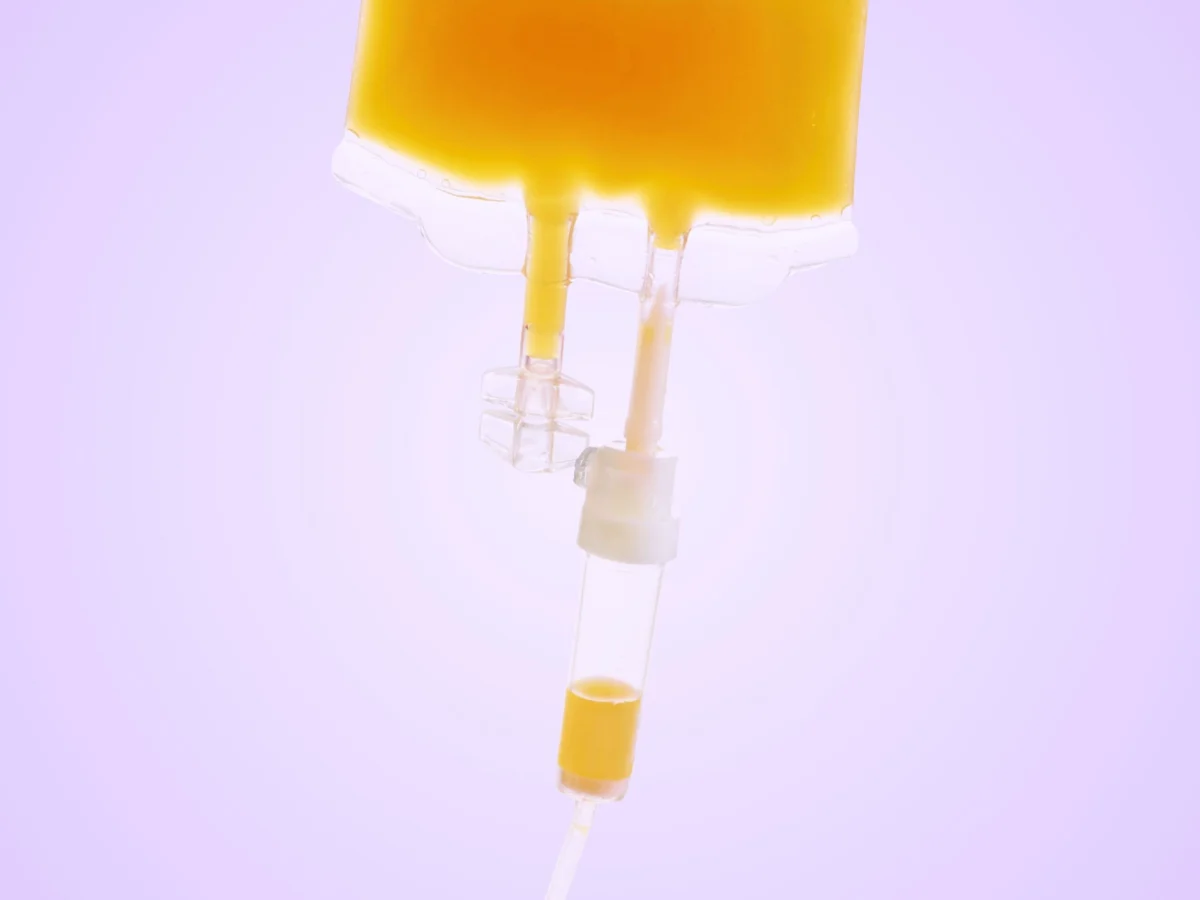
The quest for the fountain of youth has migrated from the realm of mythology to the high-tech laboratories of modern medicine. For centuries, humanity has sought to turn back the clock on aging, but today’s "elixirs" are far more clinical. Among the most buzzed-about interventions in longevity science is therapeutic plasma exchange (TPE)—a procedure that physically filters and replaces the liquid component of human blood.
A recent study published in the journal Aging Cell has ignited both excitement and skepticism, suggesting that this intensive procedure could potentially shave two and a half years off a patient’s "biological age." However, as the scientific community urges caution, it is vital to peel back the layers of sensationalism to understand what this research actually reveals about the future of aging—and why you shouldn’t be booking a "plasma clinic" appointment just yet.
The Biology of the Blood: Why Plasma Matters
To understand why researchers are targeting blood plasma, one must first understand its role in the human body. Plasma is not merely the fluid that suspends our red and white blood cells; it is a complex, information-dense transport system.
"It’s a transport system like DHL, a vehicle to bring things from your brain to your muscles, from kidney to lungs, and so on," explains Dr. Andrea Maier, MD, PhD, a geriatrician and board member of the Academy for Health and Lifespan Research. "It’s a fluid with lots of information."
This fluid carries a vast array of proteins, metabolites, hormones, and inflammatory signals—molecular signatures that reflect the internal state of every organ system. Because it acts as a centralized repository for the body’s metabolic and inflammatory "chatter," it has become a primary focal point for longevity studies. By analyzing the concentrations of thousands of proteins within the plasma, researchers can derive a proxy measurement for "biological age"—a dynamic, non-fixed metric that indicates how well an organism is functioning compared to its chronological age.
As Dr. Keenan Walker, a senior investigator at the National Institute on Aging, notes, "There’s no one biological age, but people try to estimate it. What studies have found is that people whose biological age is older than their chronological age are at greater risk for chronic conditions, diseases, and mortality."
A Chronological History of Plasma Research
The current interest in plasma exchange is the culmination of over a decade of experimental inquiry. The narrative truly began with a controversial yet fascinating technique known as parabiosis.
The Mouse Model Origins
Approximately 15 years ago, researchers began conducting experiments that linked the circulatory systems of two distinct organisms—typically an old mouse and a young mouse. The hypothesis was that the "youthful" environment of the younger mouse might contain systemic factors capable of rejuvenating the aging tissues of the older subject.
The results were striking: the older mice, when exposed to the circulatory system of their younger counterparts, displayed significantly increased resilience to tissue and organ stress. These findings provided the foundational evidence that circulating factors in the blood—or the lack thereof—play a critical role in the aging process.
From Mice to Clinical Practice
Following these animal studies, the medical community began exploring how these principles could be translated into human medicine. TPE has been used for years to treat specific autoimmune disorders, blood cancers, and neurological conditions by removing pathogenic substances from the blood. The pivot toward "anti-aging" was a logical, albeit aggressive, step: if we can filter out the toxins associated with disease, can we also filter out the accumulated biological debris that characterizes the aging process?
Deconstructing the Aging Cell Study
The 2025 Aging Cell study sought to answer this question by enrolling 42 participants. The experimental protocol involved exchanging the participants’ plasma with a combination of purified albumin (a blood protein) and saline. A subset of the cohort also received intravenous immunoglobulin (IVIG) as an immune-modulatory therapy.
Researchers tracked the participants using advanced molecular aging clocks—lab tests designed to measure age at a cellular level. On the surface, the headline-grabbing result was a reduction in biological age by approximately 2.5 years. However, closer inspection of the data reveals a more nuanced, and perhaps cautionary, reality.
The "Midterm" Mirage
The most critical takeaway from the study lies in the timing of the data. Dr. Maier highlights a significant discrepancy between the midterm findings and the final outcomes.
"If you are digging a little bit deeper, this ‘2.5 years younger’ is comparing people at midterm to the baseline, not at the end of the study," she explains. "At the end, the effect was nearly gone."
This transient result suggests that the body’s biological response to plasma exchange is complex. When a large volume of plasma is removed and replaced, the body is forced to adapt rapidly. This massive influx of new cells and fluids may trigger a temporary "rebound" effect, appearing as a reduction in biological age. However, as the body acclimates to the intervention, the biomarkers often drift back toward their original, pre-treatment state.
Scientific and Clinical Implications
The implications of this study are twofold: it confirms that blood-based interventions are physiologically powerful, but it also underscores that "more" is not necessarily "better."
The Individualized Response
Dr. Walker notes that the study revealed an interesting correlation between participant health and the efficacy of the intervention. "Those who were less healthy saw a stronger intervention effect," he observes. This suggests that the procedure might be more beneficial for those with a higher burden of chronic, low-grade systemic inflammation, rather than for generally healthy individuals seeking a "boost."
The Need for Precision
Both Drs. Maier and Walker agree that the future of longevity medicine lies in personalization rather than the "sledgehammer" approach of general plasma filtering. The current method is, as Dr. Maier describes it, a "rough" process that places significant stress on the body.
"I would call this a phase 1 study," Dr. Maier states. "We’ve basically learned that we can safely do it, and now we have to see it in much bigger studies and look at the long-term effect. It’s not a crazy idea. It’s absolutely grounded in lots of evidence, but not for everybody."
The Verdict: Proceed with Caution
While the prospect of a "blood filter" for aging is undeniably seductive, the medical consensus is clear: it is not yet ready for prime time. The potential risks of replacing large volumes of plasma, combined with the temporary nature of the observed benefits, make it an unsuitable candidate for routine clinical anti-aging practice at this stage.
The field of geroscience is moving rapidly, and the Aging Cell study serves as an essential, if modest, step forward. It provides proof-of-concept that we can manipulate biological age markers through systemic blood interventions. However, the path to a true "fountain of youth" is unlikely to be found in a simple filter.
"I love innovation, and I love this study," says Dr. Maier. "But I think the future will give us something else—something more precise, more targeted, and less traumatic for the body."
For now, those interested in longevity are better served by the "old-fashioned" methods: exercise, nutrition, sleep, and medical management of chronic conditions. While these may not offer the instant gratification of a clinical blood exchange, they remain the only interventions with a long-term, proven track record for extending both healthspan and lifespan. The plasma frontier is open, but for the average person, the best way to keep the clock from ticking faster is to support the body’s innate, natural systems rather than trying to overhaul them entirely.
 Asro
Asro
 Suro Senen
 Azzam Bilal Chamdy
