

In the high-stakes world of live sketch comedy, the relationship between a host and the writers’ room is often a delicate negotiation of boundaries, timing, and creative ambition. Few shows are as legendary—or as notoriously edgy—as Saturday Night Live (SNL). Yet, even for an institution known for pushing the envelope, some pitches are destined for the cutting room floor. Recently, Academy Award nominee Amy Adams opened up about a particularly "graphic" sketch pitched to her by Brooklyn Nine-Nine star and comedy icon Andy Samberg during her hosting debut in 2008. The revelation offers a rare, candid glimpse into the internal vetting process that protects the carefully curated personas of Hollywood’s most beloved stars.
The Context: A Career at a Crossroads
To understand the weight of Adams’ decision, one must look back at the cultural landscape of 2008. At the time, Amy Adams was riding the meteoric success of Disney’s Enchanted. The film, which blended traditional animation with live-action musical fantasy, had turned Adams into a household name and, more importantly, a beacon for young children. As Giselle, the wide-eyed, optimistic princess, Adams had become a role model for millions of young girls.
When Adams was tapped to host Saturday Night Live in March 2008, her brand was almost entirely synonymous with wholesome, family-friendly magic. She was a rising star with a reputation for grace, charm, and innocence. It was into this environment that Andy Samberg, then a prominent cast member and member of The Lonely Island, brought a pitch that stood in stark, jarring contrast to the Enchanted image Adams had cultivated.
The Pitch: A "Graphic" Departure
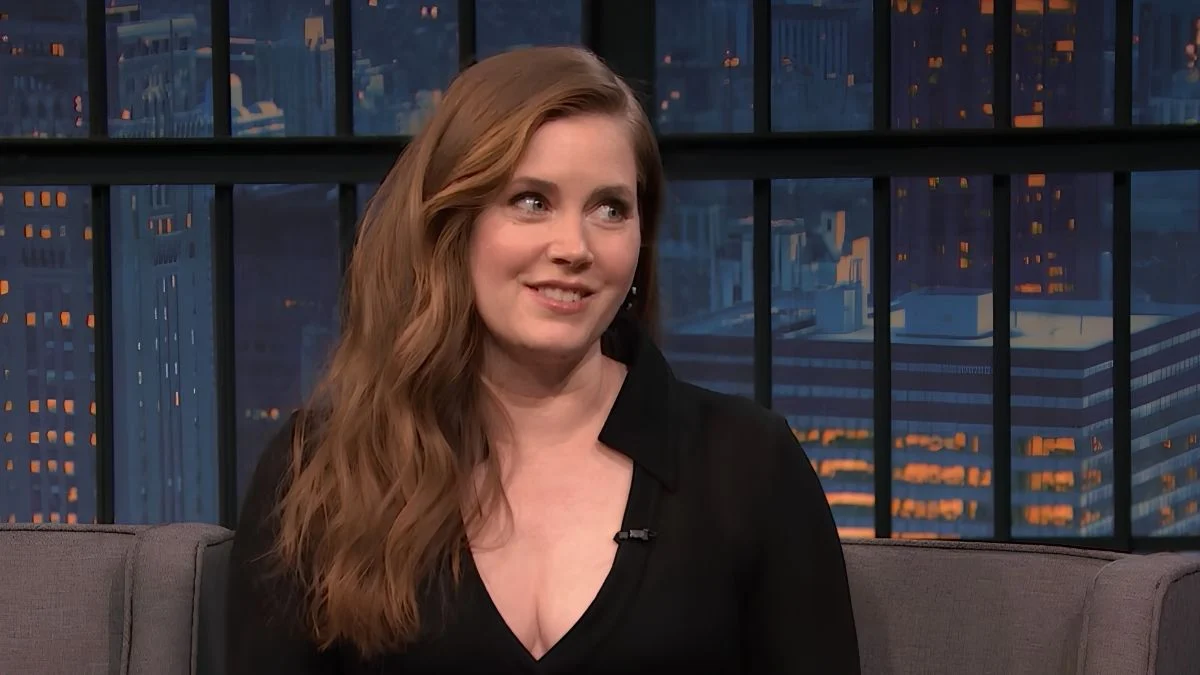
The story surfaced during a June 9 appearance on Late Night with Seth Meyers. Meyers, a former SNL head writer himself, nudged Adams to discuss the legendary rejected song. While Adams stopped short of reciting the explicit lyrics, she provided enough context to paint a vivid picture of the absurdity Samberg was aiming for.
"I’ll give you the gist without telling you the punchline," Adams told Meyers, leaning into the memory. She described a premise involving a couple in a park. In this scenario, the character played by Samberg is bitten by a spider and finds himself on the brink of death. His partner, played by Adams, tearfully asks if he has any final wishes.
According to Adams, the punchline involved Samberg’s character making a request that was, in her words, "the most graphic thing" he could conceive. The sketch was clearly designed as a shock-value musical comedy—a hallmark of The Lonely Island’s style—but it fundamentally clashed with the public’s perception of Adams.
The Decision: Protecting the Princess
Adams’ refusal to participate was not a critique of Samberg’s talent, but rather a protective measure for her audience. During the interview, she explained her thought process with remarkable clarity: "I was so keenly aware of all the, like, young girls that were watching Enchanted. And I didn’t want to be the princess singing about that particular act, you know?"
This decision highlights the professional burden placed on actors who occupy "idol" status. For an actress like Adams, whose career was built on the foundation of a fairy-tale princess, the potential for brand erosion was significant. Performing a song that leaned into crude, sexualized, or graphic humor would have risked alienating the very demographic that had propelled her to A-list status. It was a calculated career move—a refusal to let the irreverence of SNL overwrite the narrative of her breakthrough role.
Chronology of the Incident
- Late 2007: Enchanted is released, catapulting Amy Adams to global stardom.
- March 2008: Amy Adams hosts Saturday Night Live for the first time. It is during these pre-show pitch meetings that Andy Samberg presents the "spider bite" sketch.
- March 2008 (The Decision): Adams politely but firmly rejects the pitch, citing her concern for her young, Enchanted-obsessed fan base. The sketch is scrapped.
- 2024: The topic is revisited on The Lonely Island and Seth Meyers podcast, providing new context and hindsight from the perspective of the creators.
- June 2024: Adams discusses the incident in detail on Late Night with Seth Meyers, validating the story and offering her perspective on why the refusal was necessary.
The Perspective of the Creator: Samberg’s Gracious Realization
The narrative surrounding this rejection took a fascinating turn in 2024 when the incident was discussed on the Lonely Island and Seth Meyers podcast. It became clear that while Samberg is known for his boundary-pushing humor, he possessed the self-awareness to recognize the validity of Adams’ hesitation.
Seth Meyers recounted a story where, shortly after the sketch was rejected, Samberg witnessed an interaction between Adams and a young fan. "He said, literally the next day, he watched a 5-year-old come up to you and be like, ‘You mean so much to me, and I love Enchanted.’ And he was like, ‘Oh, my God, I can’t believe I almost made her do that,’" Meyers shared.
This moment of serendipity seems to have solidified Samberg’s respect for Adams’ choice. Rather than fostering resentment over a killed bit, the interaction appears to have created a mutual understanding. Adams herself praised Samberg during the interview, calling him "gracious" about the situation. The two maintained a professional relationship, and Adams proceeded to host a successful episode of the show, performing other sketches that were better suited to her comedic range at the time.
Implications: The Ethics of Comedy and Stardom
This incident serves as a poignant case study in the power dynamics of Hollywood. When a star enters a collaborative space like SNL, they are essentially handing over their reputation to the writers. If a sketch goes viral for the wrong reasons, the fallout lands on the host, not the writer.
The rejection of the sketch also touches upon the broader conversation regarding the "Disneyfication" of actors. Once an actor is cemented as a family-friendly icon, they face a "glass ceiling" of sorts regarding the roles they can accept or the comedy they can perform. Adams’ decision reflects an astute awareness of this reality. She understood that while she wanted to prove her range as a comedian, she could not afford to burn the bridge of her primary audience in the process.
Furthermore, it underscores the importance of a collaborative environment. SNL is notoriously grueling, and the sheer volume of sketches written means that not every idea is going to be a perfect fit for the host. The fact that the pitch was rejected—and that both parties moved on without lasting friction—is a testament to the professionalism required to survive in the entertainment industry.
Conclusion: A Masterclass in Boundaries
Amy Adams’ choice to reject the "graphic" sketch from 2008 was more than just a creative preference; it was an act of professional self-preservation. It allowed her to continue her career trajectory without the baggage of a controversial performance that could have redefined her public image prematurely.
By speaking about this years later, Adams has provided fans with a masterclass in navigating celebrity. It shows that even at the height of one’s fame, the ability to say "no" is one of the most powerful tools in an actor’s arsenal. In the end, the sketch remained a "what if" in the annals of SNL history, and Amy Adams went on to secure her place as one of the most versatile and respected actresses of her generation—all while keeping her princess crown firmly intact.
 Neng Nana
 Azzam Bilal Chamdy
 Nana
Nana
