

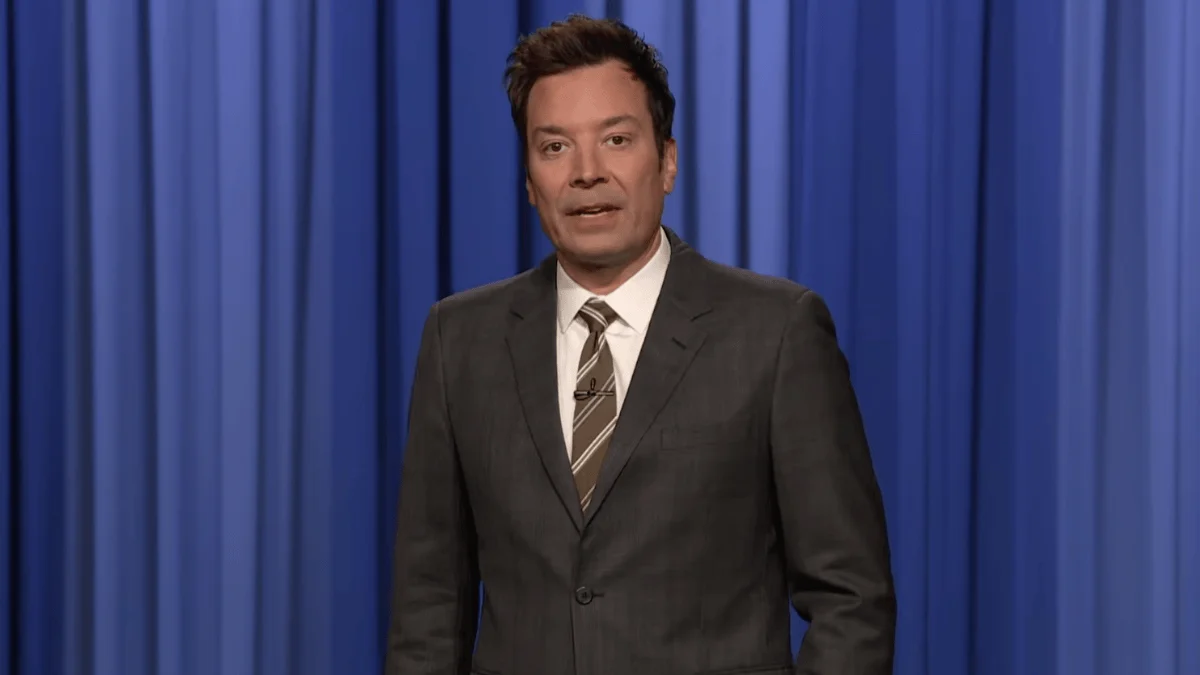
In an era defined by a fractured media landscape and heightened political vitriol, the intersection of late-night comedy and presidential discourse has become a primary battleground. This week, The Tonight Show host Jimmy Fallon offered a sharp, albeit comedic, critique of Donald Trump’s latest crusade against the press, specifically addressing the former president’s suggestion that journalists from major outlets, including The New York Times, should face arrest for their coverage of his campaign rallies.
Fallon’s monologue, which aired Tuesday, serves as a microcosm of the current state of American political commentary: a mix of disbelief, satire, and deep-seated concern regarding the constitutional implications of a political leader calling for the incarceration of the free press.
Main Facts: The Anatomy of a Contested Rally
The controversy stems from a series of events surrounding a recent rally in Ohio. Donald Trump, known for his obsession with crowd size and media portrayals, took umbrage with reports suggesting that his attendance figures were significantly lower than the venue’s capacity.
In a departure from traditional political discourse, the former president didn’t simply dispute the numbers; he escalated the rhetoric, suggesting that the journalists responsible for the coverage—specifically those from The New York Times and other prominent news organizations—should be arrested. This is not the first time the former president has targeted the press, but the explicit call for legal retribution against reporters for simply documenting attendance marks a notable shift in the intensity of his rhetoric.
Fallon tackled this escalation by framing it through his signature brand of observational humor. "Get this," Fallon remarked to his audience. "Trump is now saying that reporters from The New York Times and other media outlets should be arrested over their coverage of his rallies."
Rather than adopting a somber tone, Fallon used the moment to highlight the absurdity of the threat. "Reporters aren’t worried," he quipped. "They’re like, ‘If we can sit through a two-hour Trump speech, we can handle prison. Eh, we’re good.’"
Chronology of Escalation: From Rhetoric to Hostility
The friction between Donald Trump and the media is not a new phenomenon; it has been a defining feature of his political career since he descended the golden escalator at Trump Tower in 2015. However, the timeline of recent events shows a distinct tightening of the vice.
- The Ohio Rally (The Catalyst): The sequence of events began with the Ohio rally. Trump, displeased with the visual narrative presented by the media, insisted that the venue was a massive arena. Journalists on the ground noted that the event was held in a high-school gymnasium, leading to coverage that contradicted the president’s narrative of overwhelming, stadium-filling support.
- The Demand for Arrests: Following the coverage, Trump utilized his platforms to demand that legal action be taken against the press. This signaled a shift from labeling the media as "fake" to suggesting they are criminal entities.
- Targeted Harassment: On Monday, the rhetoric shifted from general media disdain to specific, personalized attacks. Trump directed his ire at individual journalists, calling Fox News’ Jessica Tarlov a "loser" and dismissing CNN’s Kristen Holmes by stating, "Your whole outfit is fake, and so are you."
- The Satirical Response: On Tuesday, Jimmy Fallon’s The Tonight Show provided the public with a cathartic, albeit critical, response to these developments, using comedy to dissect the former president’s fragile relationship with the truth.
Supporting Data: The Venue Discrepancy
At the heart of the conflict is a disconnect between the reality of the venues and the rhetoric employed by the campaign. Fallon leaned into this during his segment, joking about the tendency for the campaign to inflate the grandeur of their locations.
"Trump claimed that his rally in Ohio was at the Ohio Arena, even though he spoke at a high-school gymnasium. Oops," Fallon remarked. He pushed the joke further into the realm of the absurd, predicting future campaign stops: "Now he’s claiming his next rally is at Texas Stadium, but it’s really at a LongHorn Steakhouse in the birthday-party room."
While humorous, the joke touches upon a genuine concern: the strategic manipulation of information. By mislabeling venues and challenging the accuracy of reporting, the campaign creates a reality where the "truth" is subjective, tailored entirely to the leader’s ego. When reporters refuse to participate in this subjective reality, they become the enemy of the state in the eyes of the campaign, which in turn leads to the kinds of threats seen this week.
Official Responses and the Media’s Stance
The media’s reaction to these threats has been a mix of professional detachment and internal alarm. Major news organizations, such as the New York Times and CNN, have largely maintained their editorial stance, continuing to report on the former president’s activities despite the vitriol.
Journalism advocacy groups, however, have been more vocal. Organizations like the Committee to Protect Journalists (CPJ) have repeatedly warned that rhetoric calling for the arrest of reporters serves to embolden autocrats and endangers the safety of journalists working on the ground.
While the Trump campaign has not issued a formal "official response" to Fallon’s monologue—a departure from their typical practice of engaging in online brawls—the pattern of behavior suggests a doubling down. By continuing to target individual female journalists and outlets, the campaign effectively uses its supporters’ anger as a defensive mechanism to insulate the candidate from critical coverage.
Implications for Democracy and the Press
The implications of a political leader openly calling for the arrest of journalists are profound. In a democracy, the press serves as a check on power, a role protected by the First Amendment. When the rhetoric moves from "this is biased reporting" to "this is criminal activity," it challenges the foundational norms of a free society.
The Normalization of Hostility
The greatest danger of these interactions is the normalization of hostility. As Fallon’s segment suggests, the press has become accustomed to being the target of presidential ire. However, the move toward suggesting incarceration creates a "chilling effect." If journalists fear that their coverage of a rally could lead to legal harassment or arrest, they may begin to self-censor or distance themselves from the campaign entirely, leaving a vacuum where the public only receives information curated by the campaign itself.
The Role of Late-Night Comedy
Jimmy Fallon’s approach—using humor to strip away the power of the threat—is a long-standing tradition in American politics. From Johnny Carson to Jon Stewart, late-night hosts have served as the nation’s safety valve. By laughing at the absurdity of a president wanting to arrest reporters for pointing out that a gym is not an arena, Fallon provides a service. He reminds the public that these threats, while dangerous in their intent, are rooted in an insecurity that is fundamentally ridiculous.
The Future of Media Coverage
As the political cycle continues, the relationship between the press and the former president is unlikely to improve. If anything, the adversarial nature of the relationship will become more entrenched. Reporters are now forced to navigate a landscape where their professional duties are treated as acts of political rebellion.
Conclusion: The Laughter that Lingers
Jimmy Fallon’s monologue was more than just a series of jokes; it was a snapshot of a nation struggling to reconcile its democratic traditions with a leader who explicitly rejects the premise of an independent press. By framing the threat of prison as a mere inconvenience—something to be managed alongside a long speech—Fallon effectively neutralized the intimidation factor.
Yet, the underlying issue remains. The fact that a candidate for the highest office in the land can suggest the arrest of the press, and have it treated as just another Tuesday night news cycle, is a sobering reality. As we look toward the future, the challenge for both the press and the public will be to maintain that critical distance, to continue to verify the facts behind the "Ohio Arenas" of the world, and to recognize that while comedy can help us cope, the protection of the First Amendment requires a much more serious and sustained commitment from the citizenry at large.
The press, as the adage goes, may be able to "handle prison" because they have sat through much worse, but the health of the republic depends on their ability to stay out of it—and to continue reporting the truth, regardless of the venue size or the vitriol of the speaker.
 Neng Nana
 Azzam Bilal Chamdy
 Nana
