

Main Facts: A Bold Admission on the Global Stage
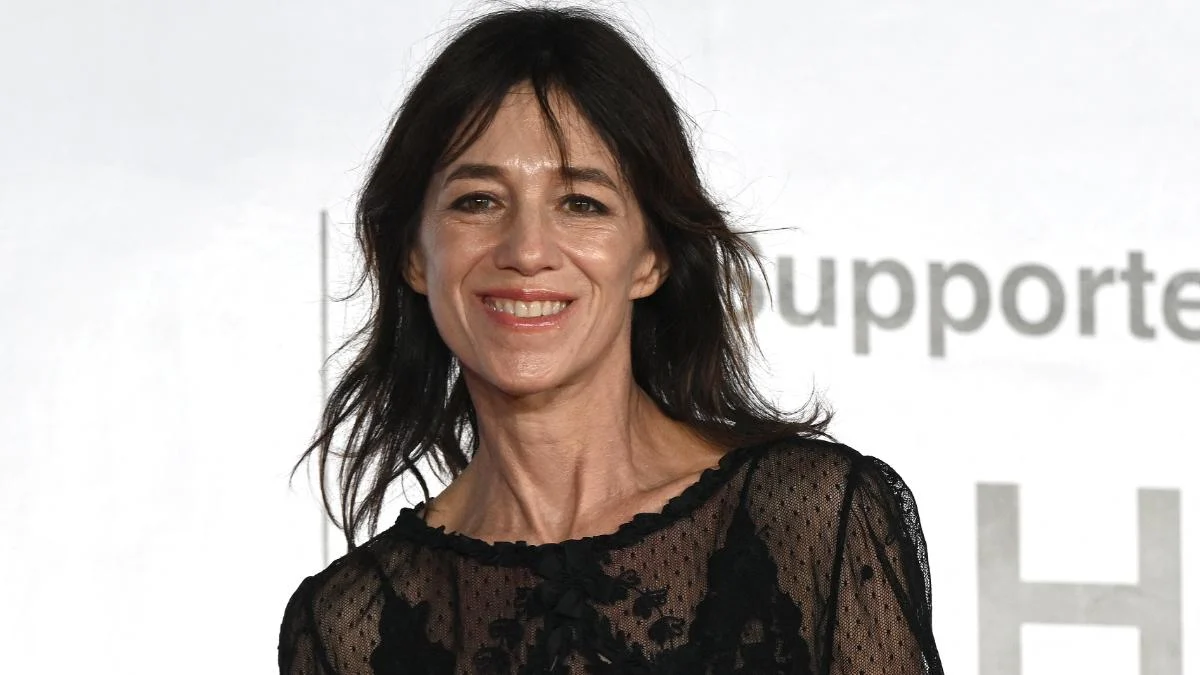
In an era where celebrity associations are often scrutinized with microscopic precision, French icon Charlotte Gainsbourg has defied the contemporary climate of "cancel culture." During her debut appearance at the prestigious Busan International Film Festival in South Korea, the 55-year-old actress and musician made a candid admission that has since rippled across social media and entertainment circles. While discussing her artistic influences and personal musical tastes, Gainsbourg—the daughter of legendary provocateurs Jane Birkin and Serge Gainsbourg—openly declared her enduring loyalty to the discography of Kanye West, now known as Ye.
"I’m not good for recommendations," Gainsbourg told an audience gathered for a special screening of Lars von Trier’s 2011 existential masterpiece, Melancholia. "I have one artist that I listen to, [a] very controversial artist, but I listen to everything he does, and it’s Kanye West. I know, it’s very easy."
This statement was not a casual remark made in passing but a deliberate acknowledgment of a long-standing creative affinity. For an artist of Gainsbourg’s pedigree—known for her introspective, moody, and highly intellectual aesthetic—aligning herself with a figure as volatile as West highlights a complex paradox: the separation of the art from the artist, a debate that remains one of the most contentious issues in modern pop culture.
Chronology: A History of Creative Alignment
The connection between Gainsbourg and West is not a new development. It is a relationship rooted in a deep, long-standing appreciation for his production capabilities and his evolution as an experimental artist.
The 2018 Take 2 Connection
The first overt public manifestation of this admiration occurred in 2018, when Gainsbourg released her EP titled Take 2. Within this five-track collection, Gainsbourg included a hauntingly stripped-back cover of West’s 2010 magnum opus, "Runaway," from his critically acclaimed album My Beautiful Dark Twisted Fantasy.
Her performance of the track on the French television show Taratata was met with critical intrigue. By choosing to interpret a song so deeply associated with West’s ego, vulnerability, and internal struggle, Gainsbourg signaled that her interest in his work was not merely superficial. She was drawn to the structural integrity of his songwriting and the emotional gravity of his compositions, elements that arguably mirror her own approach to music.
The Current Stance
Fast forward to 2026, and despite the avalanche of controversies that have engulfed West’s career—ranging from hate speech to erratic public behavior—Gainsbourg’s position remains firm. By acknowledging the "controversial" nature of her choice during her time in South Korea, she displayed a self-awareness that suggests her support is not born of ignorance, but rather a conscious decision to engage with the music regardless of the surrounding discourse.
Supporting Data: The Context of the Controversy
To understand the weight of Gainsbourg’s statement, one must examine the volatility of Ye’s recent professional and personal trajectory. The rapper has spent the last several years oscillating between creative innovation and public disgrace.
A Pattern of Inflammatory Conduct
The primary source of the "controversy" mentioned by Gainsbourg stems from West’s repeated antisemitic outbursts. Starting in late 2022 and continuing into 2023, West utilized various media platforms to make derogatory statements about the Jewish community, even going so far as to praise Adolf Hitler in interviews. While West offered a public apology to the Jewish community in late 2023, the goodwill generated was short-lived.
In February 2025, the conversation took a darker turn when reports surfaced regarding West selling merchandise featuring swastikas. This move prompted immediate backlash from corporate partners, with the e-commerce giant Shopify officially removing his store from its platform. These incidents have forced a global conversation regarding whether an artist’s creative output can or should be divorced from their harmful ideologies.
The Recent Cancellation in Russia
The volatility surrounding West has manifested in tangible economic consequences. Most recently, his attempt to bridge geopolitical divides by scheduling shows in Russia faced a harsh reality. Despite the St. Petersburg performances at the Gazprom Arena—slated for October 10 and 11, 2026—being sold out, the events were abruptly canceled. The organizers, Say Agency, confirmed the cancellation via a brief Telegram post on October 1. As of this writing, West has maintained a stony silence regarding the failed venture, leaving fans and industry analysts to speculate on whether the cancellation was due to logistical failures, political pressure, or internal instability.
Implications: The Ethics of Fandom in the 21st Century
Charlotte Gainsbourg’s defense of her listening habits touches on a larger, more uncomfortable question: Is the consumption of art a moral act?
The "Art vs. Artist" Dilemma
Gainsbourg’s position represents a traditional, perhaps waning, view of the relationship between the creator and the consumer. In this school of thought, the work stands as an entity independent of the individual who produced it. For an artist like Gainsbourg, who works in the highly subjective world of cinema and experimental music, the "vibe" and "aesthetic" of a track often outweigh the political baggage of its creator.
However, in the digital age, this perspective is increasingly under siege. Critics argue that by continuing to stream, purchase, and praise the work of someone who has espoused hate, the consumer is providing the artist with both financial support and cultural validation. When Gainsbourg tells a festival audience she listens to "everything he does," she is essentially signaling to her own fanbase that West’s career remains a relevant and vital part of the cultural zeitgeist.
Cultural Resilience vs. Reckless Endorsement
Is Gainsbourg being "reckless," or is she simply being honest? In an industry where public figures are often forced to curate their opinions to suit the prevailing social tide, her admission feels uncommonly raw. By calling the situation "very easy"—an ironic nod to how simple it is for her to enjoy the music—she seems to be acknowledging that the backlash is inevitable, yet she chooses to prioritize her aesthetic preference over the social cost.
The implication here is a potential "polarization of fandom." As artists continue to engage in controversial behavior, audiences are increasingly forced to choose: do we discard the art of those who fail our moral litmus test, or do we compartmentalize our consumption to maintain our personal connection to the work?
Conclusion: The Persistence of the Legacy
Charlotte Gainsbourg’s comments in Busan serve as a snapshot of the current cultural landscape—a place where the lines between professional output and personal morality are permanently blurred. Her loyalty to Kanye West is not an anomaly; it is a testament to the enduring power of his early and mid-career work, which remains deeply embedded in the playlists of artists and listeners worldwide.
As the industry continues to grapple with how to handle "cancelled" icons, the stance taken by Gainsbourg suggests that, at least for some, the music possesses an autonomy that no amount of controversy can fully diminish. Whether this loyalty is viewed as a courageous dedication to artistic integrity or a problematic refusal to hold figures accountable, it remains a defining feature of the modern music discourse. As for West himself, the silence following his Russian tour cancellation suggests that his future in the global spotlight is increasingly uncertain—even if, in the headphones of icons like Gainsbourg, the music plays on.
 Neng Nana
 Azzam Bilal Chamdy
 Nana
