

The landscape of wearable technology is undergoing a tectonic shift. For years, the industry was defined by the clunky, often failed experiments of the past—from Google Glass to early VR headsets that isolated users from the physical world. However, the last few months have marked a definitive pivot. As industry titans Meta and Snap accelerate their efforts to embed AI-powered cameras onto the faces of millions, a leaner, more focused adversary is quietly capturing the attention of the executive class: Shenzhen-based startup Even Realities.
With a fresh $150 million in pre-Series B funding—a round that catapults the three-year-old firm into the coveted “unicorn” status with a $1 billion valuation—Even Realities is proving that the future of smart glasses might not be about capturing the world through a lens, but about layering information onto reality without compromising privacy.
A New Contender in a Crowded Field
The smart glasses market is currently defined by a "camera-first" philosophy. Meta’s latest iterations and Snap’s recent hardware pushes prioritize augmented reality (AR) as a medium for content creation, social sharing, and real-time visual AI analysis. In contrast, Even Realities is betting on a different paradigm: display-first, privacy-centric utility.
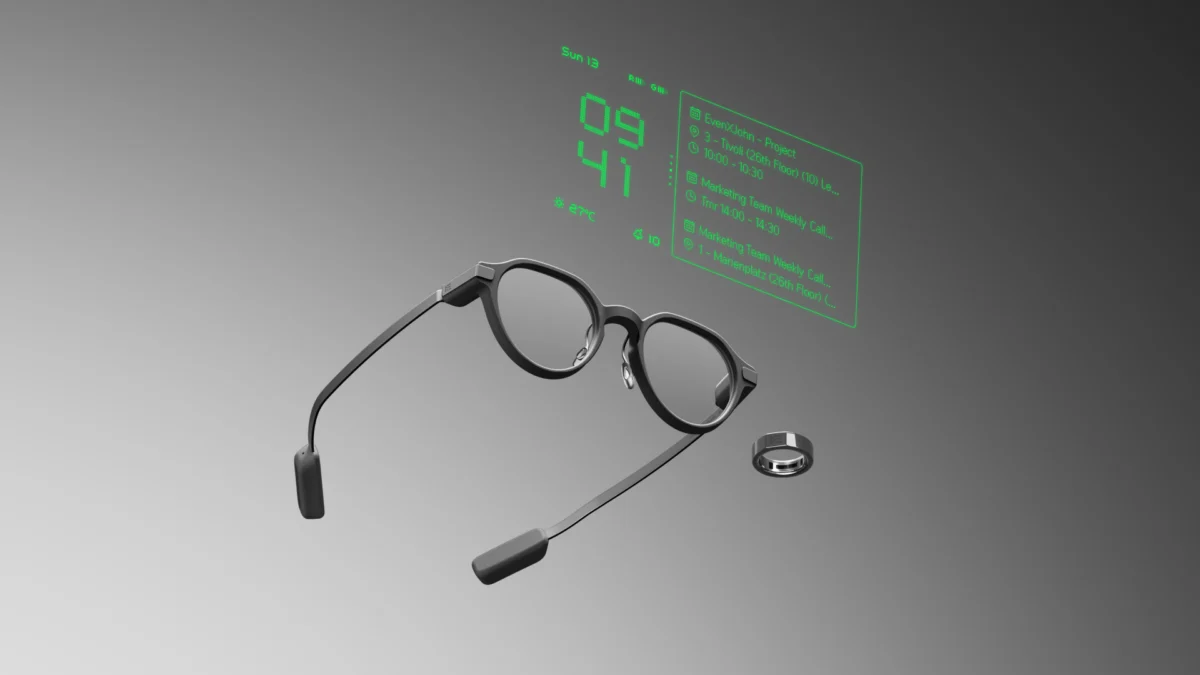
Led by founder and CEO Will Wang—a veteran of Apple’s iPhone and Watch divisions—the company has taken a contrarian approach to the "camera on your face" trend. By stripping away the camera entirely, Even Realities has positioned its flagship G2 glasses not as a surveillance tool or a content-capture device, but as a sophisticated heads-up display (HUD) for the modern professional.
The company’s recent funding round, led by tech giant Meituan and supported by returning backer Tencent, highlights a growing investor appetite for specialized hardware. Unlike the consumer-mass-market approach of its competitors, Even Realities is currently cultivating a niche that is highly profitable and surprisingly influential.
Chronology of Innovation: From Concept to Unicorn
The trajectory of Even Realities is a study in rapid execution. Founded in 2023, the startup was built by a team of industry veterans who understood the pitfalls of previous AR attempts.
- 2023: Even Realities is founded by a cross-disciplinary team of ex-Apple engineers and luxury eyewear experts, including veterans from the high-end brand Lindberg. The goal: to create glasses that look like standard eyewear but function like a smartphone.
- 2024: The company launches the "Even G1." It was a pivotal moment for the startup, as it debuted as the lightest waveguide-enabled smart glasses on the market. The product shattered expectations, surpassing the company’s internal goal of 10,000 units sold, making it the first of its kind to hit that milestone.
- Late 2024: The "Even G2" is launched. Building on the success of the G1, the G2 refines the optical stack and introduces the "Even R1" smart ring, a haptic interface that allows users to interact with their glasses through subtle gestures.
- June 2026: Even Realities closes a $150 million pre-Series B round, securing a $1 billion valuation and cementing its position as a serious threat to traditional incumbents.
The Technical Edge: Why Optics Matter
The central thesis of CEO Will Wang’s strategy is that smart glasses cannot be treated like smartphones. "With a phone or a watch, the display is just a conventional OLED or LCD screen," Wang explained in a recent interview. "Smart glasses are the first product category to rely on optical displays, which require an entirely different technology stack."
To solve this, the company developed "Even HAO" (Holistic Adaptive Optics). In traditional hardware manufacturing, a company might source a microchip from one supplier, a waveguide from another, and frames from a third. This "Frankenstein" approach often leads to bulkiness and visual artifacts.
Even Realities, by contrast, utilizes an end-to-end design philosophy. By integrating the microchip, the waveguide, and prescription lens support at the design phase rather than the assembly phase, they have achieved a form factor that is indistinguishable from premium designer glasses. This focus on the optical stack is what the company claims separates it from the "gadget" tier of wearables.
Privacy as a Competitive Advantage
The primary friction point for the mass adoption of smart glasses has always been social acceptance. People are inherently wary of being recorded by a stranger in a coffee shop. By removing the camera, Even Realities has bypassed this social barrier entirely.
"Smart glasses are probably the most personal computing device people will ever wear," says Wang. "They have to feel comfortable to both the wearer and those around them."
However, privacy at Even Realities goes beyond just removing the lens. The software architecture is designed with a "privacy-by-design" framework. For example, the device’s "Conversate" copilot—which provides real-time translation and jargon-busting for professional meetings—transcribes audio into text locally or via encrypted channels, ensuring that sensitive data is not stored in a persistent, exploitable database. The infrastructure is specifically built to comply with Europe’s stringent GDPR standards, a move that signals the company’s ambition for global, enterprise-grade adoption.
Implications for the Tech Industry
The success of Even Realities holds several implications for the future of wearable tech:
1. The Rise of the "Invisible" Wearable
As tech becomes more pervasive, the aesthetic trend is moving away from the "cyborg" look toward "stealth" tech. Even Realities’ ability to sell high-volume units at a premium price ($599 for frames, often totaling $1,000 with accessories) suggests that there is a large, underserved market of professionals who want the utility of AI without the social stigma of wearing a camera.
2. The Professionalization of AI Assistants
Most AI assistants today are tethered to phones or computers. Even Realities is betting that the "second brain" should be peripheral. By utilizing the "Conversate" copilot, the glasses act as an executive assistant, providing real-time data overlays during high-stakes business meetings. The fact that a third of their user base consists of company executives suggests that this is more than just a toy; it is a productivity tool.
3. A Shift in Market Geography
While the startup manufactures its products in China, its primary market is the United States, followed by Japan, South Korea, the Middle East, and Europe. Interestingly, the company has not yet entered the Chinese consumer market, despite its headquarters being in Shenzhen. This "export-first" strategy reflects a calculated move to capture high-purchasing-power markets where the appetite for professional-grade productivity tools is currently highest.
Looking Ahead: The Road to Mass Adoption
The company has grown from a modest team of 30–40 in 2024 to a workforce of over 400 today. This scaling effort is indicative of the massive investment required to build both hardware and the proprietary software ecosystems necessary to support them.
Despite their rapid growth, challenges remain. The company is currently operating in a premium segment where price sensitivity is low but performance expectations are incredibly high. To maintain its $1 billion valuation and continue its upward trajectory, Even Realities must prove that its optical technology can scale across diverse prescription needs and that its developer community can build software that justifies the $1,000 price tag.
The battle for the face is far from over. As Meta and Snap continue to iterate on their camera-equipped visions of the future, Even Realities stands as a testament to the "less is more" philosophy. By focusing on the sanctity of the user’s line of sight and the privacy of their social interactions, they have carved out a space that is as profitable as it is innovative. The race is no longer just about who can build the most powerful computer for the face; it is about who can make it the most essential tool for the modern professional.
 Asep Darmawan
 Siti Muinah
 Ali Ikhwan
