

By Olivia Tauber | Published: September 11, 2026
There are a few constants one expects when a crowd of college students takes over a campus fraternity lawn in broad daylight. Typically, the scene features blasting bass lines, disposable red cups, the hum of casual chatter, and students cutting class to bask in the afternoon sun.
What traditional partygoers certainly do not expect to see is a row of participants stretching meticulously on yoga mats, warming up for a group run, or lining up to take turns in professional-grade cold plunges.
Yet, this is the surreal, increasingly common setup at a "wellness darty"—a rising cultural phenomenon sweeping through American universities that fuses the highly social atmosphere of a daytime party (or "darty") with the rigorous, aesthetic-driven itinerary of an urban fitness boutique. Instead of pivoting around beer kegs, handle-sharing, and pong tables, the agenda at these gatherings typically incorporates mat Pilates, 5K group runs, ice baths, infrared saunas, and post-sweat social sessions fueled by artisanal matcha or cold brew.
While older generations look on with a mixture of bewilderment and amusement, Gen Z is actively reshaping what it means to cut loose, socialize, and prioritize health during their formative college years.

Main Facts: What is a Wellness Darty?
At its core, a wellness darty is an outdoor, daytime social gathering organized on or near college campuses that swaps out alcohol-centric activities for physical fitness and wellness routines. While music still plays and large crowds gather to mingle, the focal point has shifted entirely.
The trend has gained significant traction at major party schools across the United States, including the University of Miami, the University of Florida, Florida State University, Syracuse University, and the University of Alabama. Rather than being spontaneous student undertakings, these events are frequently coordinated by campus and local wellness organizations—such as Peak Pulse in Florida, Sweat & Soak in Alabama, and The Wellness Society chapters spanning multiple universities.
Far from being hidden away in campus recreation centers, these wellness events have deliberately occupied traditional Greek life spaces. For instance, The Wellness Society notably hosted an outdoor mat Pilates session directly on the front lawn of Syracuse University’s Delta Kappa Epsilon (DKE) fraternity house.
The demographic driving this shift consists primarily of Gen Z students who view fitness not as a chore, but as a primary pillar of lifestyle, self-care, and community bonding.
Chronology: From Digital Aesthetics to Fraternity Lawns
The emergence of the wellness darty did not happen in a vacuum; it is the physical manifestation of years of digital conditioning and shifting youth culture.

Phase 1: The Rise of Wellness Culture Online (2020–2024)
Throughout the early 2020s, social media algorithms on TikTok and Instagram were inundated with meticulous morning routines, aesthetic workout wear, matcha runs, and the "Pilates princess" or "clean girl" lifestyle trends. Working out transformed from a private health endeavor into an aspirational, public-facing digital identity. Figures like Hailey Bieber popularized a lifestyle where looking and feeling well were intrinsically linked to activewear sets, skin patches, and boutique fitness classes.
Phase 2: The Shift Away From Alcohol (2023–2025)
Concurrently, researchers and public health experts began documenting a steep decline in alcohol consumption among young adults. Gallup surveys indicated that the percentage of adults under 35 who report drinking dropped significantly compared to previous decades, with a majority of Gen Z explicitly stating that moderate drinking is unhealthy.
Phase 3: Physical Manifestation on Campus (Late 2025–September 2026)
The conceptual bridge between digital wellness trends and physical college socialization was formally crossed when local wellness collectives began organizing events that directly mirrored online aesthetics. The movement went viral in late 2025 and early 2026 when Aydan Child, founder of the Florida-based wellness community Peak Pulse, posted a TikTok video showing hundreds of students gathering outside a University of Florida fraternity house for a massive workout event.
The video’s caption—“Imagine explaining a wellness darty to someone who went to college in 2012”—instantly sparked a massive internet debate, cementing the term in the cultural lexicon. Since then, organizations like Sweat & Soak have expanded the concept by bringing mobile saunas and ice baths directly to Greek life epicenters like the University of Alabama.
Supporting Data: The Numbers Behind the Trend
The cultural pivot toward wellness-centric socialization is backed by hard economic and sociological data.

- Prioritizing Fitness: According to McKinsey’s 2024 wellness report, 56 percent of surveyed U.S. Gen Z consumers consider fitness a "very high priority," compared to just 40 percent of U.S. consumers overall.
- Economic Footprint: Subsequent McKinsey research revealed that Gen Z and millennials account for more than 41 percent of annual U.S. wellness spending, despite comprising only 36 percent of the adult population.
- The "Soft Clubbing" Boom: Eventbrite data highlights a massive surge in alternative social gatherings. Morning raves have grown by 20 percent, while coffee clubbing—a key component of the "soft clubbing" movement—has skyrocketed by 478 percent. Events centered around saunas and ice baths have seen a staggering 256 percent increase.
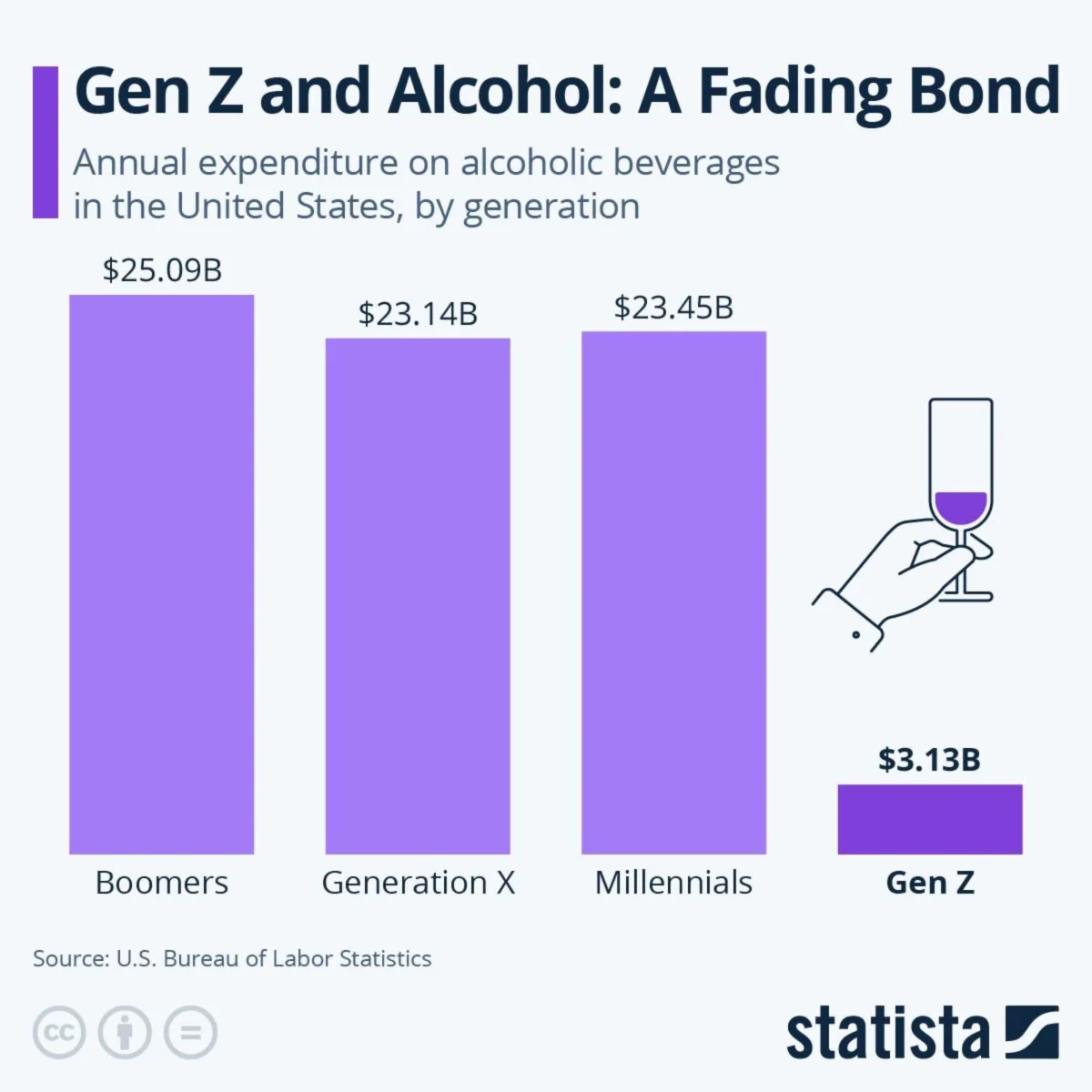
- Fading Bonds with Alcohol: A longitudinal Gallup survey shows that the share of young adults under 35 who report drinking fell from 72 percent in the early 2000s to 62 percent in the early 2020s. Furthermore, a 2023 survey indicated that 52 percent of Gen Z-ers view moderate drinking as unhealthy, up from 34 percent five years prior.
- Why Young People Abstain: According to a comprehensive survey by market research firm Knit, 51.7 percent of Gen Z respondents avoid alcohol because they dislike its taste or smell, 44.8 percent do so to prevent hangovers, and 41.4 percent harbor concerns about the long-term health effects of alcohol. Additionally, fear of social embarrassment captured on cell phone cameras—the dread of going viral for intoxication—has been cited by cultural historians as a deterrent.
Official Responses and Perspectives
Reactions to the wellness darty trend are sharply divided between the students living it and older generations looking on in disbelief.
The Student Perspective
For college students navigating the post-pandemic social landscape, wellness darties offer a structured, low-pressure environment to make friends without the social anxiety often fueled by alcohol.
Riley Meyer, a sophomore at the University of Alabama who helped facilitate a Sweat & Soak campus event, offered insight into her generation’s social hurdles. "I think my generation… does have a problem with socialization, especially without the context of alcohol at a party," Meyer noted in an interview with USA Today. "When you have an activity built in, it gives you something to do."
Organizers are also quick to clarify that wellness darties are not puritanical anti-party events meant to police behavior. Aydan Child, founder of Peak Pulse and a vocal advocate for sober-curious lifestyles, emphasizes that these gatherings are designed to be inclusive. Some events naturally transition into local bars where non-alcoholic beverages, coffee, and matcha flow freely, though traditional drinks remain optional.
Interestingly, recent data nuances the narrative: a July 2026 IWSR report noted that 74 percent of Gen Zers report having had an alcoholic drink over the past six months, up from 66 percent three years prior, pointing to an "alcohol resurgence" rather than a total prohibition. Students like Meyer confirm this balance, noting that attending a morning run or Pilates session on a Saturday does not preclude them from going out to traditional parties later that night. "It’s not like it prohibited us from going out, it just gave us something else to do," she explained.

The Internet and Intergenerational Backlash
Online, however, the trend has been met with a combination of fascination, mockery, and existential dread.
On X (formerly Twitter) and TikTok, critics have skewered the aesthetic. One widely shared post described the footage of fraternity lawn workouts as "truly bone chilling," while another user questioned why college students were "cosplaying as 30-something matcha/pilates/corporate warriors."
Millennials and older generations have expressed a sense of mourning for the chaotic, unoptimized nature of traditional college culture. In online forums like Reddit’s r/GenZ, older alumni reminisce about heavy laughter, messy dancing, and spontaneous romance as foundational milestones of youth, self-discovery, and newfound freedom.
Conversely, some commentators online have defended the trend, asking why health-conscious behavior is met with such hostility. Yet, even among sympathetic observers, a nuanced critique has emerged: the pressure on Gen Z to optimize every single moment of their lives—turning even leisure and social time into a performance of self-improvement and productivity. As one internet commenter astutely put it: "I think it’s generally because our generation is too fixated on optimizing everything. There is beauty in imperfection."
Implications: The Future of Campus Social Life
The rise of the wellness darty signals a permanent structural shift in how young adults approach community, leisure, and personal health.

- The Evolution of Greek Life: Fraternities and sororities, historically known as the undisputed gatekeepers of weekend binge drinking, are adapting to survive. By opening their lawns to wellness groups, Greek organizations are pivoting toward community health to improve their public image, attract a broader demographic of students, and mitigate liability issues associated with heavy alcohol consumption.
- The Commercialization of "Soft Socializing": Brands and hospitality businesses are taking notice. Beverage companies, fitness studios, and local cafes are increasingly marketing themselves toward daytime, sober-curious events. The massive financial capital Gen Z pours into wellness products ensures that corporate America will continue to fund and promote alternative party formats.
- Redefining Youth Culture: Ultimately, the wellness darty proves that Gen Z still deeply desires community, shared experiences, and weekend rituals. They are simply stripping away the hangover, the financial burden of expensive bar tabs, and the digital risks of alcohol-induced vulnerability.
Whether wellness darties remain a staple campus tradition or eventually evolve into another iteration of modern socialization, they offer a clear window into the future: a world where young adults refuse to choose between having a social life and taking care of their bodies. For event organizers, brands, and universities watching closely, a fraternity lawn full of yoga mats is no longer an anomaly—it is the new frontier.
 Suro Senen
 Nana Wu
 Neng Nana
