

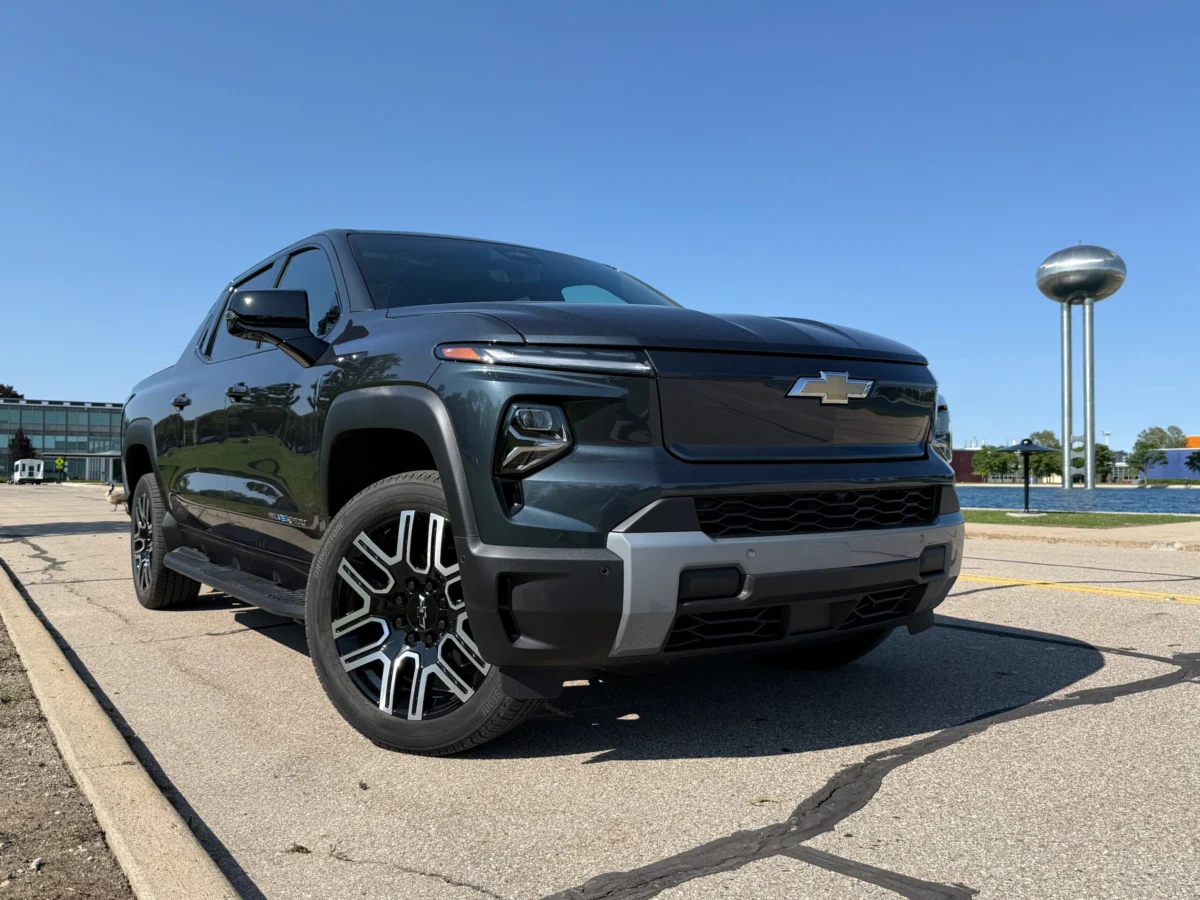
Despite a childhood spent shifting gears in a classic Chevrolet S-10 pickup from the passenger seat, I have never considered myself a "truck person." My automotive preferences have historically leaned toward the nimble handling and compact utility of hatchbacks. Yet, after spending a full day navigating the bustling streets of Detroit in the new Chevrolet Silverado EV, I found myself confronting an unexpected realization: General Motors might have just built a machine capable of converting even the most hardened city-dweller into a truck enthusiast.
The Silverado EV is a masterclass in engineering, bridging the gap between utilitarian brawn and modern electric refinement. And yet, the market response has been tepid at best. With only 14,000 units sold across the U.S. and Canada last year—a fraction of the quarterly volume moved by its internal combustion engine (ICE) counterpart—the industry is left to wonder: Has GM built the perfect electric truck, only to find that the market isn’t ready for it?
The Engineering Marvel: A Paradox on Wheels
On the road, the Silverado EV defies its physical presence. It drives with the poise of a luxury sedan, yet it possesses a bed that is cavernous and a "frunk" (front trunk) that easily swallows multiple roller bags. The cabin is whisper-quiet, providing a sanctuary of space where even those with long legs can stretch out comfortably.

But the utility goes beyond mere comfort. This is a vehicle designed for the modern American household: it can serve as a mobile power plant, capable of keeping a house running during a hurricane, and it features an autonomous-capable suite that allows for true hands-free highway driving. With a range exceeding 400 miles on a single charge, it represents a dream combination of specs for the traditional American pickup buyer.
Driving Dynamics and Technology
Getting into the Silverado EV requires a significant step up, but once settled, you are greeted by an interior that feels both familiar and futuristic. The cockpit is dominated by crisp, responsive screens that provide vital data at a glance. When you depress the brake, the vehicle surges to life.
Despite its nearly 20-foot frame, the truck is surprisingly agile in urban environments. Thanks to advanced rear-wheel steering, it maneuvers through tight parking lots with the grace of a much smaller vehicle. However, the laws of physics eventually apply; while it handles low-speed turns beautifully, wedging it into a narrow, mid-century parking space remains a daunting task.

The infotainment experience is powered by Google, offering a seamless interface that rivals the best consumer electronics. While some purists may lament the absence of Apple CarPlay, GM’s decision to prioritize its native system allows for deeper integration with the vehicle’s range and navigation logic. For instance, when plotting a course, the navigation system doesn’t just calculate time; it estimates how much of the journey can be completed using Super Cruise, GM’s sophisticated Level 2 hands-free driver-assistance system.
A Chronology of the Electric Shift
The journey of the Silverado EV began with high expectations and a design language that intentionally tips its hat to the iconic Chevrolet Avalanche. Featuring a "mid-gate" system that allows the bed to extend into the cabin, it is designed for maximum versatility.
- The Development Phase: GM spent years refining the Ultium battery platform, aiming to create a modular architecture that could scale across its entire brand portfolio.
- The Launch: When the Silverado EV first hit the market, it was marketed as the ultimate workhorse for the electric era.
- The Market Reality: Following its rollout, sales failed to hit the aggressive internal targets set by analysts. The "slow burn" of sales has forced GM to re-evaluate its strategy regarding battery costs and consumer education.
Data-Driven Insights: Debunking the Myths
One of the most persistent narratives surrounding the failure of electric trucks is that they are simply too expensive for the average consumer. However, the data suggests otherwise. The average transaction price for a full-size pickup in the United States hovers around $66,000—a figure that sits only $5,000 above the list price of a Silverado EV LT Extended Range.

Furthermore, critics often point to "towing anxiety" as a primary hurdle, citing the roughly 60% reduction in range when hauling heavy loads. While this is a technical reality, it is a largely theoretical concern for the vast majority of owners. Industry research from Strategic Vision indicates that approximately 75% of full-size truck owners tow at most once per year. If towing isn’t the primary use case, why aren’t the 400,000 annual ICE Silverado buyers making the switch?
The answer likely lies in market inertia. The pickup truck segment is defined by deep-seated brand loyalty and a traditionalist mindset that prioritizes long-established habits over technological innovation.
Examining the Super Cruise Experience
Super Cruise remains one of the most impressive facets of the GM ecosystem. My testing in the Detroit metro area during peak hours was revealing. In a vehicle of this scale, the ability to offload the mental burden of stop-and-go traffic to the car’s computer is a game-changer.

However, the system is not infallible. During my test, I experienced a moment of intense anxiety when the truck failed to adequately track a dirty, paint-splattered trailer. It was a stark reminder that even the most advanced Level 2 systems rely heavily on sensor clarity and environmental conditions. Despite this, the ride quality, bolstered by a massive 205 kWh battery pack acting as a low-center-of-gravity ballast, remains class-leading.
Implications: The Path to Parity
The future of the Silverado EV hinges on two factors: cost reduction and public perception. GM is currently preparing to transition to lithium-manganese-rich (LMR) battery chemistry, a move expected to shave $6,000 off production costs later this decade without sacrificing range. If those savings are passed to the consumer, the Silverado EV will reach price parity with its fossil-fuel siblings, removing the "premium" tax that currently hinders adoption.
The Need for Engineering Efficiency
Beyond chemistry, there is a clear need for weight reduction. By wringing unnecessary mass out of the chassis, engineers could simultaneously improve payload capacity, towing capability, and energy efficiency. Currently, I clocked the vehicle at roughly 2.1 miles per kilowatt-hour—a respectable figure, but one that highlights the massive energy required to move such a heavy, non-aerodynamic vehicle through the air.

Conclusion: The "Too Big" Problem
As I concluded my time with the Silverado, I was left with a lingering, quintessentially American irony. The truck is a technological triumph, a smooth-riding, high-tech machine that effectively delivers on the promise of an electric future. It is, in almost every metric, a superior product to the gas-guzzling predecessors that defined the last half-century.
Yet, I am forced to admit that I wouldn’t buy one—not because of the price, or the range, or the tech, but because of the infrastructure of my own life. It is simply too large for my 1950s-era two-car garage. To own the future of the American pickup, I would need a bigger house. And in a way, that is the most fitting metaphor for the current state of the American EV market: the technology is ready, but the world we built to house it is still catching up.
General Motors has provided the tools. Now, it is up to the market to decide if it is ready to renovate.
 Asep Darmawan
 Siti Muinah
 Ali Ikhwan
